


 Cart
Cart
 sales@molnova.com


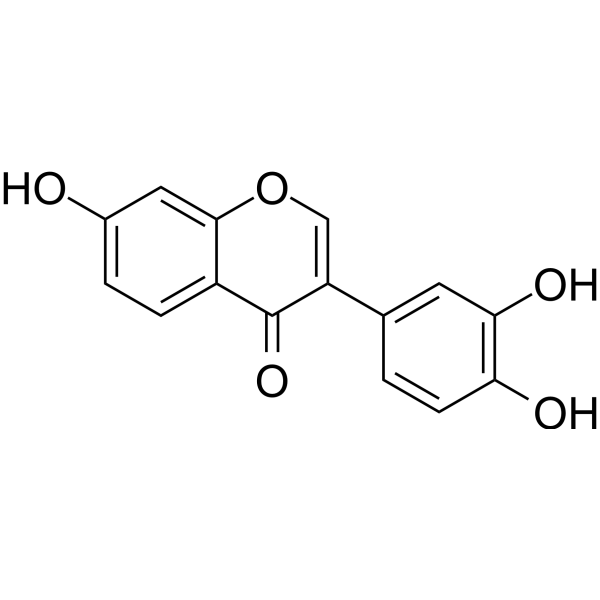
3,4,7-Trihydroxyisoflavone
CAS No. 485-63-2
3,4,7-Trihydroxyisoflavone( —— )
Catalog No. M32122 CAS No. 485-63-2
3',4',7-Trihydroxyisoflavone is a natural product.
Purity : >98% (HPLC)
 COA
Datasheet
HNMR
HPLC
MSDS
Handing Instructions
COA
Datasheet
HNMR
HPLC
MSDS
Handing Instructions
| Size | Price / USD | Stock | Quantity |
| 1 mL x 10 mM in DMSO | 28 | In Stock |


|
| 10MG | 28 | In Stock |
|
| 100MG | Get Quote | In Stock |
|
| 200MG | Get Quote | In Stock |
|
| 500MG | Get Quote | In Stock |
|
| 1G | Get Quote | In Stock |
|
Biological Information
-
Product Name3,4,7-Trihydroxyisoflavone
-
NoteResearch use only, not for human use.
-
Brief Description3',4',7-Trihydroxyisoflavone is a natural product.
-
Description3',4',7-Trihydroxyisoflavone is a natural product.
-
In Vitro7,3',4'-Trihydroxyisoflavone triggers cell cycle arrest at the G1 phase and displays an anti-proliferative effect against EGF receptor-positive skin cancer. 7,3',4'-Trihydroxyisoflavone also significantly inhibits UVB-induced COX-2 expression by suppressing the NF-B transcription activity in mouse skin epidermal JB6 P+ cells.
-
In VivoIn a mouse skin tumorigenesis model, 7,3',4'-Trihydroxyisoflavone strongly suppresses the incidence, multiplicity, and volume of UVB-induced mouse skin tumors. Consistent with the tumor data, 7,3',4'-Trihydroxyisoflavone clearly attenuates UVB-induced COX-2 expression in hairless mouse skin.
-
Synonyms——
-
PathwayOthers
-
TargetOther Targets
-
Recptor——
-
Research Area——
-
Indication——
Chemical Information
-
CAS Number485-63-2
-
Formula Weight270.2
-
Molecular FormulaC15H10O5
-
Purity>98% (HPLC)
-
SolubilityIn Vitro:?DMSO : 100 mg/mL (370.04 mM)
-
SMILES——
-
Chemical Name——
Shipping & Storage Information
-
Storage(-20℃)
-
ShippingWith Ice Pack
-
Stability≥ 2 years
Reference
molnova catalog



related products
-
2-C-Methyladenosine
2'-C-Methyladenosine is an inhibitor of hepatitis C virus (HCV) replication and a ribonucleoside diphosphate reductase inhibitor from Corynebacterium renalis.
-
MMP-1 Substrate I, f...
MMP-1 Substrate I, fluorogenic
-
Isobavachin
Isobavachin can facilitate mouse ES cells differentiating into neuronal cells.
