


 Cart
Cart
 sales@molnova.com


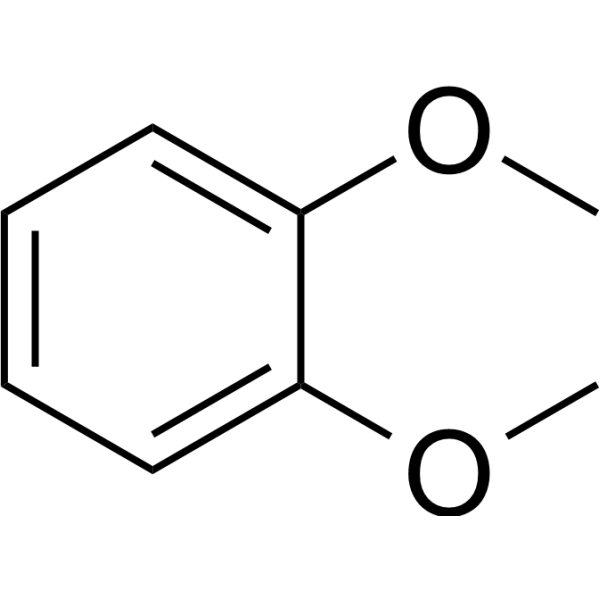
1,2-Dimethoxybenzene
CAS No. 91-16-7
1,2-Dimethoxybenzene( —— )
Catalog No. M32051 CAS No. 91-16-7
1,2-Dimethoxybenzene, a natural product secreted by Silene latifolia, is an effective pollinator attractant for the nocturnal moth Hadena bicruris.
Purity : >98% (HPLC)
 COA
Datasheet
HNMR
HPLC
MSDS
Handing Instructions
COA
Datasheet
HNMR
HPLC
MSDS
Handing Instructions
| Size | Price / USD | Stock | Quantity |
| 1 mL x 10 mM in DMSO | 28 | In Stock |


|
| 50MG | Get Quote | In Stock |
|
| 100MG | Get Quote | In Stock |
|
| 200MG | Get Quote | In Stock |
|
| 500MG | Get Quote | In Stock |
|
| 1G | Get Quote | In Stock |
|
Biological Information
-
Product Name1,2-Dimethoxybenzene
-
NoteResearch use only, not for human use.
-
Brief Description1,2-Dimethoxybenzene, a natural product secreted by Silene latifolia, is an effective pollinator attractant for the nocturnal moth Hadena bicruris.
-
Description1,2-Dimethoxybenzene, a natural product secreted by Silene latifolia, is an effective pollinator attractant for the nocturnal moth Hadena bicruris.
-
In Vitro——
-
In Vivo——
-
Synonyms——
-
PathwayOthers
-
TargetOther Targets
-
Recptor——
-
Research Area——
-
Indication——
Chemical Information
-
CAS Number91-16-7
-
Formula Weight138.1
-
Molecular FormulaC8H10O2
-
Purity>98% (HPLC)
-
SolubilityIn Vitro:?DMSO : 50 mg/mL (361.90 mM)
-
SMILES——
-
Chemical Name——
Shipping & Storage Information
-
Storage(-20℃)
-
ShippingWith Ice Pack
-
Stability≥ 2 years
Reference
molnova catalog



related products
-
BT173
BT173 is a novel inhibitor of homeodomain interacting protein kinase 2 (HIPK2 ), attenuating renal fibrosis through suppression of the TGF-?1/Smad3 pathway.
-
LiCl
LiCl is used to precipitate RNA.
-
Acortatarin F
Acortatarin F
