


 Cart
Cart
 sales@molnova.com


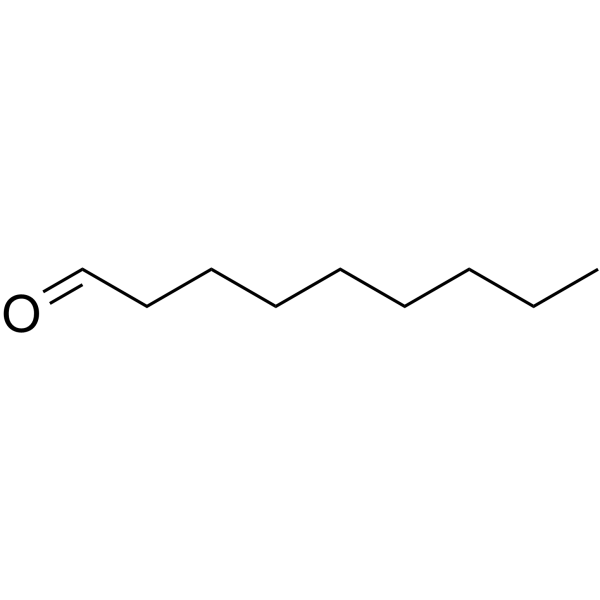
Nonanal
CAS No. 124-19-6
Nonanal( —— )
Catalog No. M32029 CAS No. 124-19-6
Nonanal is a growth factor for wood-rotting fungi. Nonanal is a potential attractant for the pine shoot beetle.
Purity : >98% (HPLC)
 COA
Datasheet
HNMR
HPLC
MSDS
Handing Instructions
COA
Datasheet
HNMR
HPLC
MSDS
Handing Instructions
| Size | Price / USD | Stock | Quantity |
| 50MG | Get Quote | In Stock |


|
| 100MG | Get Quote | In Stock |
|
| 200MG | Get Quote | In Stock |
|
| 500MG | Get Quote | In Stock |
|
| 1G | Get Quote | In Stock |
|
Biological Information
-
Product NameNonanal
-
NoteResearch use only, not for human use.
-
Brief DescriptionNonanal is a growth factor for wood-rotting fungi. Nonanal is a potential attractant for the pine shoot beetle.
-
DescriptionNonanal is a growth factor for wood-rotting fungi. Nonanal is a potential attractant for the pine shoot beetle.
-
In VitroNonanal shows a significant activity against B. cereus and L. monocytogenes, the MIC values are both 7.8 μg/ml.
-
In VivoNonanal shows a significant inhibitory effect on mice with diarrhoea induced with castor oil.
-
Synonyms——
-
PathwayOthers
-
TargetOther Targets
-
Recptor——
-
Research Area——
-
Indication——
Chemical Information
-
CAS Number124-19-6
-
Formula Weight142.2
-
Molecular FormulaC9H18O
-
Purity>98% (HPLC)
-
SolubilityIn Vitro:?DMSO : 100 mg/mL (703.04 mM)
-
SMILES——
-
Chemical Name——
Shipping & Storage Information
-
Storage(-20℃)
-
ShippingWith Ice Pack
-
Stability≥ 2 years
Reference
molnova catalog



related products
-
PODOPHYLLIN
PODOPHYLLIN
-
Schiarisanrin A
Schiarisanrin A (Kadsulignan J) is a lignan with inhibitory activity on NO production. Schiarisanrin A inhibits NO production in BV-2 cells with an IC50 of 9.6 μM.
-
Hirudonucleodisulfid...
Hirudonucleodisulfide A is a heterocyclic compound that can be found in Whitmania pigra. Hirudonucleodisulfide A shows moderately anti-anoxic activity.
