


 Cart
Cart
 sales@molnova.com


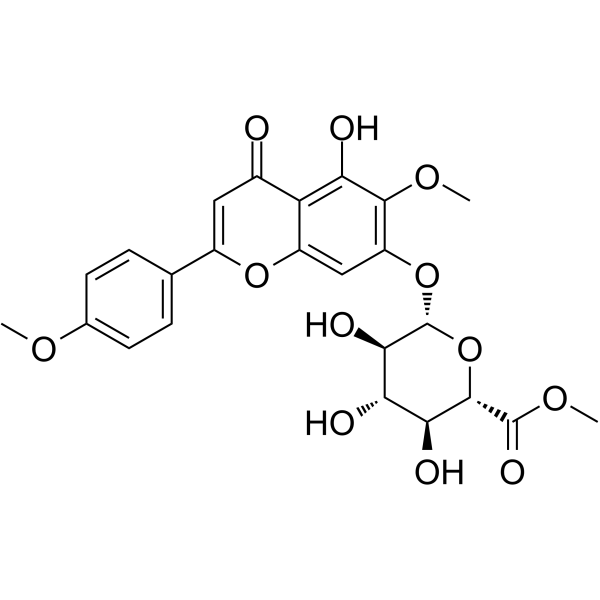
Comanthosid A
CAS No. 70938-59-9
Comanthosid A( —— )
Catalog No. M31991 CAS No. 70938-59-9
Comanthoside A is a naturally occurring flavonoid glycoside isolated from Comanthosphace japonica.Comanthoside A is also a key intermediate in the synthesis of Linaroside and Comanthoside B. Comanthoside A is a natural flavonoid glycoside isolated from Comanthosphace japonica.
Purity : >98% (HPLC)
 COA
Datasheet
HNMR
HPLC
MSDS
Handing Instructions
COA
Datasheet
HNMR
HPLC
MSDS
Handing Instructions
| Size | Price / USD | Stock | Quantity |
| 1 mL x 10 mM in DMSO | 333 | In Stock |


|
| 5MG | 187 | In Stock |
|
| 10MG | 275 | In Stock |
|
| 25MG | 465 | In Stock |
|
| 100MG | Get Quote | In Stock |
|
| 200MG | Get Quote | In Stock |
|
| 500MG | Get Quote | In Stock |
|
| 1G | Get Quote | In Stock |
|
Biological Information
-
Product NameComanthosid A
-
NoteResearch use only, not for human use.
-
Brief DescriptionComanthoside A is a naturally occurring flavonoid glycoside isolated from Comanthosphace japonica.Comanthoside A is also a key intermediate in the synthesis of Linaroside and Comanthoside B. Comanthoside A is a natural flavonoid glycoside isolated from Comanthosphace japonica.
-
DescriptionComanthoside A is a naturally occurring flavonoid glycoside isolated from Comanthosphace japonica.Comanthoside A is also a key intermediate in the synthesis of Linaroside and Comanthoside B. Comanthoside A is a natural flavonoid glycoside isolated from Comanthosphace japonica.
-
In Vitro——
-
In Vivo——
-
Synonyms——
-
PathwayOthers
-
TargetOther Targets
-
Recptor——
-
Research Area——
-
Indication——
Chemical Information
-
CAS Number70938-59-9
-
Formula Weight504.5
-
Molecular FormulaC24H24O12
-
Purity>98% (HPLC)
-
Solubility——
-
SMILES——
-
Chemical Name——
Shipping & Storage Information
-
Storage(-20℃)
-
ShippingWith Ice Pack
-
Stability≥ 2 years
Reference
molnova catalog



related products
-
(R)-AZD 9639
(R)-AZD 9639 is the R-isomer of AZD 9639, a novel respiratory syncytial virus (RSV) fusion inhibitor with antiviral activity.
-
Methyl salicylate
Methyl salicylate (oil of wintergreen or wintergreen oil) is an organic ester naturally produced by many species of plants, particularly wintergreens. It is also synthetically produced, used as a fragrance, in foods and beverages, and in liniments.
-
Tyrosine Protein Kin...
Tyrosine Protein Kinase JAK 2
