


 Cart
Cart
 sales@molnova.com


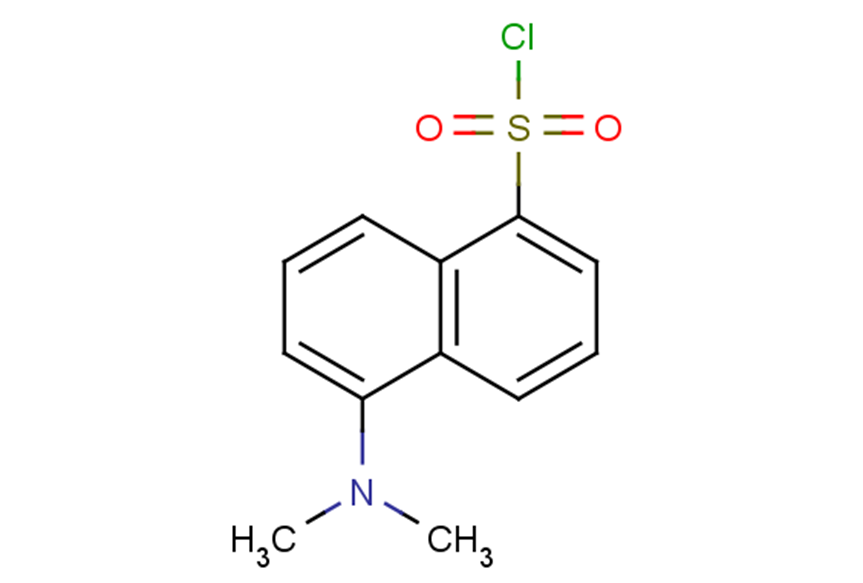
Dansyl chloride
CAS No. 605-65-2
Dansyl chloride( DNSCl )
Catalog No. M22498 CAS No. 605-65-2
Dansyl chloride reacts with primary amino groups in both aliphatic and aromatic amines to produce stable blue- or blue-green-fluorescent sulfonamide adducts. It is widely used to modify amino acids, specifically, protein sequencing and amino acid analysis.
Purity : >98% (HPLC)
 COA
Datasheet
HNMR
HPLC
MSDS
Handing Instructions
COA
Datasheet
HNMR
HPLC
MSDS
Handing Instructions
| Size | Price / USD | Stock | Quantity |
| 100MG | Get Quote | In Stock |


|
| 200MG | Get Quote | In Stock |
|
| 500MG | Get Quote | In Stock |
|
| 1G | 30 | In Stock |
|
Biological Information
-
Product NameDansyl chloride
-
NoteResearch use only, not for human use.
-
Brief DescriptionDansyl chloride reacts with primary amino groups in both aliphatic and aromatic amines to produce stable blue- or blue-green-fluorescent sulfonamide adducts. It is widely used to modify amino acids, specifically, protein sequencing and amino acid analysis.
-
DescriptionDansyl chloride reacts with primary amino groups in both aliphatic and aromatic amines to produce stable blue- or blue-green-fluorescent sulfonamide adducts. It is widely used to modify amino acids, specifically, protein sequencing and amino acid analysis.
-
In Vitro——
-
In Vivo——
-
SynonymsDNSCl
-
PathwayOthers
-
TargetOther Targets
-
RecptorOthers
-
Research Area——
-
Indication——
Chemical Information
-
CAS Number605-65-2
-
Formula Weight269.75
-
Molecular FormulaC12H12ClNO2S
-
Purity>98% (HPLC)
-
SolubilityDMSO:6.67 mg/mL (24.73 mM; Need ultrasonic)
-
SMILESCN(C)c1cccc2c(cccc12)S(Cl)(=O)=O
-
Chemical Name——
Shipping & Storage Information
-
Storage(-20℃)
-
ShippingWith Ice Pack
-
Stability≥ 2 years
Reference
molnova catalog



related products
-
Seco-neokadsuranic a...
Seco-neokadsuranic acid A is a triterpene acid isolated from Kadsura coccinea.
-
2-Carene
2-Carene is a natural compound.
-
Metolazone
Metolazone(Zaroxolyn) is primarily used to treat congestive heart failure and high blood pressure.
