


 Cart
Cart
 sales@molnova.com


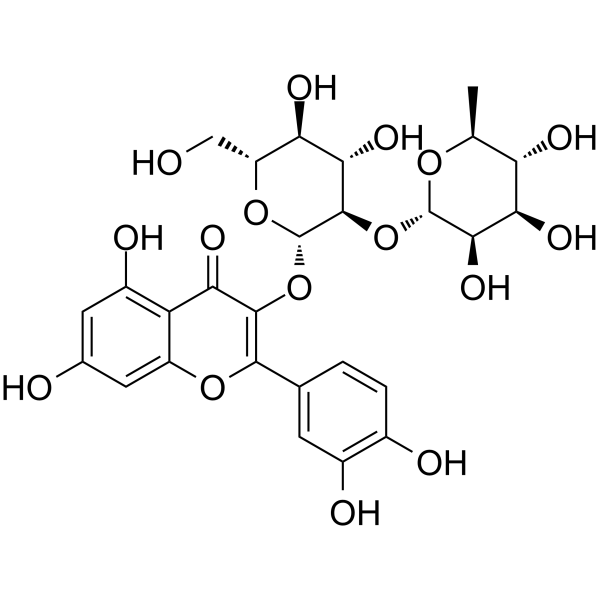
Quercetin 3-O-neohesperidoside
CAS No. 32453-36-4
Quercetin 3-O-neohesperidoside( —— )
Catalog No. M31947 CAS No. 32453-36-4
Quercetin 3-O-neohesperidoside shows anti-atherosclerosis, and antiplatelet aggregation activities.
Purity : >98% (HPLC)
 COA
Datasheet
HNMR
HPLC
MSDS
Handing Instructions
COA
Datasheet
HNMR
HPLC
MSDS
Handing Instructions
| Size | Price / USD | Stock | Quantity |
| 5MG | 144 | In Stock |


|
| 10MG | 235 | In Stock |
|
| 25MG | 397 | In Stock |
|
| 100MG | Get Quote | In Stock |
|
| 200MG | Get Quote | In Stock |
|
| 500MG | Get Quote | In Stock |
|
| 1G | Get Quote | In Stock |
|
Biological Information
-
Product NameQuercetin 3-O-neohesperidoside
-
NoteResearch use only, not for human use.
-
Brief DescriptionQuercetin 3-O-neohesperidoside shows anti-atherosclerosis, and antiplatelet aggregation activities.
-
DescriptionQuercetin 3-O-neohesperidoside shows anti-atherosclerosis, and antiplatelet aggregation activities.
-
In Vitro——
-
In Vivo——
-
Synonyms——
-
PathwayOthers
-
TargetOther Targets
-
Recptor——
-
Research Area——
-
Indication——
Chemical Information
-
CAS Number32453-36-4
-
Formula Weight610.5
-
Molecular FormulaC27H30O16
-
Purity>98% (HPLC)
-
Solubility——
-
SMILES——
-
Chemical Name——
Shipping & Storage Information
-
Storage(-20℃)
-
ShippingWith Ice Pack
-
Stability≥ 2 years
Reference
molnova catalog



related products
-
Diethylamine hydroch...
Diethylamine hydrochloride is used for organic synthesis.
-
Biotin-Bombesin
Biotin-Bombesin
-
Chromostatin, bovine
Chromostatin bovine is a chromogranin A (CGA) derivative peptide, which inhibits postassium or carbamoylcholine induced catecholamine release with an ID50 of 5 nM. Chromostatin bovine reduces calcium flux, enhances the desensitization process of the cholinergic-evoked secretory response and modulates the endocrine response associated with catecholamine.
