


 Cart
Cart
 sales@molnova.com


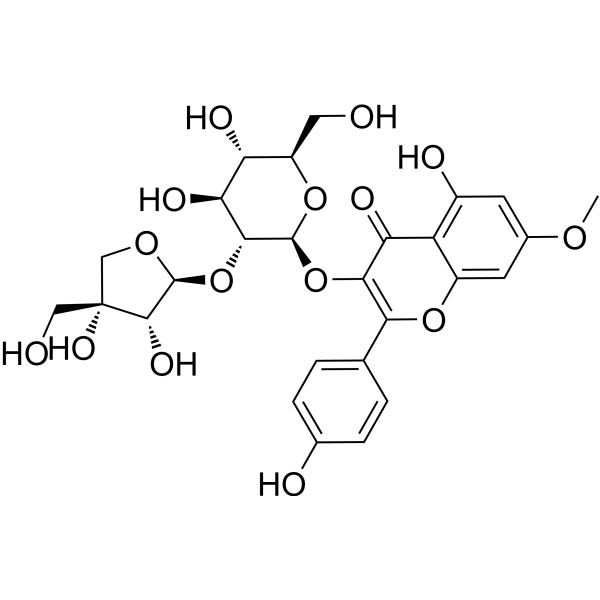
Rhamnocitrin 3-apiosyl-(1->2)-glucoside
CAS No. 148031-68-9
Rhamnocitrin 3-apiosyl-(1->2)-glucoside( —— )
Catalog No. M31893 CAS No. 148031-68-9
Rhamnocitrin 3-apiosyl-(1a 2)-glucoside is a natural product for research related to life sciences.
Purity : >98% (HPLC)
 COA
Datasheet
HNMR
HPLC
MSDS
Handing Instructions
COA
Datasheet
HNMR
HPLC
MSDS
Handing Instructions
| Size | Price / USD | Stock | Quantity |
| 10MG | 311 | In Stock |


|
| 50MG | Get Quote | In Stock |
|
| 100MG | Get Quote | In Stock |
|
| 200MG | Get Quote | In Stock |
|
| 500MG | Get Quote | In Stock |
|
| 1G | Get Quote | In Stock |
|
Biological Information
-
Product NameRhamnocitrin 3-apiosyl-(1->2)-glucoside
-
NoteResearch use only, not for human use.
-
Brief DescriptionRhamnocitrin 3-apiosyl-(1a 2)-glucoside is a natural product for research related to life sciences.
-
DescriptionRhamnocitrin 3-apiosyl-(1a 2)-glucoside is a natural product for research related to life sciences.
-
In Vitro——
-
In Vivo——
-
Synonyms——
-
PathwayOthers
-
TargetOther Targets
-
Recptor——
-
Research Area——
-
Indication——
Chemical Information
-
CAS Number148031-68-9
-
Formula Weight594.5
-
Molecular FormulaC27H30O15
-
Purity>98% (HPLC)
-
Solubility——
-
SMILES——
-
Chemical Name——
Shipping & Storage Information
-
Storage(-20℃)
-
ShippingWith Ice Pack
-
Stability≥ 2 years
Reference
molnova catalog



related products
-
beta-Costic acid
The use of costic acid and other components from the plant Dittrichia viscosa (Greek: aconiza) and related species for the preparation of acaricidal products used against the acari Varroa destructor as parasite of the honey bee.
-
Liriopesides B
Liriopesides B exhibited potential anticancer activity against human ovarian cancer A2780 cells.
-
FM1-43
FM1-43 is a highly lipophilic, water-soluble styrene dye that acts as an osmotic blocker of hair cell mechanical transducer channels and can be used to study neuropeptide granule dynamics and cytotoxicity.
