


 Cart
Cart
 sales@molnova.com


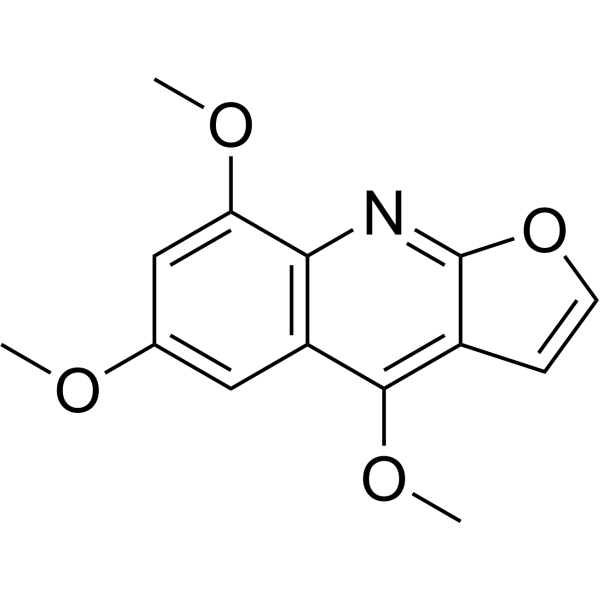
Maculosidin
CAS No. 522-19-0
Maculosidin( —— )
Catalog No. M31852 CAS No. 522-19-0
Maculosidine affect the PS I electron acceptors on leaf discs, it can inhibit ATP synthesis, basal, phosphorylating and uncoupled electron transport acting as Hill reaction inhibitors on spinach chloroplasts.
Purity : >98% (HPLC)
 COA
Datasheet
HNMR
HPLC
MSDS
Handing Instructions
COA
Datasheet
HNMR
HPLC
MSDS
Handing Instructions
| Size | Price / USD | Stock | Quantity |
| 5MG | 810 | In Stock |


|
| 50MG | Get Quote | In Stock |
|
| 100MG | Get Quote | In Stock |
|
| 200MG | Get Quote | In Stock |
|
| 500MG | Get Quote | In Stock |
|
| 1G | Get Quote | In Stock |
|
Biological Information
-
Product NameMaculosidin
-
NoteResearch use only, not for human use.
-
Brief DescriptionMaculosidine affect the PS I electron acceptors on leaf discs, it can inhibit ATP synthesis, basal, phosphorylating and uncoupled electron transport acting as Hill reaction inhibitors on spinach chloroplasts.
-
DescriptionMaculosidine affect the PS I electron acceptors on leaf discs, it can inhibit ATP synthesis, basal, phosphorylating and uncoupled electron transport acting as Hill reaction inhibitors on spinach chloroplasts.
-
In Vitro——
-
In Vivo——
-
Synonyms——
-
PathwayOthers
-
TargetOther Targets
-
Recptor——
-
Research Area——
-
Indication——
Chemical Information
-
CAS Number522-19-0
-
Formula Weight259.3
-
Molecular FormulaC14H13NO4
-
Purity>98% (HPLC)
-
Solubility——
-
SMILES——
-
Chemical Name——
Shipping & Storage Information
-
Storage(-20℃)
-
ShippingWith Ice Pack
-
Stability≥ 2 years
Reference
molnova catalog



related products
-
2-(1H-indol-1-yl)ace...
2-(1H-indol-1-yl)acetic acid
-
Palomid 529
Palomid 529 has been used in trials studying the treatment of Age-Related Macular Degeneration.
-
25-Methoxyginsenosid...
2977279-15-3
