


 Cart
Cart
 sales@molnova.com


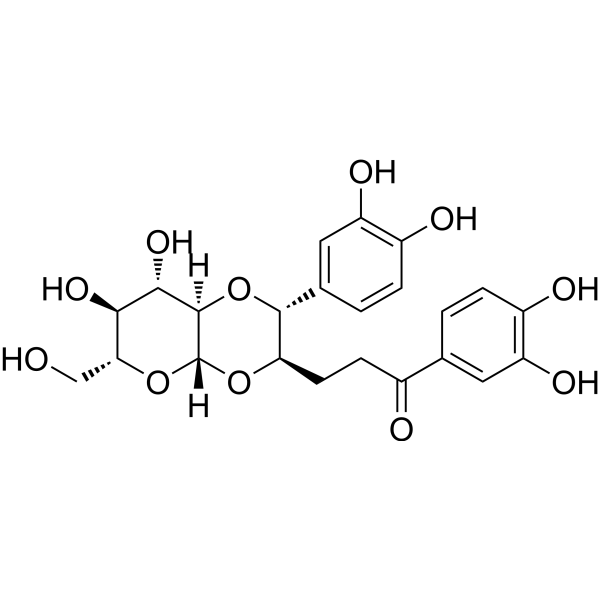
Pilosidine
CAS No. 229971-57-7
Pilosidine( —— )
Catalog No. M31831 CAS No. 229971-57-7
Pilosidine has vasoconstrictor activity, it showed facilitating effect on adrenaline evoked contractions in rabbit aorta isolated preparations.
Purity : >98% (HPLC)
 COA
Datasheet
HNMR
HPLC
MSDS
Handing Instructions
COA
Datasheet
HNMR
HPLC
MSDS
Handing Instructions
| Size | Price / USD | Stock | Quantity |
| 5MG | 810 | In Stock |


|
| 50MG | Get Quote | In Stock |
|
| 100MG | Get Quote | In Stock |
|
| 200MG | Get Quote | In Stock |
|
| 500MG | Get Quote | In Stock |
|
| 1G | Get Quote | In Stock |
|
Biological Information
-
Product NamePilosidine
-
NoteResearch use only, not for human use.
-
Brief DescriptionPilosidine has vasoconstrictor activity, it showed facilitating effect on adrenaline evoked contractions in rabbit aorta isolated preparations.
-
DescriptionPilosidine has vasoconstrictor activity, it showed facilitating effect on adrenaline evoked contractions in rabbit aorta isolated preparations.
-
In Vitro——
-
In Vivo——
-
Synonyms——
-
PathwayOthers
-
TargetOther Targets
-
Recptor——
-
Research Area——
-
Indication——
Chemical Information
-
CAS Number229971-57-7
-
Formula Weight478.5
-
Molecular FormulaC23H26O11
-
Purity>98% (HPLC)
-
Solubility——
-
SMILES——
-
Chemical Name——
Shipping & Storage Information
-
Storage(-20℃)
-
ShippingWith Ice Pack
-
Stability≥ 2 years
Reference
molnova catalog



related products
-
SAR348830
SAR348830 is novel potent and selective inhibitor of anaplastic lymphoma kinase (ALK).
-
Meranzin
Meranzin is an absorbed bioactive compound from the Traditional Chinese Medicine (TCM) Chaihu-Shugan-San (CSS).?
-
Levothyroxine sodium
Levothyroxine, the major hormone derived from the thyroid gland, is the agonist of Thyroid hormone receptor alpha and beta.evothyroxine (L-T(4))can upregulate the expression of P-gp mRNA and protein in LS180 cells, but only L-T(4) and L-T(3) can produce the same effect in Caco-2 cells, which are relatively lacking in PXR.
