


 Cart
Cart
 sales@molnova.com


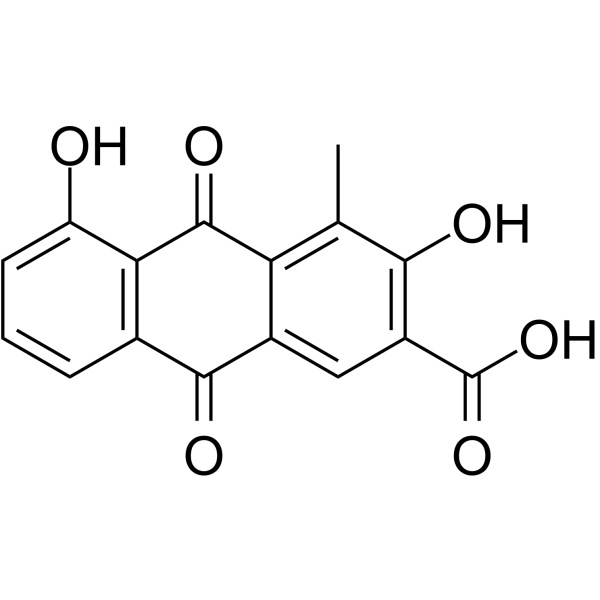
1-Methyl-2,8-dihydroxy-3-carboxy-9,10-anthraquinone
CAS No. 1401414-53-6
1-Methyl-2,8-dihydroxy-3-carboxy-9,10-anthraquinone( —— )
Catalog No. M31819 CAS No. 1401414-53-6
1-Methyl-2,8-dihydroxy-3-carboxy-9,10-anthraquinone is a natural product for research related to life sciences.
Purity : >98% (HPLC)
 COA
Datasheet
HNMR
HPLC
MSDS
Handing Instructions
COA
Datasheet
HNMR
HPLC
MSDS
Handing Instructions
| Size | Price / USD | Stock | Quantity |
| 5MG | 666 | In Stock |


|
| 50MG | Get Quote | In Stock |
|
| 100MG | Get Quote | In Stock |
|
| 200MG | Get Quote | In Stock |
|
| 500MG | Get Quote | In Stock |
|
| 1G | Get Quote | In Stock |
|
Biological Information
-
Product Name1-Methyl-2,8-dihydroxy-3-carboxy-9,10-anthraquinone
-
NoteResearch use only, not for human use.
-
Brief Description1-Methyl-2,8-dihydroxy-3-carboxy-9,10-anthraquinone is a natural product for research related to life sciences.
-
Description1-Methyl-2,8-dihydroxy-3-carboxy-9,10-anthraquinone is a natural product for research related to life sciences.
-
In Vitro——
-
In Vivo——
-
Synonyms——
-
PathwayOthers
-
TargetOther Targets
-
Recptor——
-
Research Area——
-
Indication——
Chemical Information
-
CAS Number1401414-53-6
-
Formula Weight298.3
-
Molecular FormulaC16H10O6
-
Purity>98% (HPLC)
-
Solubility——
-
SMILES——
-
Chemical Name——
Shipping & Storage Information
-
Storage(-20℃)
-
ShippingWith Ice Pack
-
Stability≥ 2 years
Reference
molnova catalog



related products
-
(3S)-3,7-dimethyloct...
(3S)-3,7-dimethyloctan-1-ol ((S)-3,7-dimethyl-1-octanol) can be used to synthesize liquid crystal compounds and nanoparticles.
-
Ganglioside GM1
Ganglioside GM1 is one of the major sphingolipids (GSLs) on the cell surface of the central nervous system (CNS), which is protective of the CNS and is used in the study of neurological disorders.
-
Benzoylpaeoniflorin
Benzoylpaeoniflorin is active against cyclooxygenase-1 and cyclooxygenase-2 enzymes.
