


 Cart
Cart
 sales@molnova.com


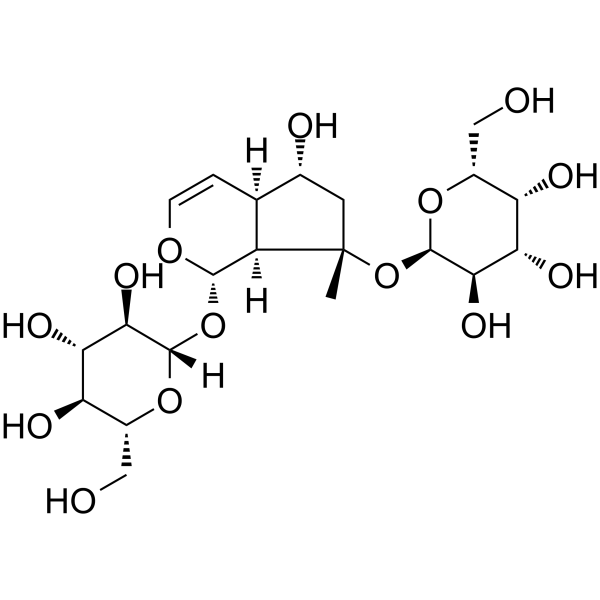
Rehmannioside C
CAS No. 81720-07-2
Rehmannioside C( —— )
Catalog No. M31696 CAS No. 81720-07-2
Rehmannioside C is an iridoid glucoside. Rehmannioside C has been isolated from Radix Rehmanniae Praeparata.
Purity : >98% (HPLC)
 COA
Datasheet
HNMR
HPLC
MSDS
Handing Instructions
COA
Datasheet
HNMR
HPLC
MSDS
Handing Instructions
| Size | Price / USD | Stock | Quantity |
| 5MG | 421 | In Stock |


|
| 50MG | Get Quote | In Stock |
|
| 100MG | Get Quote | In Stock |
|
| 200MG | Get Quote | In Stock |
|
| 500MG | Get Quote | In Stock |
|
| 1G | Get Quote | In Stock |
|
Biological Information
-
Product NameRehmannioside C
-
NoteResearch use only, not for human use.
-
Brief DescriptionRehmannioside C is an iridoid glucoside. Rehmannioside C has been isolated from Radix Rehmanniae Praeparata.
-
DescriptionRehmannioside C is an iridoid glucoside. Rehmannioside C has been isolated from Radix Rehmanniae Praeparata.
-
In Vitro——
-
In Vivo——
-
Synonyms——
-
PathwayOthers
-
TargetOther Targets
-
Recptor——
-
Research Area——
-
Indication——
Chemical Information
-
CAS Number81720-07-2
-
Formula Weight510.49
-
Molecular FormulaC21H34O14
-
Purity>98% (HPLC)
-
SolubilityIn Vitro:?DMSO : 100 mg/mL (195.89 mM)
-
SMILES——
-
Chemical Name——
Shipping & Storage Information
-
Storage(-20℃)
-
ShippingWith Ice Pack
-
Stability≥ 2 years
Reference
molnova catalog



related products
-
Glucoraphenin
The seeds of Raphanus sativus L.
-
Amcasertib
A small-molecule inhibitor that inhibits Nanog and other CSC (cancer stem cells) pathways by targeting kinases.
-
(S)-armepavine
(+)-Armepavine is a bioactive compound with pharmacological activity. As an alkaloid, (+)-Armepavine belongs to the tetrahydrobenzylisoquinoline class of compounds and may play a role in inhibiting certain diseases. The chemical structure and properties of (+)-Armepavine make it an important chemical classification in phytochemistry.
