


 Cart
Cart
 sales@molnova.com


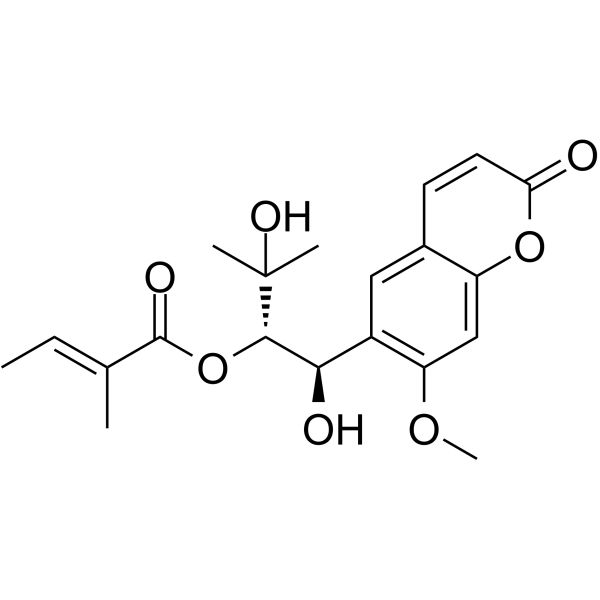
Angelol B
CAS No. 83156-04-1
Angelol B( —— )
Catalog No. M31677 CAS No. 83156-04-1
The absorption and transport of angelol A and Angelol B are passive diffusion as the dominating process in Caco-2 cell monolayer model.
Purity : >98% (HPLC)
 COA
Datasheet
HNMR
HPLC
MSDS
Handing Instructions
COA
Datasheet
HNMR
HPLC
MSDS
Handing Instructions
| Size | Price / USD | Stock | Quantity |
| 10MG | 164 | In Stock |


|
| 50MG | Get Quote | In Stock |
|
| 100MG | Get Quote | In Stock |
|
| 200MG | Get Quote | In Stock |
|
| 500MG | Get Quote | In Stock |
|
| 1G | Get Quote | In Stock |
|
Biological Information
-
Product NameAngelol B
-
NoteResearch use only, not for human use.
-
Brief DescriptionThe absorption and transport of angelol A and Angelol B are passive diffusion as the dominating process in Caco-2 cell monolayer model.
-
DescriptionThe absorption and transport of angelol A and Angelol B are passive diffusion as the dominating process in Caco-2 cell monolayer model.
-
In Vitro——
-
In Vivo——
-
Synonyms——
-
PathwayOthers
-
TargetOther Targets
-
Recptor——
-
Research Area——
-
Indication——
Chemical Information
-
CAS Number83156-04-1
-
Formula Weight376.4
-
Molecular FormulaC20H24O7
-
Purity>98% (HPLC)
-
Solubility——
-
SMILES——
-
Chemical Name——
Shipping & Storage Information
-
Storage(-20℃)
-
ShippingWith Ice Pack
-
Stability≥ 2 years
Reference
molnova catalog



related products
-
Boc-NH-C4-acid
Boc-NH-C4-acid is a PROTAC linker, which belongs to an Alkyl/ether linker.
-
N-Formylglycine
N-Formylglycine is a simple dipeptide and a post-translationally generated residue with unique catalytic capabilities and biotechnology applications.
-
Aquaporin-2 (254-267...
Aquaporin-2 (254-267), human
