


 Cart
Cart
 sales@molnova.com


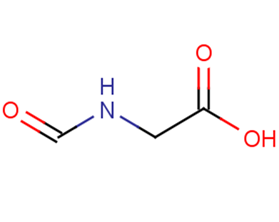
N-Formylglycine
CAS No. 2491-15-8
N-Formylglycine( —— )
Catalog No. M19686 CAS No. 2491-15-8
N-Formylglycine is a simple dipeptide and a post-translationally generated residue with unique catalytic capabilities and biotechnology applications.
Purity : >98% (HPLC)
 COA
Datasheet
HNMR
HPLC
MSDS
Handing Instructions
COA
Datasheet
HNMR
HPLC
MSDS
Handing Instructions
| Size | Price / USD | Stock | Quantity |
| 1 mL x 10 mM in DMSO | 28 | In Stock |


|
| 100MG | Get Quote | In Stock |
|
| 200MG | Get Quote | In Stock |
|
| 500MG | 36 | In Stock |
|
| 1G | 51 | In Stock |
|
Biological Information
-
Product NameN-Formylglycine
-
NoteResearch use only, not for human use.
-
Brief DescriptionN-Formylglycine is a simple dipeptide and a post-translationally generated residue with unique catalytic capabilities and biotechnology applications.
-
DescriptionN-Formylglycine is a simple dipeptide and a post-translationally generated residue with unique catalytic capabilities and biotechnology applications.
-
In Vitro——
-
In Vivo——
-
Synonyms——
-
PathwayOthers
-
TargetOther Targets
-
RecptorOthers
-
Research Area——
-
Indication——
Chemical Information
-
CAS Number2491-15-8
-
Formula Weight103.08
-
Molecular FormulaC3H5NO3
-
Purity>98% (HPLC)
-
SolubilityDMSO:10 mM
-
SMILESOC(=O)CNC=O
-
Chemical Name——
Shipping & Storage Information
-
Storage(-20℃)
-
ShippingWith Ice Pack
-
Stability≥ 2 years
Reference
1.Appel MJ et al. Formylglycine a post-translationally generated residue with unique catalytic capabilities and biotechnology applications. ACS Chem Biol. 2015 Jan 16;10(1):72-84.
molnova catalog



related products
-
4-Chloroquinolin-8-o...
4-Chloroquinolin-8-ol is a building block.
-
Z-Ala-Ala-Leu-pNA
Z-Ala-Ala-Leu-pNA
-
Pentagastrin
pentagastrin is a synthetic polypeptide that has effects like gastrin when given parenterally, which can cause the secretion and synthesis of salivary proteins.
