


 Cart
Cart
 sales@molnova.com


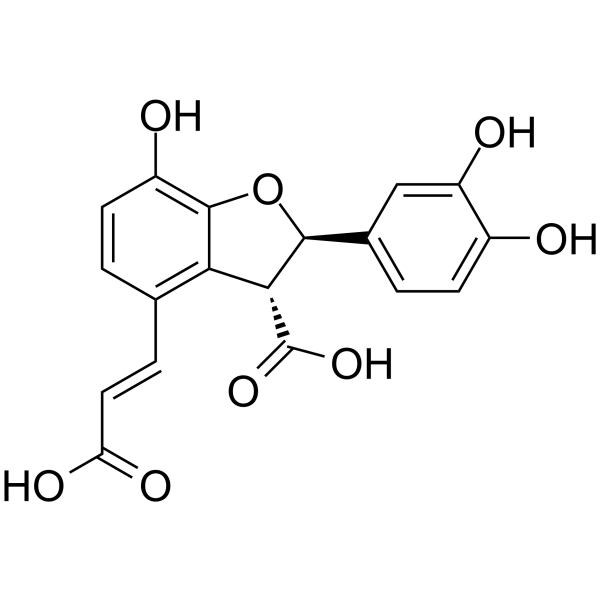
Przewalskinic acid A
CAS No. 136112-75-9
Przewalskinic acid A( —— )
Catalog No. M31445 CAS No. 136112-75-9
Przewalskinic acid A is a rare, water-soluble, and highly biologically active ingredient found, thus far, only in the Salvia przewalskii Maxim herb.
Purity : >98% (HPLC)
 COA
Datasheet
HNMR
HPLC
MSDS
Handing Instructions
COA
Datasheet
HNMR
HPLC
MSDS
Handing Instructions
| Size | Price / USD | Stock | Quantity |
| 5MG | 640 | In Stock |


|
| 50MG | Get Quote | In Stock |
|
| 100MG | Get Quote | In Stock |
|
| 200MG | Get Quote | In Stock |
|
| 500MG | Get Quote | In Stock |
|
| 1G | Get Quote | In Stock |
|
Biological Information
-
Product NamePrzewalskinic acid A
-
NoteResearch use only, not for human use.
-
Brief DescriptionPrzewalskinic acid A is a rare, water-soluble, and highly biologically active ingredient found, thus far, only in the Salvia przewalskii Maxim herb.
-
DescriptionPrzewalskinic acid A is a rare, water-soluble, and highly biologically active ingredient found, thus far, only in the Salvia przewalskii Maxim herb.
-
In Vitro——
-
In Vivo——
-
Synonyms——
-
PathwayOthers
-
TargetOther Targets
-
Recptor——
-
Research Area——
-
Indication——
Chemical Information
-
CAS Number136112-75-9
-
Formula Weight358.3
-
Molecular FormulaC18H14O8
-
Purity>98% (HPLC)
-
SolubilityIn Vitro:?DMSO : 100 mg/mL (279.10 mM)
-
SMILES——
-
Chemical Name——
Shipping & Storage Information
-
Storage(-20℃)
-
ShippingWith Ice Pack
-
Stability≥ 2 years
Reference
molnova catalog



related products
-
Randaiol
Randaiol is a natural product from Magnolia hypoleuca.
-
Fmoc-Gly-Thr(psi(Me,...
Fmoc-Gly-Thr(psi(Me,Me)pro)-OH is a dipeptide.
-
3-Epiursolic acid
3-Epiursolic acid may have antiinflammatory activity, it shows inhibition on Cathepsins L (catL), the IC50 value of 6.5 μM, cathepsins L (catL) and B play an important role in tumor progression and have been considered promising therapeutic targets in the development of novel anticancer agents.
