


 Cart
Cart
 sales@molnova.com


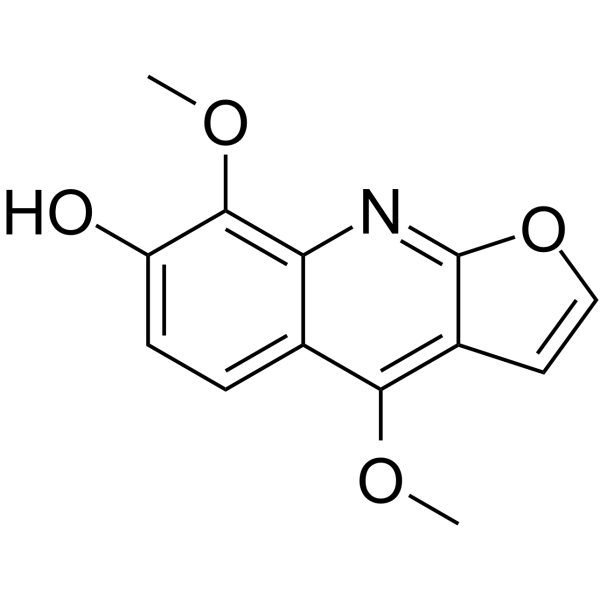
Haplopine
CAS No. 5876-17-5
Haplopine( —— )
Catalog No. M31361 CAS No. 5876-17-5
Haplopine shows photo-activated antimicrobial activity against S. aureus. It exhibits potent melanogenesis-inhibitory activities with almost no toxicity to the cells.
Purity : >98% (HPLC)
 COA
Datasheet
HNMR
HPLC
MSDS
Handing Instructions
COA
Datasheet
HNMR
HPLC
MSDS
Handing Instructions
| Size | Price / USD | Stock | Quantity |
| 5MG | 873 | In Stock |


|
| 50MG | Get Quote | In Stock |
|
| 100MG | Get Quote | In Stock |
|
| 200MG | Get Quote | In Stock |
|
| 500MG | Get Quote | In Stock |
|
| 1G | Get Quote | In Stock |
|
Biological Information
-
Product NameHaplopine
-
NoteResearch use only, not for human use.
-
Brief DescriptionHaplopine shows photo-activated antimicrobial activity against S. aureus. It exhibits potent melanogenesis-inhibitory activities with almost no toxicity to the cells.
-
DescriptionHaplopine shows photo-activated antimicrobial activity against S. aureus. It exhibits potent melanogenesis-inhibitory activities with almost no toxicity to the cells.
-
In Vitro——
-
In Vivo——
-
Synonyms——
-
PathwayOthers
-
TargetOther Targets
-
Recptor——
-
Research Area——
-
Indication——
Chemical Information
-
CAS Number5876-17-5
-
Formula Weight245.2
-
Molecular FormulaC13H11NO4
-
Purity>98% (HPLC)
-
Solubility——
-
SMILES——
-
Chemical Name——
Shipping & Storage Information
-
Storage(-20℃)
-
ShippingWith Ice Pack
-
Stability≥ 2 years
Reference
molnova catalog



related products
-
[Sar1, Ile8]-Angiote...
[Sar1, Ile8]-Angiotensin II is a peptide that has multiple effects on vascular smooth muscle, including contraction of normal arteries and hypertrophy or hyperplasia of cultured cells or diseased vessels. The biological activities of angiotensin II antagonists upon basal and angiotensin II-stimulated aldosterone production were evaluated in an isolated canine glomerulosa cell preparation.
-
2-broMobenzene-1,3,5...
2-broMobenzene-1,3,5-triol is a marine derived natural products found in Rhabdonia verticillata.
-
trans-2,3,4-Trimetho...
trans-2,3,4-Trimethoxycinnamic acid is a natural product for research related to life sciences.
