


 Cart
Cart
 sales@molnova.com


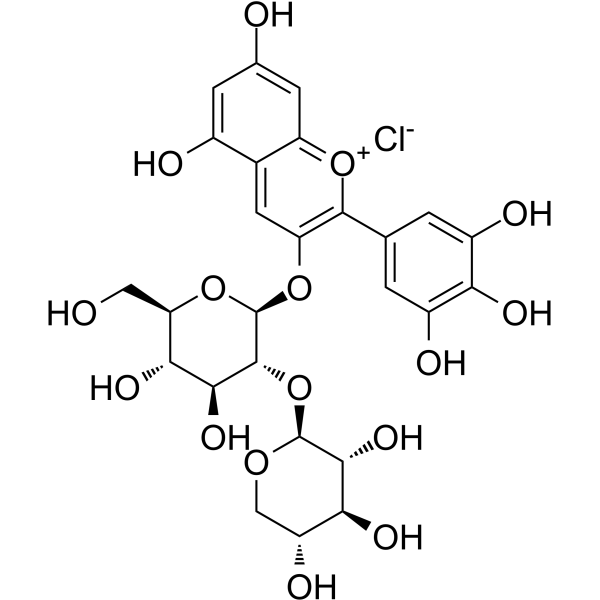
Delphinidin-3-sambubioside chloride
CAS No. 53158-73-9
Delphinidin-3-sambubioside chloride( —— )
Catalog No. M31225 CAS No. 53158-73-9
Delphinidin-3-sambubioside chloride has antioxidant activity.
Purity : >98% (HPLC)
 COA
Datasheet
HNMR
HPLC
MSDS
Handing Instructions
COA
Datasheet
HNMR
HPLC
MSDS
Handing Instructions
| Size | Price / USD | Stock | Quantity |
| 5MG | 550 | In Stock |


|
| 50MG | Get Quote | In Stock |
|
| 100MG | Get Quote | In Stock |
|
| 200MG | Get Quote | In Stock |
|
| 500MG | Get Quote | In Stock |
|
| 1G | Get Quote | In Stock |
|
Biological Information
-
Product NameDelphinidin-3-sambubioside chloride
-
NoteResearch use only, not for human use.
-
Brief DescriptionDelphinidin-3-sambubioside chloride has antioxidant activity.
-
DescriptionDelphinidin-3-sambubioside chloride has antioxidant activity.
-
In VitroDelphinidin-3-sambubioside chloride (50-200 μM, 30 min) inhibits LPS-induced iNOS expression in RAW264.7 cells.Delphinidin-3-sambubioside chloride (50-200 μM, 30 min) suppresses the phosphorylation of ERK1/2 and MEK1/2 in RAW264.7 cells.Delphinidin-3-sambubioside chloride (50-200 μM, 30 min) downregulates NF-κB signaling pathway in RAW264.7 cells.Delphinidin-3-sambubioside chloride (24 h) inhibits HL-60 cells proliferation by inducing apoptosis, with an IC50 of 75 μM.Delphinidin-3-sambubioside chloride (100-200 μg/mL, 24 h) decreases intracellular TG levels and lipid accumulation in oleic acid-treated HepG2 cells. Western Blot Analysis Cell Line:RAW264.7 cells Concentration:50, 100, 200 μM Incubation Time:30 min Result:Suppressed the degradation of IκB, and the phosphorylation of p65.
-
In VivoDelphinidin-3-sambubioside chloride (15 μmol/kg, i.p.) inhibits mouse paw edema induced by LPS.Delphinidin-3-sambubioside chloride (30 mg/kg body, oral gavage, daily for eight weeks) decreases lipid accumulation in HFD rats. Animal Model:Delphinidin-3-sambubioside chloride (15 μmol/kg, i.p.) .Dosage:15 μmol/kg Administration:Intraperitoneal injection (i.p.), for 4 days.Result:Reduced the LPS-induced paw thickness. Decreased the edema by 89.3%.Decreased the levels of LPS induced serum IL-6, MCP-1 and TNF-α.Animal Model:HFD-fed rats Dosage:30 mg/kg Administration:Oral gavage, daily for eight weeks.Result:Reduced the body weight gain, visceral fat, and abdominal fat and decreased hepatic lipid deposits.
-
Synonyms——
-
PathwayOthers
-
TargetOther Targets
-
Recptor——
-
Research Area——
-
Indication——
Chemical Information
-
CAS Number53158-73-9
-
Formula Weight633
-
Molecular FormulaC26H29O16Cl
-
Purity>98% (HPLC)
-
Solubility——
-
SMILES——
-
Chemical Name——
Shipping & Storage Information
-
Storage(-20℃)
-
ShippingWith Ice Pack
-
Stability≥ 2 years
Reference
molnova catalog



related products
-
HBVpol655, HBV polym...
HBVpol655, HBV polymerase (655 - 663)
-
Halofuginone hydrobr...
Halofuginone specifically inhibits collagen type I gene expression and matrix metalloproteinase 2 (MMP-2) gene expression, which may result in the suppression of angiogenesis, tumor stromal cell development, and tumor cell growth.
-
Benzoin
The main uses of benzoin are as a precursor to?benzil, which is a?photoinitiator.
