


 Cart
Cart
 sales@molnova.com


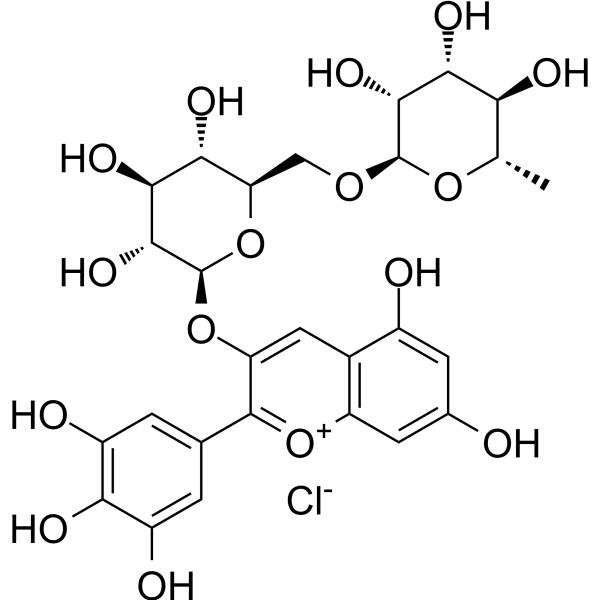
Delphinidin-3-O-rutinoside chloride
CAS No. 15674-58-5
Delphinidin-3-O-rutinoside chloride( —— )
Catalog No. M31220 CAS No. 15674-58-5
Delphinidin-3-O-rutinoside chloride has antioxidant activity.
Purity : >98% (HPLC)
 COA
Datasheet
HNMR
HPLC
MSDS
Handing Instructions
COA
Datasheet
HNMR
HPLC
MSDS
Handing Instructions
| Size | Price / USD | Stock | Quantity |
| 5MG | 267 | In Stock |


|
| 50MG | Get Quote | In Stock |
|
| 100MG | Get Quote | In Stock |
|
| 200MG | Get Quote | In Stock |
|
| 500MG | Get Quote | In Stock |
|
| 1G | Get Quote | In Stock |
|
Biological Information
-
Product NameDelphinidin-3-O-rutinoside chloride
-
NoteResearch use only, not for human use.
-
Brief DescriptionDelphinidin-3-O-rutinoside chloride has antioxidant activity.
-
DescriptionDelphinidin-3-O-rutinoside chloride has antioxidant activity.
-
In Vitro——
-
In Vivo——
-
Synonyms——
-
PathwayOthers
-
TargetOther Targets
-
Recptor——
-
Research Area——
-
Indication——
Chemical Information
-
CAS Number15674-58-5
-
Formula Weight645
-
Molecular FormulaC27H31O16Cl
-
Purity>98% (HPLC)
-
Solubility——
-
SMILES——
-
Chemical Name——
Shipping & Storage Information
-
Storage(-20℃)
-
ShippingWith Ice Pack
-
Stability≥ 2 years
Reference
molnova catalog



related products
-
12-Diphenylhydrazine
Pharmaceutical industry for the production of antipyretic analgesics bute; dye industry used in the manufacture of benzidine dyes etc.
-
Methyl ganoderenate ...
Methyl ganoderenate F
-
Kisspeptin-10, rat
Endogenous ligand for the rodent kisspeptin receptor (KISS1, GPR54).
