


 Cart
Cart
 sales@molnova.com


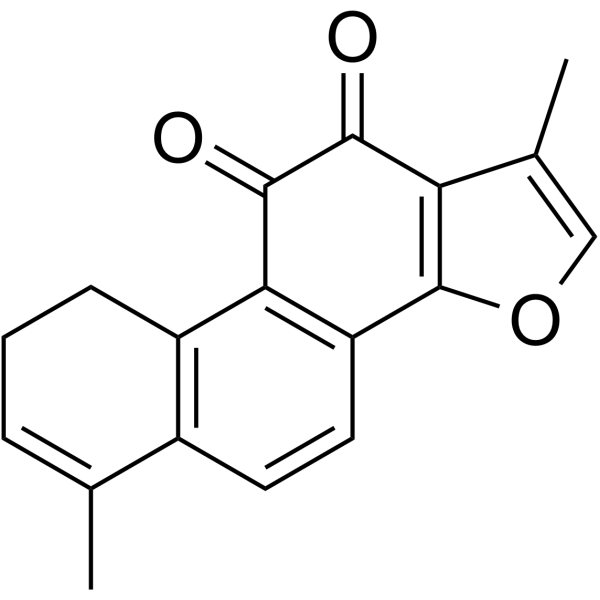
1,2-Dihydrotanshinquinone
CAS No. 77769-21-2
1,2-Dihydrotanshinquinone( —— )
Catalog No. M31150 CAS No. 77769-21-2
1,2 Dihydrotanshinquinone is active against both Trypanosoma brucei rhodesiense and Plasmodium falciparum.
Purity : >98% (HPLC)
 COA
Datasheet
HNMR
HPLC
MSDS
Handing Instructions
COA
Datasheet
HNMR
HPLC
MSDS
Handing Instructions
| Size | Price / USD | Stock | Quantity |
| 5MG | 783 | In Stock |


|
| 50MG | Get Quote | In Stock |
|
| 100MG | Get Quote | In Stock |
|
| 200MG | Get Quote | In Stock |
|
| 500MG | Get Quote | In Stock |
|
| 1G | Get Quote | In Stock |
|
Biological Information
-
Product Name1,2-Dihydrotanshinquinone
-
NoteResearch use only, not for human use.
-
Brief Description1,2 Dihydrotanshinquinone is active against both Trypanosoma brucei rhodesiense and Plasmodium falciparum.
-
Description1,2 Dihydrotanshinquinone is active against both Trypanosoma brucei rhodesiense and Plasmodium falciparum.
-
In Vitro1,2-Dihydrotanshinone inhibits the formation of the pathogenic complex formed between (CUG)n-RNA and the splicing-factor muscleblind-like 1 (MBNL1) (≥50% inhibition at 100 μg/mL).
-
In Vivo——
-
Synonyms——
-
PathwayOthers
-
TargetOther Targets
-
Recptor——
-
Research Area——
-
Indication——
Chemical Information
-
CAS Number77769-21-2
-
Formula Weight278.3
-
Molecular FormulaC18H14O3
-
Purity>98% (HPLC)
-
Solubility——
-
SMILES——
-
Chemical Name——
Shipping & Storage Information
-
Storage(-20℃)
-
ShippingWith Ice Pack
-
Stability≥ 2 years
Reference
molnova catalog



related products
-
Fantofarone
Fantofarone is a highly potent Calcium Channel antagonist.
-
Ethylparaben
Ethylparaben is the ethyl ester of p-hydroxybenzoic acid, used as an antifungal preservative.
-
Moxnidazole
Moxnidazole, a 5-nitroimidazole, is mutagenic in microbial assays and in Drosophila, inducing genetic alterations in mouse somatic cells.
