


 Cart
Cart
 sales@molnova.com


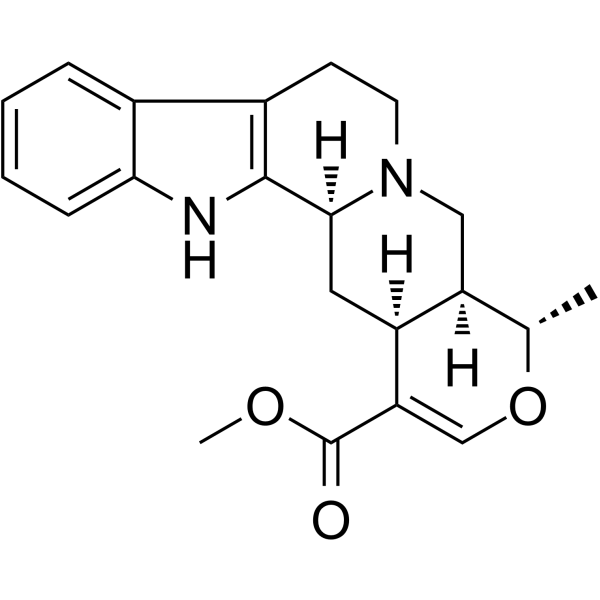
Tetrahydroalstonine
CAS No. 6474-90-4
Tetrahydroalstonine( —— )
Catalog No. M31034 CAS No. 6474-90-4
Tetrahydroalstonine is an indole alkaloid extracted from the fruit of Rhazya stricta and is a selective α2-adrenoceptor antagonist. tetrahydroalstonine has shown antipsychotic activity in Rauwolfia tetraphylla.
Purity : >98% (HPLC)
 COA
Datasheet
HNMR
HPLC
MSDS
Handing Instructions
COA
Datasheet
HNMR
HPLC
MSDS
Handing Instructions
| Size | Price / USD | Stock | Quantity |
| 5MG | 512 | In Stock |


|
| 50MG | Get Quote | In Stock |
|
| 100MG | Get Quote | In Stock |
|
| 200MG | Get Quote | In Stock |
|
| 500MG | Get Quote | In Stock |
|
| 1G | Get Quote | In Stock |
|
Biological Information
-
Product NameTetrahydroalstonine
-
NoteResearch use only, not for human use.
-
Brief DescriptionTetrahydroalstonine is an indole alkaloid extracted from the fruit of Rhazya stricta and is a selective α2-adrenoceptor antagonist. tetrahydroalstonine has shown antipsychotic activity in Rauwolfia tetraphylla.
-
DescriptionTetrahydroalstonine is an indole alkaloid extracted from the fruit of Rhazya stricta and is a selective α2-adrenoceptor antagonist. tetrahydroalstonine has shown antipsychotic activity in Rauwolfia tetraphylla.
-
In Vitro——
-
In Vivo——
-
Synonyms——
-
PathwayOthers
-
TargetOther Targets
-
Recptor——
-
Research Area——
-
Indication——
Chemical Information
-
CAS Number6474-90-4
-
Formula Weight352.4
-
Molecular FormulaC21H24N2O3
-
Purity>98% (HPLC)
-
SolubilityIn Vitro:?DMSO : 100 mg/mL (283.74 mM)
-
SMILES——
-
Chemical Name——
Shipping & Storage Information
-
Storage(-20℃)
-
ShippingWith Ice Pack
-
Stability≥ 2 years
Reference
molnova catalog



related products
-
Palmitone
16-Hentriacontanone (Pentadecyl ketone) is a natural product.
-
1-Methylnicotinamide...
Niacin metabolite excreted via the urinary system.
-
Isomaltotetraose
Isomaltotetraose (CI4) is a chained oligomeric isomaltose (IMO) present in syrups that induces dextranase synthesis.
