


 Cart
Cart
 sales@molnova.com


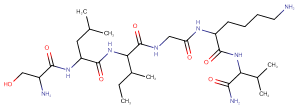
Protease-Activated Receptor-2, amide
CAS No. 190383-13-2
Protease-Activated Receptor-2, amide( —— )
Catalog No. M30034 CAS No. 190383-13-2
Protease-Activated Receptor-2, amide (SLIGKV-NH2) is a highly potent protease-activated receptor-2 (PAR2) activating peptide.
Purity : >98% (HPLC)
 COA
Datasheet
HNMR
HPLC
MSDS
Handing Instructions
COA
Datasheet
HNMR
HPLC
MSDS
Handing Instructions
| Size | Price / USD | Stock | Quantity |
| 2MG | 46 | In Stock |


|
| 5MG | 67 | In Stock |
|
| 10MG | 112 | In Stock |
|
| 25MG | 191 | In Stock |
|
| 50MG | 281 | In Stock |
|
| 100MG | 421 | In Stock |
|
| 200MG | Get Quote | In Stock |
|
| 500MG | Get Quote | In Stock |
|
| 1G | Get Quote | In Stock |
|
Biological Information
-
Product NameProtease-Activated Receptor-2, amide
-
NoteResearch use only, not for human use.
-
Brief DescriptionProtease-Activated Receptor-2, amide (SLIGKV-NH2) is a highly potent protease-activated receptor-2 (PAR2) activating peptide.
-
DescriptionProtease-Activated Receptor-2, amide (SLIGKV-NH2) is a highly potent protease-activated receptor-2 (PAR2) activating peptide.(In Vitro):The PAR2-activating peptides used are: SLIGKV-OH, SLIGRL-OH, SLIGKV-NH2, SLIGRL-NH2. The synthetic agonist peptides mimicking the tethered ligand of PAR2, Ser-Leu-Ile-Gly-Lys-Val (SLIGKV-OH), Ser-Leu-Ile-Gly-Arg-Leu (SLIGRL-OH) and their amidated forms Ser-Leu-Ile-Gly-Lys-Val-amide (SLIGKV-NH2) Ser-Leu-Ile-Gly-Arg-Leu-amide (SLIGRL-NH2) have also been demonstrated being able to activate the receptor without enzymatic cleavage, therefore, have been utilised as biological tools to examine physiological functions of PAR2. Protease-Activated Receptor-2, amide is one of a four family subgroup of G-protein-coupled receptors (GPCRs), called PARs. Protease-activated receptors are distinguished from other GPCRs through their unique proteolytic mechanism of activation. For PAR2, activating proteases, such as trypsin, tryptase and coagulation factors VIIa and Xa, cleave a specific extracellular amino-terminal domain of the receptor to reveal a "tethered ligand", SLIGKV- and SLIGRL- for human and mouse/rat PAR2, respectively, which subsequently interacts with the activation domain of the receptor, initiating intracellular signaling pathways. The protease-activated receptor-2 (PAR2) has been implicated in the pathogenesis of several inflammatory and autoimmune disorders, and is expressed in a wide variety of human tissues and cells. PAR2 belongs to a family of seven transmembrane domain receptor proteins that are activated by proteolysis. Enzymatic digestion exposes an N-terminus ligand sequence that binds intramolecularly to the activation site on the extracellular loop II, initiating a G-protein-mediated cell-signalling cascade and nuclear factor-kappa B (NF-κB)-regulated gene transcription.
-
In Vitro——
-
In Vivo——
-
Synonyms——
-
PathwayGPCR/G Protein
-
TargetPAR
-
RecptorPAR2
-
Research Area——
-
Indication——
Chemical Information
-
CAS Number190383-13-2
-
Formula Weight614.78
-
Molecular FormulaC28H54N8O7
-
Purity>98% (HPLC)
-
SolubilityH2O : 33.33 mg/mL (54.21 mM; Need ultrasonic)
-
SMILES——
-
Chemical NameSequence:Ser-Leu-Ile-Gly-Lys-Val-NH2
Shipping & Storage Information
-
Storage(-20℃)
-
ShippingWith Ice Pack
-
Stability≥ 2 years
Reference
Kanke T, et al. Binding of a highly potent protease-activated receptor-2 (PAR2) activating peptide, [3H]2-furoyl-LIGRL-NH2, to human PAR2. Br J Pharmacol. 2005 May;145(2):255-63.
molnova catalog



related products
-
PAR-4 Agonist Peptid...
PAR-4 agonist peptide stimulates thromboxane production by human platelets with the maximal response to this agonist being approximately half of that observed after maximal thrombin stimulation.
-
tcY-NH2
Selective PAR4 antagonist peptide. Inhibits endostatin release and platelet aggregation induced by thrombin.
-
FSLLRY-NH2
Selective PAR2 peptide antagonist. Reverses taxol-induced mechanical allodynia, heat hyperalgesia and PKC activation in ICR mice. Blocks ERK activation and collagen production in isolated cardiac fibroblasts. Also reduces symptoms in a mouse model of dermatophyte-associated itch.
