


 Cart
Cart
 sales@molnova.com


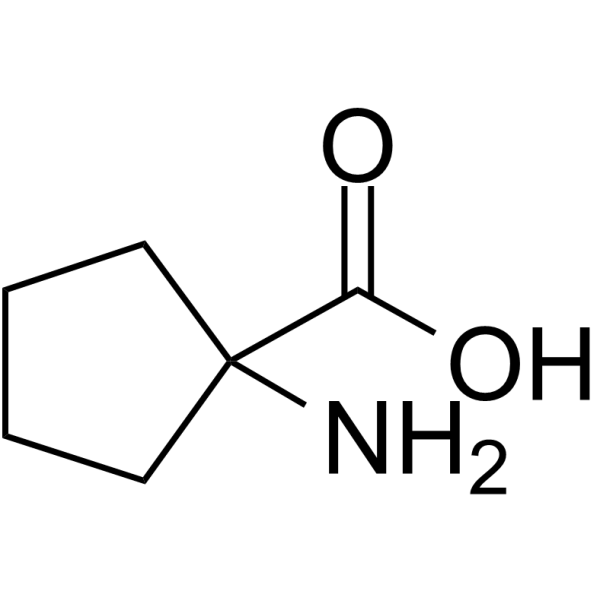
Cycloleucine
CAS No. 52-52-8
Cycloleucine( —— )
Catalog No. M28811 CAS No. 52-52-8
Cycloleucine is an antagonist of NMDA receptor associated glycine receptor with a Ki of 600 μM. Cycloleucine is also a competitive inhibitor of S-adenosyl-methionine mediated methylation with anxiolytic and cytostatic effects.
Purity : >98% (HPLC)
 COA
Datasheet
HNMR
HPLC
MSDS
Handing Instructions
COA
Datasheet
HNMR
HPLC
MSDS
Handing Instructions
| Size | Price / USD | Stock | Quantity |
| 25MG | 37 | In Stock |


|
| 50MG | 51 | In Stock |
|
| 100MG | 74 | In Stock |
|
| 200MG | 110 | In Stock |
|
| 500MG | 183 | In Stock |
|
| 1G | Get Quote | In Stock |
|
Biological Information
-
Product NameCycloleucine
-
NoteResearch use only, not for human use.
-
Brief DescriptionCycloleucine is an antagonist of NMDA receptor associated glycine receptor with a Ki of 600 μM. Cycloleucine is also a competitive inhibitor of S-adenosyl-methionine mediated methylation with anxiolytic and cytostatic effects.
-
DescriptionCycloleucine is an antagonist of NMDA receptor associated glycine receptor with a Ki of 600 μM. Cycloleucine is also a competitive inhibitor of S-adenosyl-methionine mediated methylation with anxiolytic and cytostatic effects.(In Vitro):Cytostatic (10 μg/mL) inhibits the viability of human KB and mouse L1210s leukemia cell lines. Cycloleucine (4-40 mM; 3 h) blocks internal methylation of viral RNA in B77 transformed chick embryo fibroblasts. Cycloleucine (40 mM; 24 h) blocks the formation of both m6A and the penultimate Gm in B77 38S RNA subunits by greater than 90%.(In Vivo):Cycloleucine (0.5, 1.0, 2.0, 4 μg/μL; intracerebroventrically) increases time spent in open arms, open arm entries, and extreme arrivals in rats. In Semliki Forest virus strain A7(74) infected and control mice, Cycloleucine reduces thymus and spleen weights.
-
In VitroCycloleucine (4-40 mM; 3 h) blocks internal methylation of viral RNA in B77 transformed chick embryo fibroblasts.?Cycloleucine (40 mM; 24 h) blocks the formation of both m6A and the penultimate Gm in B77 38S RNA subunits by greater than 90%.?Cytostatic (10 μg/mL) inhibits the viability human KB and mouse L1210s leukemia cell lines.
-
In VivoCycloleucine (0.5-4 μg; intracerebroventrical injection) increases time spent in open arms, open arm entries, and extreme arrivals in rats.Cycloleucine reduces thymus and spleen weights in Semliki Forest virus (SFV) strain A7(74) infected and control mice. Animal Model:Male rats bilaterally cannulated into the nucleus accumbens septi (NAS) Dosage:1 μL of 0.5, 1.0, 2.0, 4 μg/μL Administration:Intracerebroventrical injection Result: Increased time spent in the open arms and extreme arrivals at all doses.Increased open arm entries at the dose of 4 μg.
-
Synonyms——
-
PathwayMembrane Transporter/Ion Channel
-
TargetNMDAR
-
Recptor——
-
Research Area——
-
Indication——
Chemical Information
-
CAS Number52-52-8
-
Formula Weight129.159
-
Molecular FormulaC6H11NO2
-
Purity>98% (HPLC)
-
SolubilityIn Vitro:?H2O : 20 mg/mL (154.85 mM)
-
SMILESNC1(CCCC1)C(O)=O
-
Chemical Name——
Shipping & Storage Information
-
Storage(-20℃)
-
ShippingWith Ice Pack
-
Stability≥ 2 years
Reference
1.Fujii S. Evaluation of hypersensitivity to anthraquinone-related substances. Toxicology. 2003 Dec 1;193(3):261-7.
molnova catalog



related products
-
Sennoside B
Sennoside B is an anthranoid. Anthranoid derivatives are used all over the world as a treatment for constipation.
-
Ibotenic acid
Ibotenic acid has agonist activity at both the NMDA and trans-ACPD or metabotropic quisqualate receptors.
-
Co 101244 hydrochlor...
Co 101244 hydrochloride is an NR2B-containing NMDA receptor antagonist.
