


 Cart
Cart
 sales@molnova.com


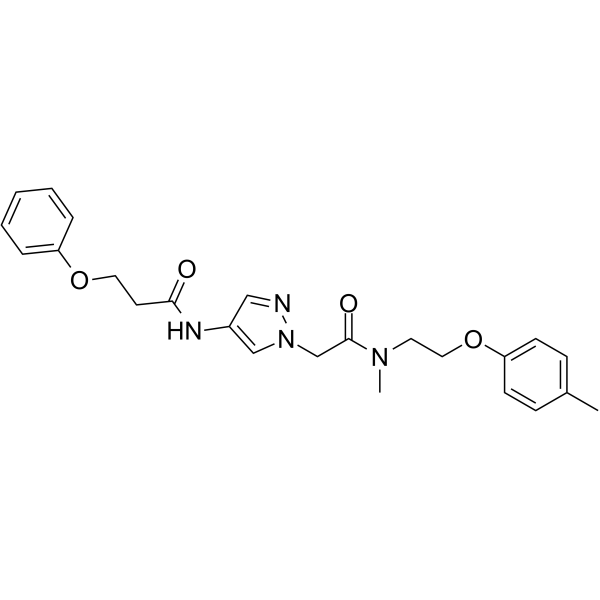
IXA4
CAS No. 1185329-96-7
IXA4( —— )
Catalog No. M28621 CAS No. 1185329-96-7
IXA4 is a highly selective, nontoxic activator of IRE1/XBP1s and reduces APP secretion by activating IRE1. IXA4-stimulated IRE1 activation also enhanced pancreatic function.
Purity : >98% (HPLC)
 COA
Datasheet
HNMR
HPLC
MSDS
Handing Instructions
COA
Datasheet
HNMR
HPLC
MSDS
Handing Instructions
| Size | Price / USD | Stock | Quantity |
| 1 mL x 10 mM in DMSO | 85 | In Stock |


|
| 5MG | 76 | In Stock |
|
| 10MG | 122 | In Stock |
|
| 25MG | 160 | In Stock |
|
| 50MG | 252 | In Stock |
|
| 100MG | 405 | In Stock |
|
| 200MG | Get Quote | In Stock |
|
| 500MG | Get Quote | In Stock |
|
| 1G | Get Quote | In Stock |
|
Biological Information
-
Product NameIXA4
-
NoteResearch use only, not for human use.
-
Brief DescriptionIXA4 is a highly selective, nontoxic activator of IRE1/XBP1s and reduces APP secretion by activating IRE1. IXA4-stimulated IRE1 activation also enhanced pancreatic function.
-
DescriptionIXA4 is a highly selective, nontoxic activator of IRE1/XBP1s and reduces APP secretion by activating IRE1. IXA4-stimulated IRE1 activation also enhanced pancreatic function.(In Vitro):In other cell lines including Huh7 and SHSY5Y cells, IXA4 selectively upregulated XBP1s mRNA relative to genes regulated by ATF6 (eg BiP) or PERK (eg CHOP). IXA4 reduces Aβ levels by 50% in conditioned medium prepared on CHO7PA2 cells expressing the V717F APP (APPV717F) mutant . IXA4 rescues mitochondrial defects in SH-SY5Y cells expressing disease-associated APP mutants. After 4 h of treatment in HEK293T cells, IXA4 promotes adaptive IRE1/XBP1s signaling, but not RIDD . IXA4 also promotes selective transcriptional remodeling of the ER proteostasis pathway relative to the cytoplasmic or mitochondrial pathway.
-
In VitroIXA4 (10 μM; 4 hours) selectively upregulates XBP1s mRNA, relative to genes regulated by ATF6 (e.g., BiP) or PERK (e.g., CHOP), in other cell lines including Huh7 and SHSY5Y cells. IXA4 (10μM; 18 hours) reduces Aβ levels 50% in conditioned media prepared on CHO7PA2 cells expressing the V717F APP (APPV717F) mutant. IXA4 rescues mitochondrial defects in SH-SY5Y cells expressing disease-relevant APP mutants. IXA4 (10μM; 4 hours) promotes adaptive IRE1/XBP1s signaling, but not RIDD, following 4 hrs of treatment in HEK293T cells.IXA4 also promotes selective transcriptional remodeling of ER proteostasis pathways, relative to cytosolic or mitochondrial pathways.
-
In Vivo——
-
Synonyms——
-
PathwayOthers
-
TargetOther Targets
-
RecptorCalcium channel
-
Research Area——
-
Indication——
Chemical Information
-
CAS Number1185329-96-7
-
Formula Weight436.5
-
Molecular FormulaC24H28N4O4
-
Purity>98% (HPLC)
-
SolubilityIn Vitro:?DMSO : 100 mg/mL (229.10 mM)
-
SMILESCc(cc1)ccc1OCCN(C)C(Cn1ncc(NC(CCOc2ccccc2)=O)c1)=O
-
Chemical Name——
Shipping & Storage Information
-
Storage(-20℃)
-
ShippingWith Ice Pack
-
Stability≥ 2 years
Reference
1.TakashiYamamoto, et al. Discovery, structure-activity relationship study, and oral analgesic efficacy of cyproheptadine derivatives possessing N-type calcium channel inhibitory activity. Bioorg Med Chem. 2006 Aug 1;14(15):5333-9.
molnova catalog



related products
-
Homoeriodictyol 7-O-...
Homoeriodictyol 7-O-β-D-glucoside is a natural product from Viscum coloratum(Kom.)Nakai. Homoeriodictyol 7-O-β-D-glucoside is an antagonist of platelet-activating factor (PAF).
-
Synaptobrevin-2 (73-...
Synaptobrevin-2 (73-79) (human, bovine, mouse, rat)
-
Uridine 5'-monophosp...
5'-Uridylic acid. A uracil nucleotide containing one phosphate group esterified to the sugar moiety in the 2' 3' or 5' position. Uridine 5'-monophosphate is a nucleotide that is found in RNA. It is an ester of phosphoric acid with the nucleoside uridine. UMP consists of the phosphate group the pentose sugar ribose and the nucleobase uracil.
