


 Cart
Cart
 sales@molnova.com


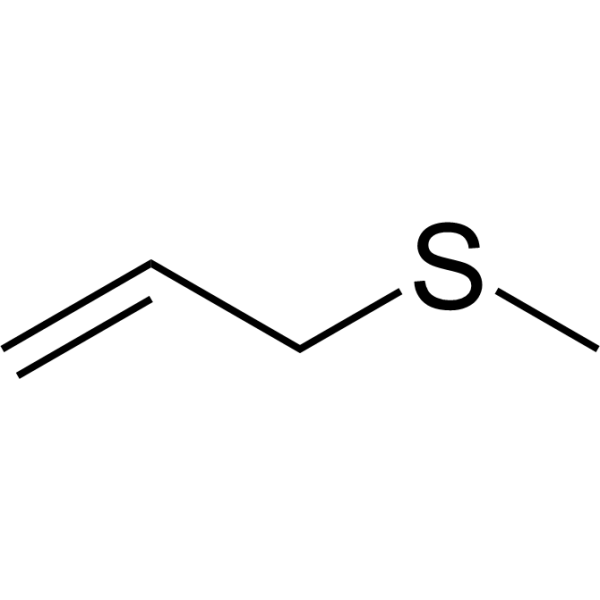
Allyl Methyl Sulfide
CAS No. 10152-76-8
Allyl Methyl Sulfide( —— )
Catalog No. M28472 CAS No. 10152-76-8
Allyl Methyl Sulfide is a bioactive organosulfur compound found in garlic with antibacterial, antioxidant, and anticancer activities.
Purity : >98% (HPLC)
 COA
Datasheet
HNMR
HPLC
MSDS
Handing Instructions
COA
Datasheet
HNMR
HPLC
MSDS
Handing Instructions
| Size | Price / USD | Stock | Quantity |
| 1 mL x 10 mM in DMSO | 28 | In Stock |


|
| 100MG | Get Quote | In Stock |
|
| 200MG | Get Quote | In Stock |
|
| 500MG | 29 | In Stock |
|
| 1G | 41 | In Stock |
|
Biological Information
-
Product NameAllyl Methyl Sulfide
-
NoteResearch use only, not for human use.
-
Brief DescriptionAllyl Methyl Sulfide is a bioactive organosulfur compound found in garlic with antibacterial, antioxidant, and anticancer activities.
-
DescriptionAllyl Methyl Sulfide is a bioactive organosulfur compound found in garlic with antibacterial, antioxidant, and anticancer activities.
-
In Vitro——
-
In Vivo——
-
Synonyms——
-
PathwayProteasome/Ubiquitin
-
TargetEndogenous Metabolite
-
RecptorEndogenous Metabolite
-
Research Area——
-
Indication——
Chemical Information
-
CAS Number10152-76-8
-
Formula Weight88.17
-
Molecular FormulaC4H8S
-
Purity>98% (HPLC)
-
SolubilityIn Vitro:?DMSO : 100 mg/mL (1134.17 mM)
-
SMILESCSCC=C
-
Chemical Name——
Shipping & Storage Information
-
Storage(-20℃)
-
ShippingWith Ice Pack
-
Stability≥ 2 years
Reference
molnova catalog



related products
-
Farnesol
Farnesol is a natural product has the activity in inhibiting bacteria.
-
D-Cysteine
D-Cysteine is the D-isomer of cysteine and a powerful inhibitor of the growth of E. coli.
-
Ercalcidiol
Ercalcidiol is a metabolite of vitamin D2 and can be used in monitoring vitamin D therapy.
