


 Cart
Cart
 sales@molnova.com


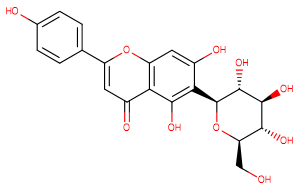
Isovitexin(b)
CAS No. 29702-25-8
Isovitexin(b)( saponaretin | Apigenin-6-C-glucoside )
Catalog No. M21451 CAS No. 29702-25-8
Isovitexin an active component of many traditional Chinese medicines shows various activities such as anti-oxidant anti-inflammatory anti-alzheimer disease (AD) effects and so on.
Purity : >98% (HPLC)
 COA
Datasheet
HNMR
HPLC
MSDS
Handing Instructions
COA
Datasheet
HNMR
HPLC
MSDS
Handing Instructions
| Size | Price / USD | Stock | Quantity |
| 1 mL x 10 mM in DMSO | 86 | In Stock |


|
| 5MG | 77 | In Stock |
|
| 10MG | 111 | In Stock |
|
| 25MG | 182 | In Stock |
|
| 50MG | 263 | In Stock |
|
| 100MG | 389 | In Stock |
|
| 200MG | Get Quote | In Stock |
|
| 500MG | Get Quote | In Stock |
|
| 1G | Get Quote | In Stock |
|
Biological Information
-
Product NameIsovitexin(b)
-
NoteResearch use only, not for human use.
-
Brief DescriptionIsovitexin an active component of many traditional Chinese medicines shows various activities such as anti-oxidant anti-inflammatory anti-alzheimer disease (AD) effects and so on.
-
DescriptionIsovitexin an active component of many traditional Chinese medicines shows various activities such as anti-oxidant anti-inflammatory anti-alzheimer disease (AD) effects and so on.
-
In Vitro——
-
In Vivo——
-
Synonymssaponaretin | Apigenin-6-C-glucoside
-
PathwayOthers
-
TargetAntioxidant
-
RecptorAntioxidant|Apoptosis
-
Research Area——
-
Indication——
Chemical Information
-
CAS Number29702-25-8
-
Formula Weight432.4
-
Molecular FormulaC21H20O10
-
Purity>98% (HPLC)
-
SolubilityDMSO:86 mg/mL (198.89 mM)
-
SMILESC1=CC(=CC=C1C2=CC(=O)C3=C(O2)C=C(C(=C3O)[C@H]4[C@@H]([C@H]([C@@H]([C@H](O4)CO)O)O)O)O)O
-
Chemical Name——
Shipping & Storage Information
-
Storage(-20℃)
-
ShippingWith Ice Pack
-
Stability≥ 2 years
Reference
molnova catalog



related products
-
Ganoderic acid D
Ganoderic acid D is one of the major components in Ganoderma triterpenes.
-
Diformylphloroglucin...
Diformylphloroglucinol (2,4,6-Trihydroxyisophthalaldehyde) is an acyl resorcinol isolated from the leaves of the Eucalyptus nigra tree and is a raw material for the synthesis of resorcinol compounds with antioxidant and antiulcer activity.
-
4-(Ethoxymethyl)phen...
4-(Ethoxymethyl)phenol (p-Hydroxybenzyl Et ether) is a small molecule extracted from Amburana cearensis, exhibiting cytotoxic and antioxidant activities.
