


 Cart
Cart
 sales@molnova.com


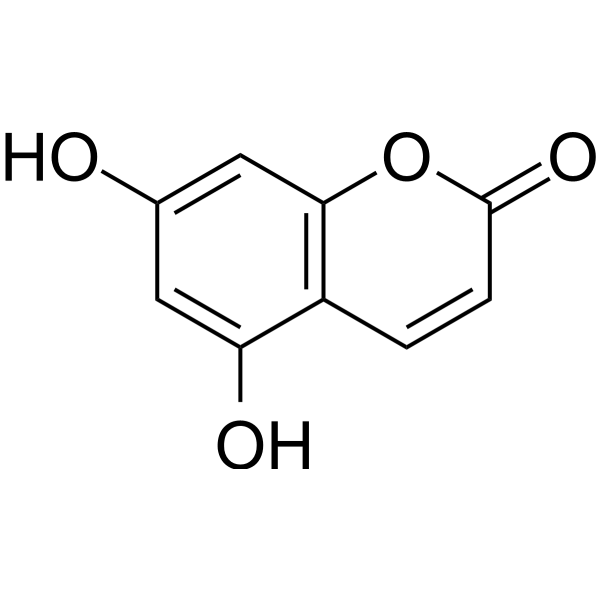
5,7-Dihydroxycoumarin
CAS No. 2732-18-5
5,7-Dihydroxycoumarin( —— )
Catalog No. M28126 CAS No. 2732-18-5
5,7-Dihydroxycoumarin is a natural product isolated from the dichloromethane extract of the inflorescences of Macaranga triloba.
Purity : >98% (HPLC)
 COA
Datasheet
HNMR
HPLC
MSDS
Handing Instructions
COA
Datasheet
HNMR
HPLC
MSDS
Handing Instructions
| Size | Price / USD | Stock | Quantity |
| 1 mL x 10 mM in DMSO | 28 | In Stock |


|
| 100MG | Get Quote | In Stock |
|
| 200MG | 27 | In Stock |
|
| 500MG | Get Quote | In Stock |
|
| 1G | Get Quote | In Stock |
|
Biological Information
-
Product Name5,7-Dihydroxycoumarin
-
NoteResearch use only, not for human use.
-
Brief Description5,7-Dihydroxycoumarin is a natural product isolated from the dichloromethane extract of the inflorescences of Macaranga triloba.
-
Description5,7-Dihydroxycoumarin is a natural product isolated from the dichloromethane extract of the inflorescences of Macaranga triloba.
-
In Vitro——
-
In Vivo——
-
Synonyms——
-
PathwayGPCR/G Protein
-
TargetAntibacterial
-
Recptorestrogen receptor
-
Research Area——
-
Indication——
Chemical Information
-
CAS Number2732-18-5
-
Formula Weight178.143
-
Molecular FormulaC9H6O4
-
Purity>98% (HPLC)
-
SolubilityIn Vitro:?DMSO : 25 mg/mL (140.34 mM)
-
SMILESOc1cc(O)c2ccc(=O)oc2c1
-
Chemical Name——
Shipping & Storage Information
-
Storage(-20℃)
-
ShippingWith Ice Pack
-
Stability≥ 2 years
Reference
1.Chen SH, et al. Premarin stimulates estrogen receptor-alpha to protect against traumatic brain injury in male rats. Crit Care Med. 2009 Dec;37(12):3097-106.
molnova catalog



related products
-
Chicoric Acid
Chicoric Acid is a potent inhibitor of human immunodeficiency virus type-1 (HIV-1) integrase and the replication in tissues.
-
RPW-24
RPW-24 is a stimulator of host immune defenses?has antibacterial activity.
-
Pefloxacin
Pefloxacin is a an antibacterial agent and prevents bacterial Dna replication by inhibiting Dna gyrase (topoisomerse) .
