


 Cart
Cart
 sales@molnova.com


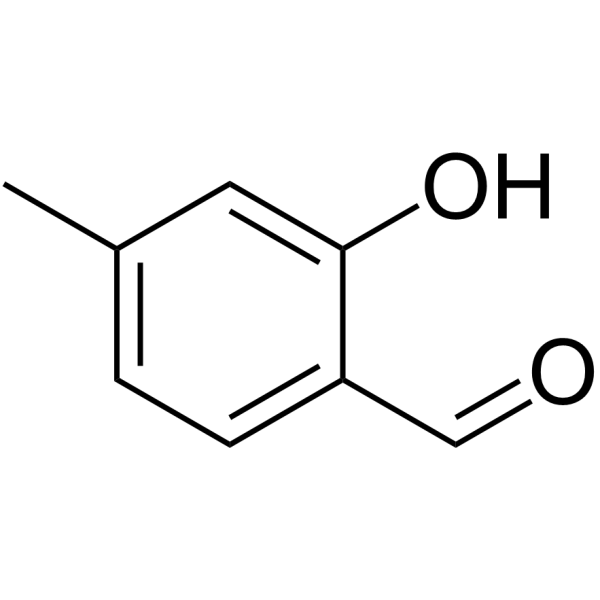
2-Hydroxy-4-methylbenzaldehyde
CAS No. 698-27-1
2-Hydroxy-4-methylbenzaldehyde( —— )
Catalog No. M28089 CAS No. 698-27-1
2-Hydroxy-4-methylbenzaldehyde is an endogenous metabolite.
Purity : >98% (HPLC)
 COA
Datasheet
HNMR
HPLC
MSDS
Handing Instructions
COA
Datasheet
HNMR
HPLC
MSDS
Handing Instructions
| Size | Price / USD | Stock | Quantity |
| 1 mL x 10 mM in DMSO | 28 | In Stock |


|
| 100MG | Get Quote | In Stock |
|
| 200MG | 27 | In Stock |
|
| 500MG | Get Quote | In Stock |
|
| 1G | Get Quote | In Stock |
|
Biological Information
-
Product Name2-Hydroxy-4-methylbenzaldehyde
-
NoteResearch use only, not for human use.
-
Brief Description2-Hydroxy-4-methylbenzaldehyde is an endogenous metabolite.
-
Description2-Hydroxy-4-methylbenzaldehyde is an endogenous metabolite.
-
In Vitro——
-
In Vivo——
-
Synonyms——
-
PathwayProteasome/Ubiquitin
-
TargetEndogenous Metabolite
-
RecptorRORγt
-
Research Area——
-
Indication——
Chemical Information
-
CAS Number698-27-1
-
Formula Weight136.15
-
Molecular FormulaC8H8O2
-
Purity>98% (HPLC)
-
SolubilityIn Vitro:?DMSO : 33.33 mg/mL (244.80 mM)
-
SMILESCc1ccc(C=O)c(O)c1
-
Chemical Name——
Shipping & Storage Information
-
Storage(-20℃)
-
ShippingWith Ice Pack
-
Stability≥ 2 years
Reference
1.Sato A, et al. Design and Synthesis of Conformationally Constrained RORγt Inverse Agonists. ChemMedChem. 2019 Oct 28.
molnova catalog



related products
-
Coenzyme A
Coenzyme A is an obligatory cofactor in all living cells synthesized from pantothenate (Vitamin B5), adenosine triphosphate (ATP), and cysteine.
-
34-Dihydroxyphenylac...
34-Dihydroxybenzeneacetic acid is the main neuronal metabolite of dopamine.
-
9AzNue5Ac
9AzNue5Ac is a Neu5Ac analog that is metabolized in living cells and in mice.9AzNue5Ac binds to salivary glycans.
