


 Cart
Cart
 sales@molnova.com


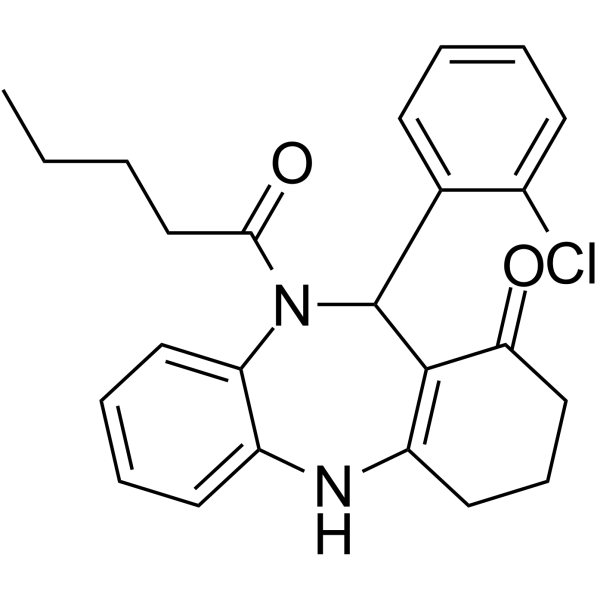
RBC10
CAS No. 362503-73-9
RBC10( —— )
Catalog No. M27791 CAS No. 362503-73-9
RBC10 inhibits the binding of Ral to its effector RALBP1, as well as inhibiting Ral-mediated cell spreading of murine embryonic fibroblasts and anchorage-independent growth of human cancer cell lines.
Purity : >98% (HPLC)
 COA
Datasheet
HNMR
HPLC
MSDS
Handing Instructions
COA
Datasheet
HNMR
HPLC
MSDS
Handing Instructions
| Size | Price / USD | Stock | Quantity |
| 1 mL x 10 mM in DMSO | 74 | In Stock |


|
| 2MG | 42 | In Stock |
|
| 5MG | 69 | In Stock |
|
| 10MG | 112 | In Stock |
|
| 25MG | 259 | In Stock |
|
| 50MG | 366 | In Stock |
|
| 100MG | 533 | In Stock |
|
| 200MG | 724 | In Stock |
|
| 500MG | Get Quote | In Stock |
|
| 1G | Get Quote | In Stock |
|
Biological Information
-
Product NameRBC10
-
NoteResearch use only, not for human use.
-
Brief DescriptionRBC10 inhibits the binding of Ral to its effector RALBP1, as well as inhibiting Ral-mediated cell spreading of murine embryonic fibroblasts and anchorage-independent growth of human cancer cell lines.
-
DescriptionRBC10 inhibits the binding of Ral to its effector RALBP1, as well as inhibiting Ral-mediated cell spreading of murine embryonic fibroblasts and anchorage-independent growth of human cancer cell lines.
-
In Vitro——
-
In Vivo——
-
Synonyms——
-
PathwayOthers
-
TargetOther Targets
-
Recptormicrotubule|ADC Cytotoxin
-
Research Area——
-
Indication——
Chemical Information
-
CAS Number362503-73-9
-
Formula Weight408.93
-
Molecular FormulaC24H25ClN2O2
-
Purity>98% (HPLC)
-
SolubilityIn Vitro:?DMSO : 125 mg/mL (305.68 mM)
-
SMILESCCCCC(=O)N1C(C2=C(CCCC2=O)Nc2ccccc12)c1ccccc1Cl
-
Chemical Name——
Shipping & Storage Information
-
Storage(-20℃)
-
ShippingWith Ice Pack
-
Stability≥ 2 years
Reference
1.Roy S, et al. SMI-Ribosome inactivating protein conjugates selectively inhibit tumor cell growth. Chem Commun (Camb). 2017 Apr 11;53(30):4234-4237.
molnova catalog



related products
-
GGTI 298
GGTI 298 is a geranylgeranyltransferase I inhibitor with ability to arrest human tumor cells in the G1 phase of the cell cycle and induce apoptosis.
-
3,5-Diiodotyrosine D...
3, 5-Diiodotyrosine is a product from the iodination of monoiodotyrosine.
-
Endokinin A/B
Endokinin A/B
