


 Cart
Cart
 sales@molnova.com


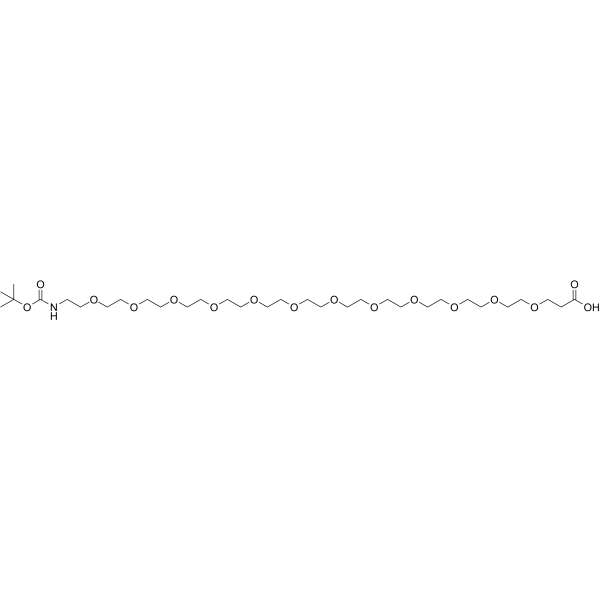
Boc-NH-PEG12-CH2CH2COOH
CAS No. 1415981-79-1
Boc-NH-PEG12-CH2CH2COOH( —— )
Catalog No. M26921 CAS No. 1415981-79-1
Boc-NH-PEG12-CH2CH2COOH is a PEG-based PROTAC linker that can be used in the synthesis of PROTACs.
Purity : >98% (HPLC)
 COA
Datasheet
HNMR
HPLC
MSDS
Handing Instructions
COA
Datasheet
HNMR
HPLC
MSDS
Handing Instructions
| Size | Price / USD | Stock | Quantity |
| 1 mL x 10 mM in DMSO | 29 | In Stock |


|
| 25MG | 29 | In Stock |
|
| 100MG | Get Quote | In Stock |
|
| 200MG | Get Quote | In Stock |
|
| 500MG | Get Quote | In Stock |
|
| 1G | Get Quote | In Stock |
|
Biological Information
-
Product NameBoc-NH-PEG12-CH2CH2COOH
-
NoteResearch use only, not for human use.
-
Brief DescriptionBoc-NH-PEG12-CH2CH2COOH is a PEG-based PROTAC linker that can be used in the synthesis of PROTACs.
-
DescriptionBoc-NH-PEG12-CH2CH2COOH is a PEG-based PROTAC linker that can be used in the synthesis of PROTACs.(In Vitro):PROTACs contain two different ligands connected by a linker; one is a ligand for an E3 ubiquitin ligase and the other is for the target protein. PROTACs exploit the intracellular ubiquitin-proteasome system to selectively degrade target proteins.
-
In VitroPROTACs contain two different ligands connected by a linker; one is a ligand for an E3 ubiquitin ligase and the other is for the target protein. PROTACs exploit the intracellular ubiquitin-proteasome system to selectively degrade target proteins.
-
In Vivo——
-
Synonyms——
-
PathwayOthers
-
TargetOther Targets
-
RecptorERK| MAPK
-
Research Area——
-
Indication——
Chemical Information
-
CAS Number1415981-79-1
-
Formula Weight717.847
-
Molecular FormulaC32H63NO16
-
Purity>98% (HPLC)
-
SolubilityIn Vitro:?DMSO : 100 mg/mL (139.31 mM)
-
SMILESCC(C)(C)OC(=O)NCCOCCOCCOCCOCCOCCOCCOCCOCCOCCOCCOCCOCCC(O)=O
-
Chemical Name——
Shipping & Storage Information
-
Storage(-20℃)
-
ShippingWith Ice Pack
-
Stability≥ 2 years
Reference
1.Breyer I, Azzi A. Differential inhibition by alpha- and beta-tocopherol of human erythroleukemia cell adhesion: role of integrins. Free Radic Biol Med. 2001 Jun 15;30(12):1381-9.
molnova catalog



related products
-
Prepro-Neuromedin U ...
Prepro-Neuromedin U (104-136) (human)
-
BIS-TRIS
buffering agent used in biochemistry.
-
Retrofractamide C
The fruits of Piper nigrum L.
