


 Cart
Cart
 sales@molnova.com


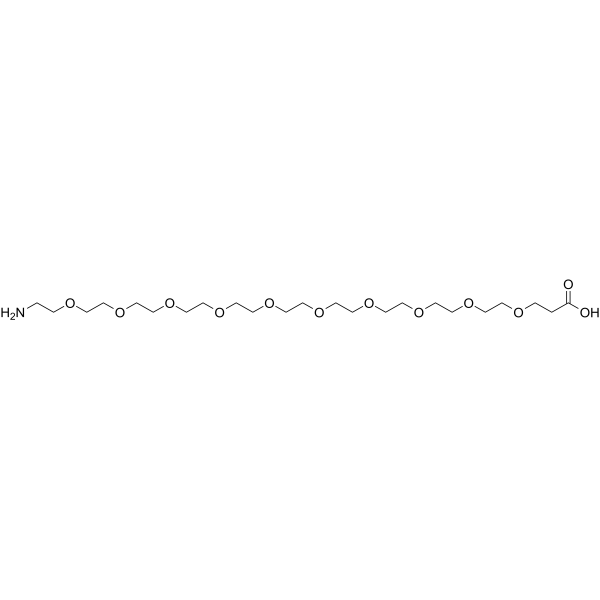
Amino-PEG10-acid
CAS No. 2170987-85-4
Amino-PEG10-acid( —— )
Catalog No. M26880 CAS No. 2170987-85-4
Amino-PEG10-acid is a PEG-based PROTAC linker that can be used in the synthesis of PROTACs.
Purity : >98% (HPLC)
 COA
Datasheet
HNMR
HPLC
MSDS
Handing Instructions
COA
Datasheet
HNMR
HPLC
MSDS
Handing Instructions
| Size | Price / USD | Stock | Quantity |
| 5MG | 30 | In Stock |


|
| 10MG | 39 | In Stock |
|
| 25MG | 78 | In Stock |
|
| 50MG | 114 | In Stock |
|
| 100MG | 170 | In Stock |
|
| 200MG | 246 | In Stock |
|
| 500MG | Get Quote | In Stock |
|
| 1G | Get Quote | In Stock |
|
Biological Information
-
Product NameAmino-PEG10-acid
-
NoteResearch use only, not for human use.
-
Brief DescriptionAmino-PEG10-acid is a PEG-based PROTAC linker that can be used in the synthesis of PROTACs.
-
DescriptionAmino-PEG10-acid is a PEG-based PROTAC linker that can be used in the synthesis of PROTACs.(In Vitro):PROTACs contain two different ligands connected by a linker; one is a ligand for an E3 ubiquitin ligase and the other is for the target protein. PROTACs exploit the intracellular ubiquitin-proteasome system to selectively degrade target proteins.
-
In VitroPROTACs contain two different ligands connected by a linker; one is a ligand for an E3 ubiquitin ligase and the other is for the target protein. PROTACs exploit the intracellular ubiquitin-proteasome system to selectively degrade target proteins.
-
In Vivo——
-
Synonyms——
-
PathwayOthers
-
TargetOther Targets
-
Recptor——
-
Research Area——
-
Indication——
Chemical Information
-
CAS Number2170987-85-4
-
Formula Weight529.624
-
Molecular FormulaC23H47NO12
-
Purity>98% (HPLC)
-
Solubility——
-
SMILESNCCOCCOCCOCCOCCOCCOCCOCCOCCOCCOCCC(O)=O
-
Chemical Name——
Shipping & Storage Information
-
Storage(-20℃)
-
ShippingWith Ice Pack
-
Stability≥ 2 years
Reference
1.Zhu Q, et al. In silico and in vitro genotoxicity evaluation of levofloxacin n-oxide, an impurity in levofloxacin. Toxicol Mech Methods. 2012 Apr;22(3):225-30.
molnova catalog



related products
-
4-methyl-6-phenyl-2H...
4-methyl-6-phenyl-2H-pyranone is derived from Scutellaria baicalensis Georgi and improves mitochondrial functionality to protect astrocytes against hydrogen peroxide-induced toxicity.
-
3,8-Di-O-methylellag...
3,3'-Di-O-methylellagic acid reveals moderate antibacterial activity, it also shows strong DPPH radical scavenging activities with SC50 of 123.3 ug/mL.
-
Corynan-16-carboxyli...
Corynan-16-carboxylic acid, 17-hydroxy-, methyl ester
