


 Cart
Cart
 sales@molnova.com


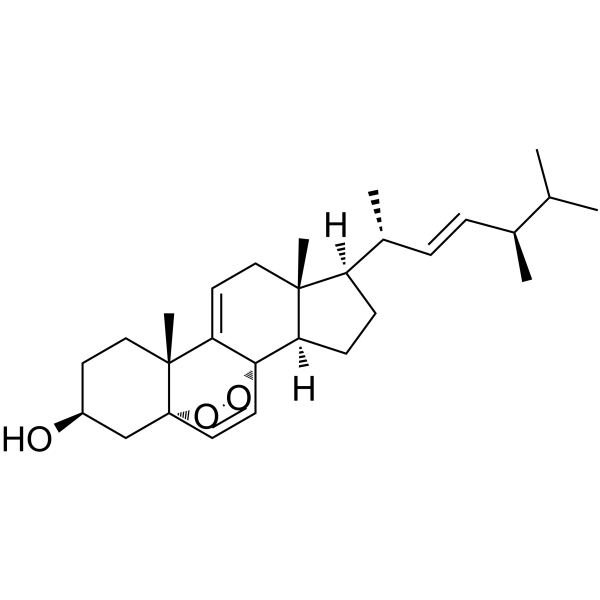
5,8-Epidioxyergosta-6,9(11),22-trien-3-ol
CAS No. 86363-50-0
5,8-Epidioxyergosta-6,9(11),22-trien-3-ol( —— )
Catalog No. M31403 CAS No. 86363-50-0
9,11-Dehydroergosterol peroxide is a useful organic compound for research related to life sciences.
Purity : >98% (HPLC)
 COA
Datasheet
HNMR
HPLC
MSDS
Handing Instructions
COA
Datasheet
HNMR
HPLC
MSDS
Handing Instructions
| Size | Price / USD | Stock | Quantity |
| 5MG | 565 | In Stock |


|
| 50MG | Get Quote | In Stock |
|
| 100MG | Get Quote | In Stock |
|
| 200MG | Get Quote | In Stock |
|
| 500MG | Get Quote | In Stock |
|
| 1G | Get Quote | In Stock |
|
Biological Information
-
Product Name5,8-Epidioxyergosta-6,9(11),22-trien-3-ol
-
NoteResearch use only, not for human use.
-
Brief Description9,11-Dehydroergosterol peroxide is a useful organic compound for research related to life sciences.
-
Description9,11-Dehydroergosterol peroxide is a useful organic compound for research related to life sciences.
-
In Vitro5,8-Epidioxyergosta-6,9(11),22-trien-3-ol (9,11-Dehydroergosterol peroxide) is an effective inhibitor of HL60 leukemia cell growth and apoptosis-inducer.Apoptosis induced by 5,8-Epidioxyergosta-6,9(11),22-trien-3-ol from Ganoderma Lucidum mycelium in human malignant melanoma cells is Mcl?1 dependent.
-
In Vivo——
-
Synonyms——
-
PathwayOthers
-
TargetOther Targets
-
Recptor——
-
Research Area——
-
Indication——
Chemical Information
-
CAS Number86363-50-0
-
Formula Weight426.63
-
Molecular FormulaC28H42O3
-
Purity>98% (HPLC)
-
Solubility——
-
SMILES——
-
Chemical Name——
Shipping & Storage Information
-
Storage(-20℃)
-
ShippingWith Ice Pack
-
Stability≥ 2 years
Reference
molnova catalog



related products
-
BMS-3
BMS-3 is a potent?LIMK?inhibitor with?IC50s of 5 nM and 6 nM for?LIMK1?and?LIMK2, respectively.
-
Ly93
Ly93 is a selective and orally active sphingomyelin synthase 2 (SMS2) inhibitor (IC50: 91 nM) used for studying atherosclerosis.
-
γ-1-MSH, amide
Gamma-MSH (Melanocyte Stimulating Hormone), a putative hormone in the N-terminal region of the ACTH/beta- endorphin (beta-EP) precursor protein, was studied by RIA with an antiserum against gamma 3-MSH in ACTH-producing mouse pituitary tumor cells, AtT-20/D16v.
