


 Cart
 sales@molnova.com


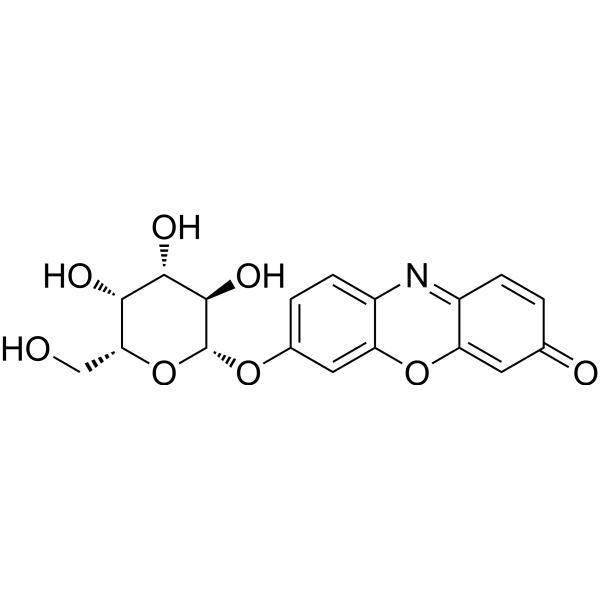
resorufin galactopyranoside
CAS No. 95079-19-9
resorufin galactopyranoside( —— )
Catalog No. M26836 CAS No. 95079-19-9
resorufin galactopyranoside is a chemical compound.
Purity : >98% (HPLC)
 COA
Datasheet
HNMR
HPLC
MSDS
Handing Instructions
| Size | Price / USD | Stock | Quantity |
| 1 mL x 10 mM in DMSO | 107 | In Stock |


|
| 5MG | 101 | In Stock |
|
| 10MG | 164 | In Stock |
|
| 25MG | 265 | In Stock |
|
| 50MG | 365 | In Stock |
|
| 100MG | Get Quote | In Stock |
|
| 200MG | Get Quote | In Stock |
|
| 500MG | Get Quote | In Stock |
|
| 1G | Get Quote | In Stock |
|
Biological Information
-
Product Nameresorufin galactopyranoside
-
NoteResearch use only, not for human use.
-
Brief Descriptionresorufin galactopyranoside is a chemical compound.
-
Descriptionresorufin galactopyranoside is a chemical compound.
-
In Vitro——
-
In Vivo——
-
Synonyms——
-
PathwayOthers
-
TargetOther Targets
-
RecptorPLA2G16
-
Research Area——
-
Indication——
Chemical Information
-
CAS Number95079-19-9
-
Formula Weight375.33
-
Molecular FormulaC18H17NO8
-
Purity>98% (HPLC)
-
Solubility——
-
SMILESOC[C@H]([C@@H]([C@@H]([C@H]1O)O)O)O[C@H]1Oc(cc1)cc(O2)c1N=C(C=C1)C2=CC1=O
-
Chemical Name——
Shipping & Storage Information
-
Storage(-20℃)
-
ShippingWith Ice Pack
-
Stability≥ 2 years
Reference
1.Zhou J, et al. Activity-Based Protein Profiling Identifies α-Ketoamides as Inhibitors for Phospholipase A2 Group XVI. ACS Chem Biol. 2019 Feb 15;14(2):164-169.
molnova catalog



related products
-
3-Mercaptopropionic ...
3-Mercaptopropionic acid (3-Sulfanylpropanoic acid) is an intermediate in the metabolism of organosulfur in the natural environment and is commonly used in nanoparticles.
-
S-I-G-S-L-A-K
SIGSLAK has the active site of E. coli penicillin-binding protein 1b.
-
BC-1382
BC-1382 is a potent ubiquitin E3 ligase HECTD2 inhibitor that specificly disrupts the HECTD2/PIAS1 interaction(IC50 of 5 nM).BC-1382, that targeted HECTD2 and attenuated lipopolysaccharide (LPS)- and Pseudomonas aeruginosa-induced lung inflammation.?
