


 Cart
Cart
 sales@molnova.com


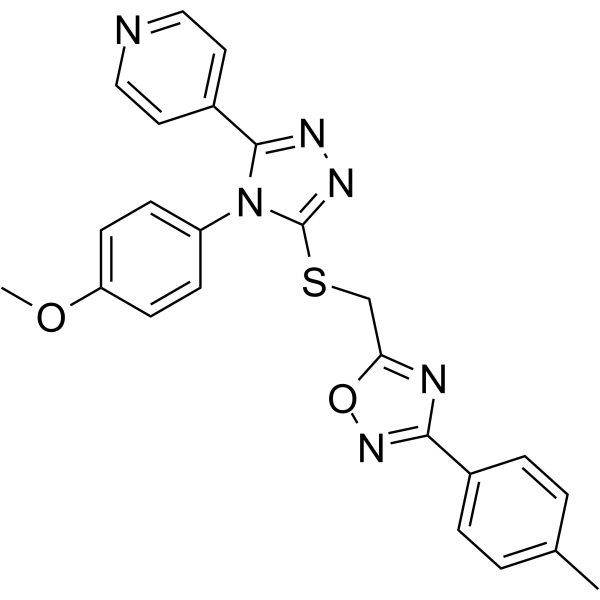
JW74
CAS No. 863405-60-1
JW74( —— )
Catalog No. M26727 CAS No. 863405-60-1
JW74 antagonizes LiCl-induced activation of the canonical Wnt signaling (IC50: 420 nM).
Purity : >98% (HPLC)
 COA
Datasheet
HNMR
HPLC
MSDS
Handing Instructions
COA
Datasheet
HNMR
HPLC
MSDS
Handing Instructions
| Size | Price / USD | Stock | Quantity |
| 1 mL x 10 mM in DMSO | 35 | In Stock |


|
| 5MG | 32 | In Stock |
|
| 10MG | 42 | In Stock |
|
| 25MG | 93 | In Stock |
|
| 50MG | 138 | In Stock |
|
| 100MG | 193 | In Stock |
|
| 200MG | 276 | In Stock |
|
| 500MG | Get Quote | In Stock |
|
| 1G | Get Quote | In Stock |
|
Biological Information
-
Product NameJW74
-
NoteResearch use only, not for human use.
-
Brief DescriptionJW74 antagonizes LiCl-induced activation of the canonical Wnt signaling (IC50: 420 nM).
-
DescriptionJW74 antagonizes LiCl-induced activation of the canonical Wnt signaling (IC50: 420 nM).(In Vitro):Ki-67 expression is reduced from 97.5% in DMSO-treated cells to 86.7% in JW74-treated cells. Relative to DMSO-treated cells, the cellular viability of U2OS cells treated for 72 h treatment with 10 μM JW74 is reduced to 80%. The effect of tankyrase inhibition on cellular viability is tested by performing an MTS assay. Flow cytometry is also performed to determine the expression marker Ki-67 in U2OS following 48 h treatment with DMSO or 10 uM JW74 . JW74 displays a reduction of canonical Wnt signaling in the ST-Luc assay (IC50: 790 nM) .(In Vivo):The in vivo efficacy of JW74 is tested using SW480 cell xenografts. A relatively high dose of JW74 (150 or 300 mg/kg) is used because of a rapid compound degradation in the organism as indicated in the human liver microsome analysis (t1/2=2.5 minutes) and in pharmacokinetic analyses (after peroral injections: t1/2=30 minutes and intravenous injections: t1/2=15 minutes). JW74 concentration in tumors is in the range 4.2 to 72.1 μmol/kg for JW74 150 mg/kg, 1.9 to 11.1 μmol/kg for JW74 300 mg/kg, and 2.8 μM in plasma for both doses .
-
In VitroJW74 shows a reduction of canonical Wnt signaling in the ST-Luc assay with an IC50 of 790 nM. The effect of tankyrase inhibition on cellular viability is tested by performing an MTS assay. The cellular viability of U2OS cells treated for 72 h treatment with 10 μM JW74 is reduced to 80%, relative to DMSO-treated cells. Flow cytometry is also performed to determine the expression marker Ki-67 in U2OS following 48 h treatment with DMSO or 10 uM JW74. Ki-67 expression is reduced from 97.5% in DMSO-treated cells to 86.7% in JW74-treated cells.
-
In VivoThe in vivo efficacy of JW74 is tested using SW480 cell xenografts. A relatively high dose of JW74 (150 or 300 mg/kg) is used because of a rapid compound degradation in the organism as indicated in the human liver microsome analysis (t1/2=2.5 minutes) and in pharmacokinetic analyses (after per oral injections: t1/2=30 minutes and intravenous injections: t1/2=15 minutes). The presence of JW74 in tumors and plasma is identified by mass spectrometry. JW74 concentration in tumors is in the range 4.2 to 72.1 μmol/kg for JW74 150 mg/kg, 1.9 to 11.1 μmol/kg for JW74 300 mg/kg, and 2.8 μM in plasma for both doses.
-
Synonyms——
-
PathwayWnt/Notch/Hedgehog
-
TargetWnt/beta/catenin
-
RecptorS. aureus
-
Research Area——
-
Indication——
Chemical Information
-
CAS Number863405-60-1
-
Formula Weight456.52
-
Molecular FormulaC24H20N6O2S
-
Purity>98% (HPLC)
-
SolubilityIn Vitro:?DMSO : ≥ 50 mg/mL (109.52 mM)
-
SMILESCOc1ccc(cc1)-n1c(SCc2nc(no2)-c2ccc(C)cc2)nnc1-c1ccncc1
-
Chemical Name——
Shipping & Storage Information
-
Storage(-20℃)
-
ShippingWith Ice Pack
-
Stability≥ 2 years
Reference
1.Cornett JB, et al. In vitro and in vivo antibacterial activities of the fluoroquinolone WIN 49375 (amifloxacin). Antimicrob Agents Chemother. 1985 Jan;27(1):4-10.
molnova catalog



related products
-
N-(3-Methoxybenzyl)-...
N-3-methoxylBenzyllinolenicamide induces osteogenic differentiation and subsequent bone formation of mesenchymal stem cells by activating the canonical Wnt/β-catenin signaling pathway that can be used for osteoporosis research.
-
TNKS-2-IN-2
TNKS-2-IN-2 is a novel and potent TNKS2 selective inhibitor (IC50: 22 nM) with potential anti-tumour activity for studying colon cancer, lung cancer, and breast cancer.
-
FIDAS-3
FIDAS-3 effectively competes against S-adenosylmethionine (SAM) for MAT2A binding.?
