


 Cart
Cart
 sales@molnova.com


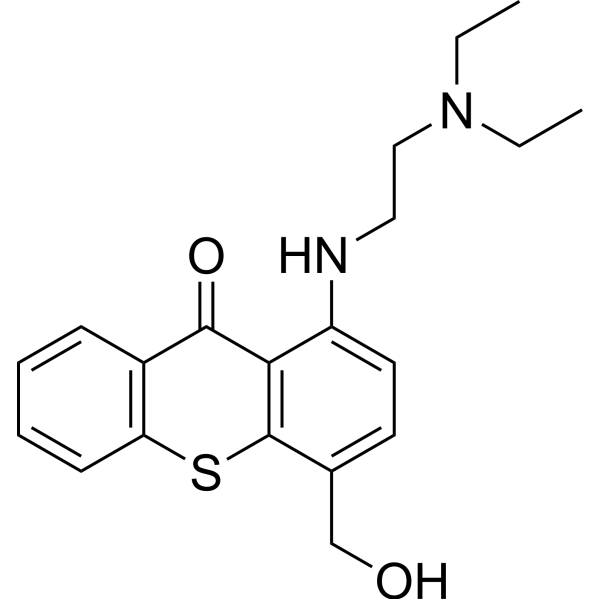
Hycanthone
CAS No. 3105-97-3
Hycanthone( Win 249-33 | Etrenol(mesylate) )
Catalog No. M26712 CAS No. 3105-97-3
Hycanthone is a potent drug of antischistosomal. Hycanthone is a DNA intercalator that inhibits RNA synthesis and DNA topoisomerases I and II.
Purity : >98% (HPLC)
 COA
Datasheet
HNMR
HPLC
MSDS
Handing Instructions
COA
Datasheet
HNMR
HPLC
MSDS
Handing Instructions
| Size | Price / USD | Stock | Quantity |
| 1 mL x 10 mM in DMSO | 48 | In Stock |


|
| 5MG | 30 | In Stock |
|
| 10MG | 48 | In Stock |
|
| 100MG | Get Quote | In Stock |
|
| 200MG | Get Quote | In Stock |
|
| 500MG | Get Quote | In Stock |
|
| 1G | Get Quote | In Stock |
|
Biological Information
-
Product NameHycanthone
-
NoteResearch use only, not for human use.
-
Brief DescriptionHycanthone is a potent drug of antischistosomal. Hycanthone is a DNA intercalator that inhibits RNA synthesis and DNA topoisomerases I and II.
-
DescriptionHycanthone is a potent drug of antischistosomal. Hycanthone is a DNA intercalator that inhibits RNA synthesis and DNA topoisomerases I and II. Hycanthone inhibits nucleic acid biosynthesis and inhibits APE1 via direct protein binding(KD: 10 nM).(In Vitro):Hycanthone at 20 mg/mL or more is progressively more detrimental to cell viability. Compared to that of controls, results show that increased concentrations of Hycanthone, ranging from 0.1 to 10 μg/mL, progressively decreases viral interferon yields as much as 73% . (In Vivo):Male worms treated with Hycanthone display signs of possible partial recovery from the initial low levels of incorporation. After treatment with Hycanthone, the incorporation of tritiated thymidine into TCA-precipitable material of adult sensitive worms undergo a progressive decrease. Immature worms are totally unaffected by Hycanthone at all times tested. In the first four days after treatment, incorporation of tritiated leucine by drug-sensitive worms treated with Hycanthone is inhibited by 40 to 50%. 7 days after Hycanthone treatment, both ribosomal RNA species are reduced by at least 80% with respect to untreated worms, with some indication of a possible accumulation of heavier precursor molecules .
-
In VitroHycanthone has an IC50 of 80 nM for inhibition of APE1 incision of depurinated plasmid DNA. Hycanthone (0.05-100 μM; for 2 h) promotes APE1 cleavage in presence of Cycloheximide (CHX) and this cleavage is inhibited by 1% DMSO. Hycanthone at 20 mg/mL or more is progressively more detrimental to cell viability. Results reveal that increased concentrations of Hycanthone, ranging from 0.1 to 10 μg/mL, progressively reduces viral interferon yields as much as 73% compare to that of controls.
-
In VivoResults show that the incorporation of tritiated thymidine into TCA-precipitable material of adult sensitive worms undergo a progressive decrease after treatment with Hycanthone. Immature worms are totally unaffected by Hycanthone at all times tested. Male worms treated with Hycanthone show signs of a possible partial recovery from the initial low levels of incorporation. The incorporation of tritiated leucine by drug-sensitive worms treated with Hycanthone is inhibited by 40 to 50% in the first four days after treatment. Results show that, 7 days after Hycanthone treatment, both ribosomal RNA species are reduced by at least 80% with respect to untreated worms, with some indication of a possible accumulation of heavier precursor molecules.
-
SynonymsWin 249-33 | Etrenol(mesylate)
-
PathwayCell Cycle/DNA Damage
-
TargetDNA/RNA Synthesis
-
RecptorDrug-Linker Conjugates for ADC| Microtubule/Tubulin
-
Research Area——
-
Indication——
Chemical Information
-
CAS Number3105-97-3
-
Formula Weight356.48
-
Molecular FormulaC20H24N2O2S
-
Purity>98% (HPLC)
-
SolubilityIn Vitro:?DMSO : 12.5 mg/mL (35.07 mM)
-
SMILESCCN(CC)CCNc1ccc(CO)c2sc3ccccc3c(=O)c12
-
Chemical Name——
Shipping & Storage Information
-
Storage(-20℃)
-
ShippingWith Ice Pack
-
Stability≥ 2 years
Reference



-
DNA polymerase-IN-1
DNA polymerase-IN-1, a DNA polymerase inhibitor, exhibited antiproliferative activity against tumor cells with a half-inhibitory concentration (IC50) of 20.7 μM.
-
NSAH?
NSAH is a nonnucleoside inhibitor of human ribonucleotide reductase (hRR).with cell-free IC50 of 32 μM and cell-based IC50 of ~250 nM, respectively.A unique nonnucleoside small-molecule hRR inhibitor, naphthyl salicylic acyl hydrazone (NSAH), using virtual screening, binding affinity, inhibition, and cell toxicity assays.?NSAH binds to hRRM1 with an apparent dissociation constant of 37 μM, and steady-state kinetics reveal a competitive mode of inhibition.?
-
10-Formyl-5,8-dideaz...
10-Formyl-5,8-dideazafolic acid (CB3717) is a water-soluble analog of folic acid, also known as folate.
