


 Cart
Cart
 sales@molnova.com


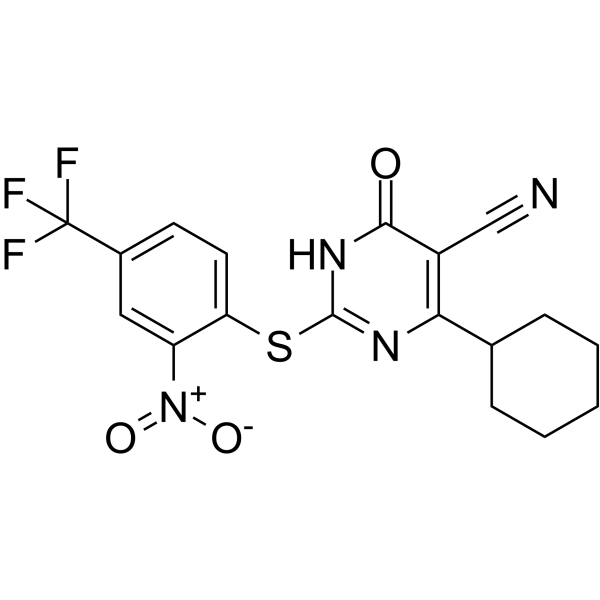
RH01386
CAS No. 301177-36-6
RH01386( —— )
Catalog No. M26579 CAS No. 301177-36-6
RH01386 is a small molecule that can prevent ER stress-induced β cell dysfunction and death, and inhibits proapoptotic gene expression,has the potential for type 2 diabetes treatment. RH01386 restores ER stress-impaired glucose-stimulated insulin secretion responses.
Purity : >98% (HPLC)
 COA
Datasheet
HNMR
HPLC
MSDS
Handing Instructions
COA
Datasheet
HNMR
HPLC
MSDS
Handing Instructions
| Size | Price / USD | Stock | Quantity |
| 1 mL x 10 mM in DMSO | 130 | In Stock |


|
| 2MG | 86 | In Stock |
|
| 5MG | 141 | In Stock |
|
| 10MG | 207 | In Stock |
|
| 25MG | 337 | In Stock |
|
| 50MG | 443 | In Stock |
|
| 100MG | 607 | In Stock |
|
| 200MG | 821 | In Stock |
|
| 500MG | Get Quote | In Stock |
|
| 1G | Get Quote | In Stock |
|
Biological Information
-
Product NameRH01386
-
NoteResearch use only, not for human use.
-
Brief DescriptionRH01386 is a small molecule that can prevent ER stress-induced β cell dysfunction and death, and inhibits proapoptotic gene expression,has the potential for type 2 diabetes treatment. RH01386 restores ER stress-impaired glucose-stimulated insulin secretion responses.
-
DescriptionRH01386 is a small molecule that can prevent ER stress-induced β cell dysfunction and death, and inhibits proapoptotic gene expression,has the potential for type 2 diabetes treatment. RH01386 restores ER stress-impaired glucose-stimulated insulin secretion responses.(In Vitro):ATP levels in βTC6 cells treated with (tunicamycin) Tm increase by RH01386.RH01386 exhibits a EC50 value of 1.894 μM. RH01386 dose-dependently inhibits (tunicamycin) Tm-induced cell death, and inhibits the activity of caspase-3, a downstream effector of the apoptotic pathway in βTC6 cells.
-
In VitroRH01386 (270 nM-70 μM; 72hours) is confirmed to increase ATP levels in βTC6 cells treated with (tunicamycin) Tm, exhibits a EC50 value of 1.894 μM.RH01386 (270 nM-70 μM; 72 hours) dose-dependently inhibits (tunicamycin) Tm-induced cell death, and inhibits the activity of caspase-3, a downstream effector of the apoptotic pathway in βTC6 cells.Cell Viability Assay Cell Line:βTC6 cells Concentration:270 nM-70 μM Incubation Time:72 hours Result:Inhibited ER stress-induced death of βTC6 cells in a dose-dependent manner.Apoptosis Analysis Cell Line:βTC6 cells Concentration:270 nM-70 μM Incubation Time:72 hours Result:Protected βTC6 cells from Tm-induced cell death.
-
In Vivo——
-
Synonyms——
-
PathwayOthers
-
TargetOther Targets
-
Recptor——
-
Research Area——
-
Indication——
Chemical Information
-
CAS Number301177-36-6
-
Formula Weight424.4
-
Molecular FormulaC18H15F3N4O3S
-
Purity>98% (HPLC)
-
SolubilityIn Vitro:?DMSO : 100 mg/mL (235.63 mM)
-
SMILES[O-][N+](=O)c1cc(ccc1Sc1nc(C2CCCCC2)c(C#N)c(=O)[nH]1)C(F)(F)F
-
Chemical Name——
Shipping & Storage Information
-
Storage(-20℃)
-
ShippingWith Ice Pack
-
Stability≥ 2 years
Reference
1.Wang XX, et al. The implementation of high fermentative 2,3-butanediol production from xylose by simultaneous additions of yeast extract, Na2EDTA, and acetic acid. N Biotechnol. 2015 Aug 3.
molnova catalog



related products
-
CI-976
CI-976 (PD 128042) is a potent, selective, orally bioavailable inhibitor of ACAT-1 (Acetyl-CoA acetyltransferase 1) with IC50 of 73 nM.
-
Clemaphenol A
Clemaphenol A is a natural product from Cynanchum auriculatum.
-
Pomalidomide-PEG4-C2...
Pomalidomide-PEG4-C2-NH2 is a synthesized E3 ligase ligand-linker conjugate incorporating the Pomalidomide-based cereblon ligand and 4-unit PEG linker.
