


 Cart
Cart
 sales@molnova.com


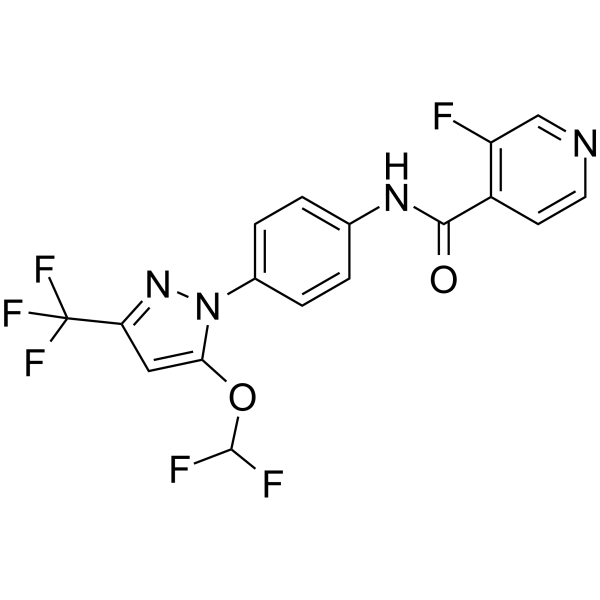
NFAT Transcription Factor Regulator-1
CAS No. 245747-71-1
NFAT Transcription Factor Regulator-1( —— )
Catalog No. M26330 CAS No. 245747-71-1
NFAT Transcription Factor Regulator-1 is an synthesis inhibitor of IL-2 (IC50 of 182 nM).
Purity : >98% (HPLC)
 COA
Datasheet
HNMR
HPLC
MSDS
Handing Instructions
COA
Datasheet
HNMR
HPLC
MSDS
Handing Instructions
| Size | Price / USD | Stock | Quantity |
| 1 mL x 10 mM in DMSO | 89 | In Stock |


|
| 5MG | 81 | In Stock |
|
| 10MG | 138 | In Stock |
|
| 25MG | 256 | In Stock |
|
| 50MG | 369 | In Stock |
|
| 100MG | 528 | In Stock |
|
| 200MG | Get Quote | In Stock |
|
| 500MG | 1051 | In Stock |
|
| 1G | Get Quote | In Stock |
|
Biological Information
-
Product NameNFAT Transcription Factor Regulator-1
-
NoteResearch use only, not for human use.
-
Brief DescriptionNFAT Transcription Factor Regulator-1 is an synthesis inhibitor of IL-2 (IC50 of 182 nM).
-
DescriptionNFAT Transcription Factor Regulator-1 is an synthesis inhibitor of IL-2 (IC50 of 182 nM).(In Vitro):NFAT Transcription Factor Regulator-1 inhibits IL-2 synthesis(IC50 of 182 nM). NFAT Transcription Factor Regulator-1 inhibits human and rat PBMC proliferation with IC50s of 82 and 146 nM, respectively. NFAT Transcription Factor Regulator-1 is able to inhibit IL-4 and IL-5 production in human T-cell lines with similar potency to its effects on IL-2 release.(In Vivo):NFAT Transcription Factor Regulator-1 is found to have an inhibitory potency approximately 10-fold better than that of cyclosporine. Comparable inhibitory effects on T-cell IL-2 production are obtained with NFAT Transcription Factor Regulator-1 and cyclosporine at doses of 3.0 and 30 mg/kg, po, respectively. The efficacies achieved in monkeys in vivo for blocking T-cell cytokine production suggest that NFAT Transcription Factor Regulator-1 has potential similar to that of cyclosporine for use in transplantation.
-
In VitroNFAT Transcription Factor Regulator-1 (compound example 19) inhibits IL-2 synthesis with an IC50 of 182 nM. NFAT Transcription Factor Regulator-1 inhibits human and rat PBMC proliferation with IC50s of 82 and 146 nM, respectively. NFAT Transcription Factor Regulator-1 is able to inhibit IL-4 and IL-5 production in human T-cell lines with similar potency to its effects on IL-2 release.
-
In VivoNFAT Transcription Factor Regulator-1 is found to have an inhibitory potency approximately 10-fold better than that of cyclosporine. Comparable inhibitory effects on T-cell IL-2 production are obtained with NFAT Transcription Factor Regulator-1 and cyclosporine at doses of 3.0 and 30 mg/kg, po, respectively. The efficacies achieved in monkeys in vivo for blocking T-cell cytokine production suggest that NFAT Transcription Factor Regulator-1 has potential similar to that of cyclosporine for use in transplantation.
-
Synonyms——
-
PathwayApoptosis
-
TargetIL Receptor
-
RecptorPEGs
-
Research Area——
-
Indication——
Chemical Information
-
CAS Number245747-71-1
-
Formula Weight416.283
-
Molecular FormulaC17H10F6N4O2
-
Purity>98% (HPLC)
-
SolubilityIn Vitro:?DMSO : 100 mg/mL (240.22 mM)
-
SMILESFC(F)Oc1cc(nn1-c1ccc(NC(=O)c2ccncc2F)cc1)C(F)(F)F
-
Chemical Name——
Shipping & Storage Information
-
Storage(-20℃)
-
ShippingWith Ice Pack
-
Stability≥ 2 years
Reference



-
Ixekizumab
Ixekizumab (LY2439821) is a humanized IgG4 monoclonal antibody that selectively binds and neutralizes interleukin IL-17A with a Kd value of <3 pM. It blocks the binding of IL-17A to IL-17RA but not to other IL-17 family members.
-
Cyclosporin D
Cyclosporin D is a metabolite of cyclosporin A, an immunosuppressant drug that binds cyclophilin D, inhibiting the phosphatase activity of calcineurin in T cells.
-
Vunakizumab
Vunakizumab (Anti-Human IL17A Recombinant Antibody) is a human IgGκ monoclonal antibody that specifically targets and inhibits IL-17A's receptor interaction, making it useful for researching autoimmune conditions such as psoriatic arthritis, ankylosing spondylitis, multiple sclerosis, and inflammatory arthritis .
