


 Cart
Cart
 sales@molnova.com


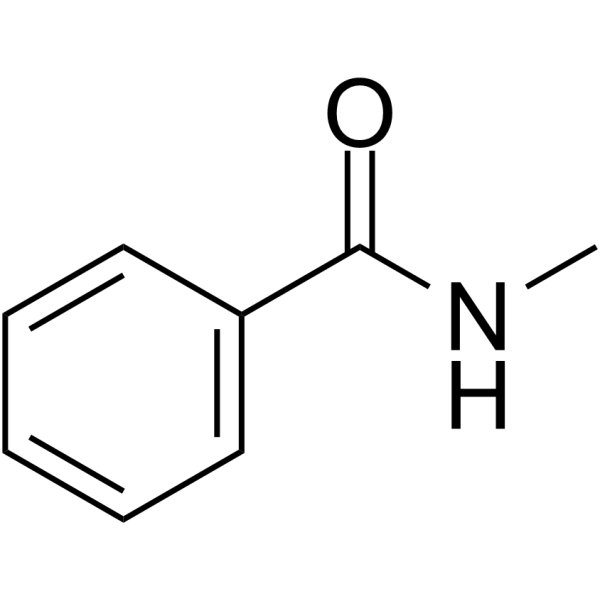
N-Methylbenzamide
CAS No. 613-93-4
N-Methylbenzamide( —— )
Catalog No. M26316 CAS No. 613-93-4
N-Methylbenzamide is a potent phosphodiesterase 10A (PDE10A) inhibitor,with anti-cancer activity.
Purity : >98% (HPLC)
 COA
Datasheet
HNMR
HPLC
MSDS
Handing Instructions
COA
Datasheet
HNMR
HPLC
MSDS
Handing Instructions
| Size | Price / USD | Stock | Quantity |
| 1 mL x 10 mM in DMSO | 28 | In Stock |


|
| 100MG | Get Quote | In Stock |
|
| 200MG | Get Quote | In Stock |
|
| 500MG | Get Quote | In Stock |
|
| 1G | 27 | In Stock |
|
Biological Information
-
Product NameN-Methylbenzamide
-
NoteResearch use only, not for human use.
-
Brief DescriptionN-Methylbenzamide is a potent phosphodiesterase 10A (PDE10A) inhibitor,with anti-cancer activity.
-
DescriptionN-Methylbenzamide is a potent phosphodiesterase 10A (PDE10A) inhibitor,with anti-cancer activity.(In Vivo):N-Methylbenzamide is active against tumor in donor female BDF mice (18-23 g).
-
In Vitro——
-
In VivoN-Methylbenzamide (compound 21; 100-800 mg/kg; ip; for 17 days) is active against tumor in donor female BDF mice (18-23 g).
-
Synonyms——
-
PathwayAngiogenesis
-
TargetPDE
-
RecptorAntifection| Antifungal
-
Research Area——
-
Indication——
Chemical Information
-
CAS Number613-93-4
-
Formula Weight135.166
-
Molecular FormulaC8H9NO
-
Purity>98% (HPLC)
-
SolubilityIn Vitro:?DMSO : 250 mg/mL (1849.66 mM)
-
SMILESCNC(=O)c1ccccc1
-
Chemical Name——
Shipping & Storage Information
-
Storage(-20℃)
-
ShippingWith Ice Pack
-
Stability≥ 2 years
Reference
1.Activity of quinones from teak (Tectona grandis) on fungal cell wall stress.Planta Med. 2006 Aug;72(10):943-4.
molnova catalog



related products
-
Lotamilast
Lotamilast (RVT 501, E6005) is a?potent, selective PDE4 inhibitor with IC50 of 2.8 nM, suppresses the production of various cytokines from human lymphocytes and monocytes with IC50 of 0.49-3.1 nM.
-
Amrinone
A positive inotropic cardiotonic (cardiotonic agents) with vasodilator properties, phosphodiesterase 3 inhibitory activity, and the ability to stimulate calcium ion influx into the cardiac cell.
-
Sildenafil
Sildenfail is a vasoactive agent used to treat erectile dysfunction and reduce symptoms in patients with pulmonary arterial hypertension (PAH).
