


 Cart
Cart
 sales@molnova.com


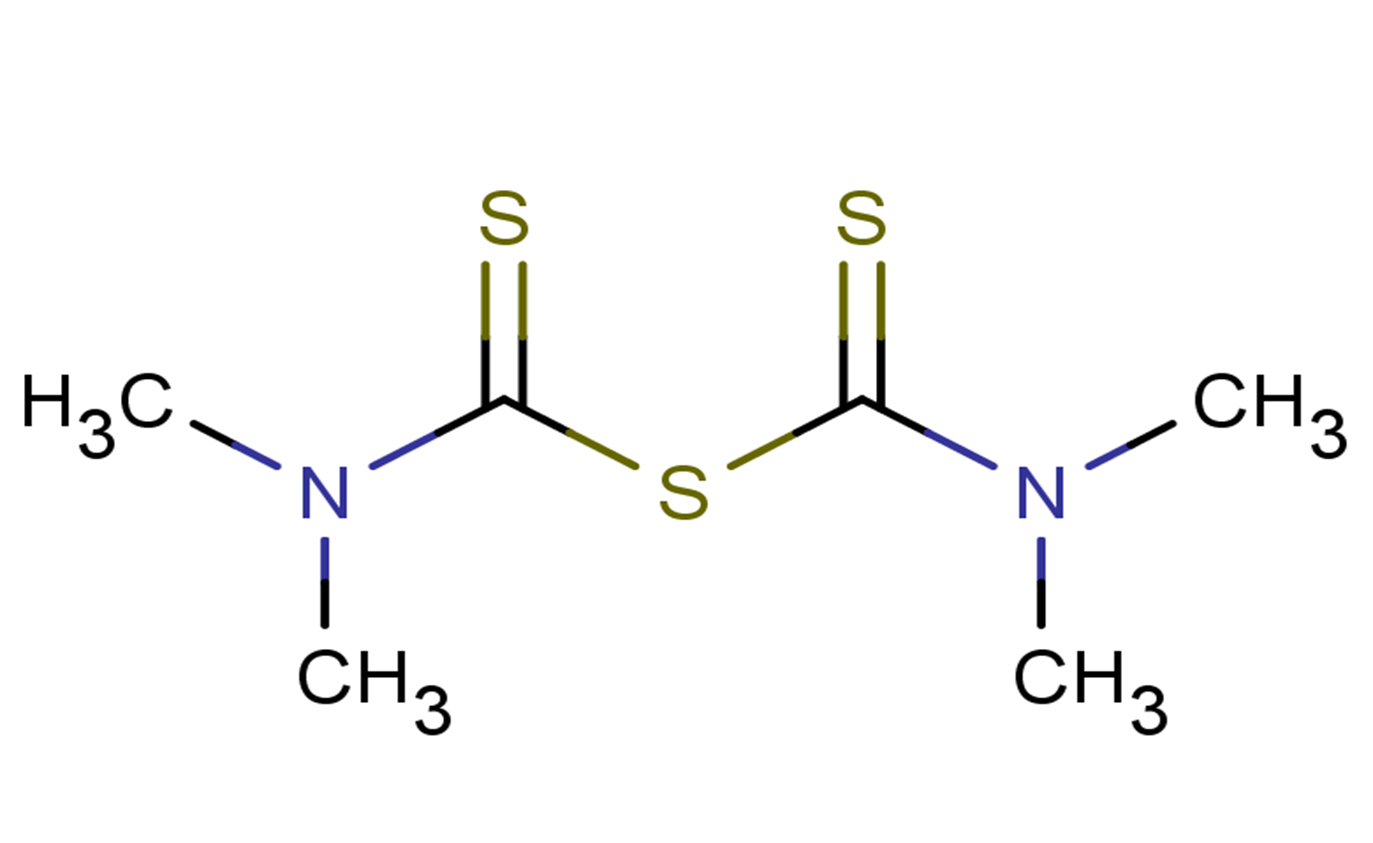
Tetramethylthiuram monosulfide
CAS No. 97-74-5
Tetramethylthiuram monosulfide( TMTM )
Catalog No. M25022 CAS No. 97-74-5
Tetramethylthiuram monosulfide is widely used as a catalyst in rubber-processing techniques, it possesses a medium-degree toxicity and causes point mutations in strains TA 100 and TA 1535 (Salmonella typhimurium LT 2).
Purity : >98% (HPLC)
 COA
Datasheet
HNMR
HPLC
MSDS
Handing Instructions
COA
Datasheet
HNMR
HPLC
MSDS
Handing Instructions
| Size | Price / USD | Stock | Quantity |
| 100MG | 38 | In Stock |


|
| 200MG | Get Quote | In Stock |
|
| 500MG | 93 | In Stock |
|
| 1G | 137 | In Stock |
|
Biological Information
-
Product NameTetramethylthiuram monosulfide
-
NoteResearch use only, not for human use.
-
Brief DescriptionTetramethylthiuram monosulfide is widely used as a catalyst in rubber-processing techniques, it possesses a medium-degree toxicity and causes point mutations in strains TA 100 and TA 1535 (Salmonella typhimurium LT 2).
-
DescriptionTetramethylthiuram monosulfide is widely used as a catalyst in rubber-processing techniques, it possesses a medium-degree toxicity and causes point mutations in strains TA 100 and TA 1535 (Salmonella typhimurium LT 2).
-
In Vitro——
-
In Vivo——
-
SynonymsTMTM
-
PathwayOthers
-
TargetOther Targets
-
RecptorOthers
-
Research Area——
-
Indication——
Chemical Information
-
CAS Number97-74-5
-
Formula Weight208.37
-
Molecular FormulaC6H12N2S3
-
Purity>98% (HPLC)
-
SolubilityDMSO:42 mg/ml (201.56 mM); Ethanol:3 mg/ml (14.4 mM)
-
SMILESCN(C)C(=S)SC(=S)N(C)C
-
Chemical Name——
Shipping & Storage Information
-
Storage(-20℃)
-
ShippingWith Ice Pack
-
Stability≥ 2 years
Reference
1.Alanis OT, et al. Environ Res. 1982 Jun;28(1):199-211.
molnova catalog



related products
-
Lappaol F
1. Lappaol F has antioxidant and antiaging properties, it may promote the C. elegans longevity and stress resistance through a JNK-1-DAF-16 cascade.
-
Bisabolol oxide A
Bisabololoxide A induces apoptosis in rat thymocytes.
-
regaloside I
Regaloside I is the monomeric component in lily. Regaloside I could be the main constituent in protecting human dermal fibroblasts from UVA-induced morphological changes .
