


 Cart
Cart
 sales@molnova.com


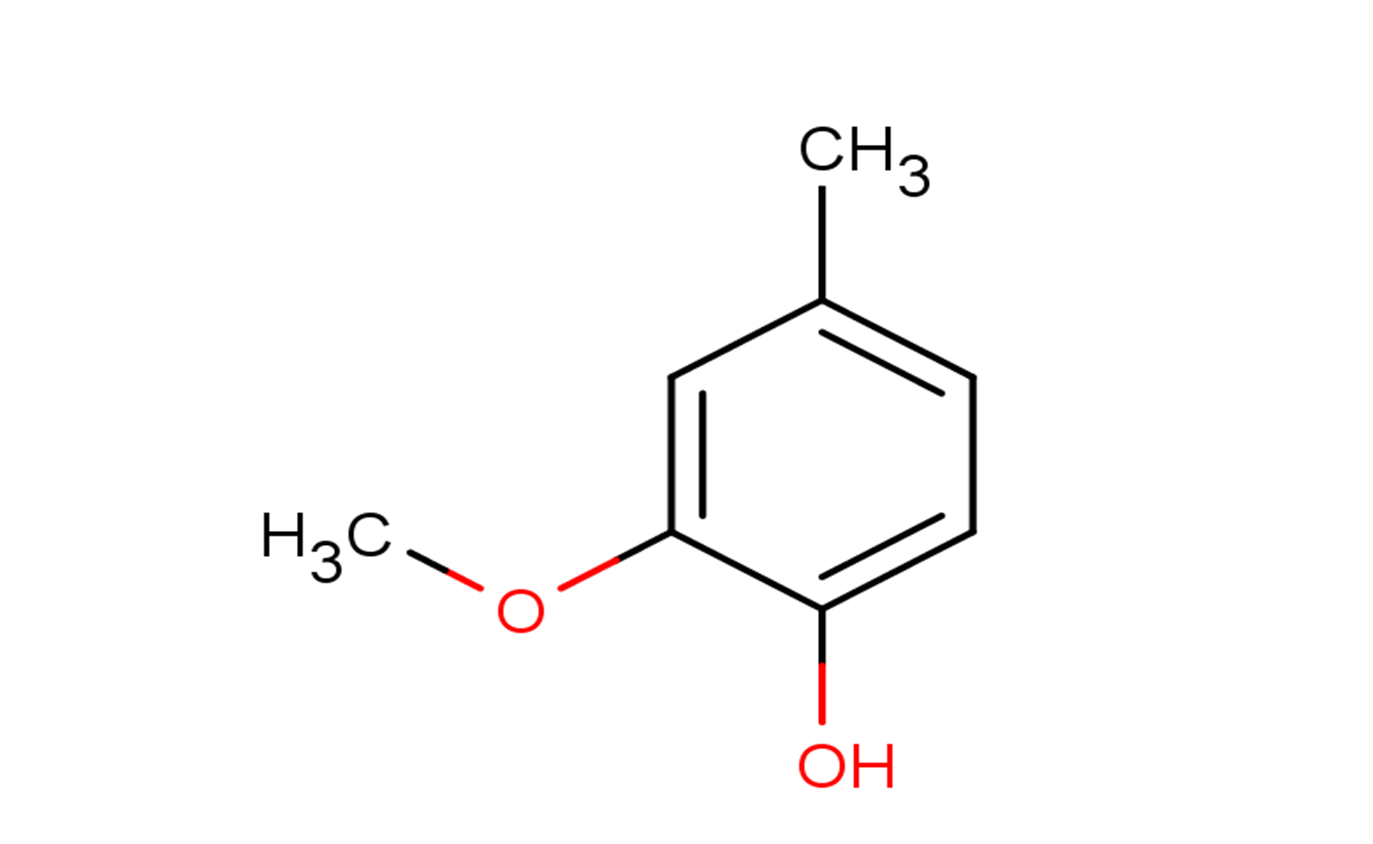
Creosol
CAS No. 93-51-6
Creosol( —— )
Catalog No. M24986 CAS No. 93-51-6
Creosol is an agent of Antioxidant and Antibacterial.
Purity : >98% (HPLC)
 COA
Datasheet
HNMR
HPLC
MSDS
Handing Instructions
COA
Datasheet
HNMR
HPLC
MSDS
Handing Instructions
| Size | Price / USD | Stock | Quantity |
| 1 mL x 10 mM in DMSO | 28 | In Stock |


|
| 100MG | Get Quote | In Stock |
|
| 200MG | Get Quote | In Stock |
|
| 500MG | 35 | In Stock |
|
| 1G | Get Quote | In Stock |
|
Biological Information
-
Product NameCreosol
-
NoteResearch use only, not for human use.
-
Brief DescriptionCreosol is an agent of Antioxidant and Antibacterial.
-
DescriptionCreosol is an agent of Antioxidant and Antibacterial.
-
In Vitro——
-
In Vivo——
-
Synonyms——
-
PathwayProteasome/Ubiquitin
-
TargetEndogenous Metabolite
-
RecptorHuman Endogenous Metabolite
-
Research Area——
-
Indication——
Chemical Information
-
CAS Number93-51-6
-
Formula Weight138.17
-
Molecular FormulaC8H10O2
-
Purity>98% (HPLC)
-
SolubilityDMSO:Soluble
-
SMILESCC1=CC=C(O)C(OC)=C1
-
Chemical Name——
Shipping & Storage Information
-
Storage(-20℃)
-
ShippingWith Ice Pack
-
Stability≥ 2 years
Reference
1.Gygli G, Lucas MF, Guallar V, van Berkel WJH. The ins and outs of vanillyl alcohol oxidase: Identification of ligand migration paths. PLoS Comput Biol. 2017 Oct 6;13(10):e1005787. doi: 10.1371/journal.pcbi.1005787. eCollection 2017 Oct. PubMed PMID: 28985219; PubMed Central PMCID: PMC5646868.
molnova catalog



related products
-
10 FTHF disodium
10 FTHF disodium (10-Formyltetrahydrofolic acid disodium) is a form of tetrahydrofolate, a formyl donor in anabolism, involved in the synthesis of purine compounds.
-
(+)-Longifolene
(+)-Longifolene is a naturally occurring.
-
5α-Cholestane
5α-Cholestane belongs to the class of organic compounds known as cholestane steroids.
