


 Cart
Cart
 sales@molnova.com


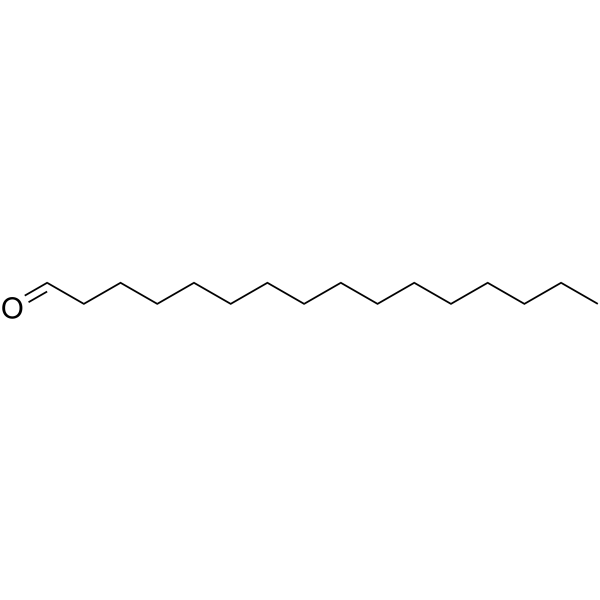
Hexadecanal
CAS No. 629-80-1
Hexadecanal( Palmitaldehyde )
Catalog No. M26567 CAS No. 629-80-1
Hexadecanal is a free fatty aldehyde present in animals.
Purity : >98% (HPLC)
 COA
Datasheet
HNMR
HPLC
MSDS
Handing Instructions
COA
Datasheet
HNMR
HPLC
MSDS
Handing Instructions
| Size | Price / USD | Stock | Quantity |
| 1 mL x 10 mM in DMSO | 37 | In Stock |


|
| 100MG | Get Quote | In Stock |
|
| 200MG | 33 | In Stock |
|
| 500MG | 52 | In Stock |
|
| 1G | Get Quote | In Stock |
|
Biological Information
-
Product NameHexadecanal
-
NoteResearch use only, not for human use.
-
Brief DescriptionHexadecanal is a free fatty aldehyde present in animals.
-
DescriptionHexadecanal is a free fatty aldehyde present in animals.
-
In Vitro——
-
In Vivo——
-
SynonymsPalmitaldehyde
-
PathwayProteasome/Ubiquitin
-
TargetEndogenous Metabolite
-
RecptorEthoxyresorufin-O-deethylase (EROD)
-
Research Area——
-
Indication——
Chemical Information
-
CAS Number629-80-1
-
Formula Weight240.431
-
Molecular FormulaC16H32O
-
Purity>98% (HPLC)
-
SolubilityIn Vitro:?DMSO : 5 mg/mL (20.80 mM)
-
SMILESCCCCCCCCCCCCCCCC=O
-
Chemical Name——
Shipping & Storage Information
-
Storage(-20℃)
-
ShippingWith Ice Pack
-
Stability≥ 2 years
Reference
1.Pann Suh, et al. Compound having activity for inhibiting dioxin toxicity, pharmaceutical composition comprising the compound and method for treating disease resulting from dioxin toxicity using the compound .US 20070032458 A1.
molnova catalog



related products
-
(R)-3-Hydroxybutanoi...
(R)-3-Hydroxybutanoic acid sodium ((R)-3-Hydroxybutyric acid) is a chiral precursor that can be used to synthesize biodegradable PHB and its copolyesters. (R)-3-Hydroxybutanoic acid sodium can be used as a nutrient in plants.
-
Valeric acid
Valeric acid or pentanoic acid is a straight chain alkyl carboxylic acid with the chemical formula CH3(CH2)3COOH.
-
Palmitoylcarnitine
Palmitoylcarnitine (Palmitoyl DL-carnitine) is a mitochondrial fatty acid oxidation intermediate that acts as a surfactant.
