


 Cart
Cart
 sales@molnova.com


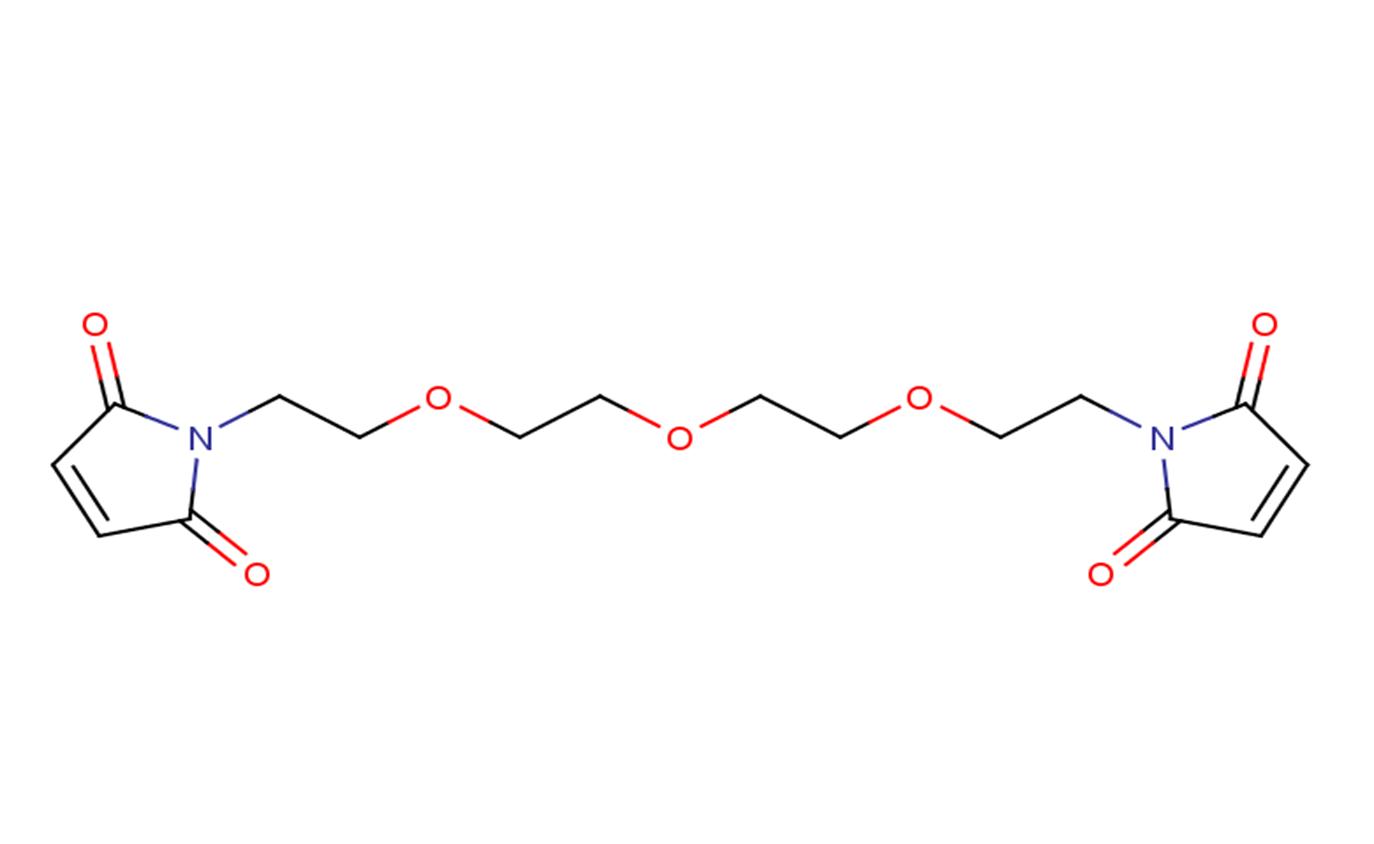
BM-PEG3
CAS No. 86099-06-1
BM-PEG3( 1,11-Bis-maleimidotetraethyleneglycol )
Catalog No. M24856 CAS No. 86099-06-1
BM-PEG3 is a PEG-based PROTAC linker that can be used in the synthesis of PROTACs.
Purity : >98% (HPLC)
 COA
Datasheet
HNMR
HPLC
MSDS
Handing Instructions
COA
Datasheet
HNMR
HPLC
MSDS
Handing Instructions
| Size | Price / USD | Stock | Quantity |
| 25MG | 28 | In Stock |


|
| 50MG | 36 | In Stock |
|
| 100MG | Get Quote | In Stock |
|
| 200MG | Get Quote | In Stock |
|
| 500MG | Get Quote | In Stock |
|
| 1G | Get Quote | In Stock |
|
Biological Information
-
Product NameBM-PEG3
-
NoteResearch use only, not for human use.
-
Brief DescriptionBM-PEG3 is a PEG-based PROTAC linker that can be used in the synthesis of PROTACs.
-
DescriptionBM-PEG3 is a PEG-based PROTAC linker that can be used in the synthesis of PROTACs.
-
In VitroPROTACs contain two different ligands connected by a linker; one is a ligand for an E3 ubiquitin ligase and the other is for the target protein. PROTACs exploit the intracellular ubiquitin-proteasome system to selectively degrade target proteins.
-
In Vivo——
-
Synonyms1,11-Bis-maleimidotetraethyleneglycol
-
PathwayPROTACs
-
TargetPROTAC
-
RecptorPEGs
-
Research Area——
-
Indication——
Chemical Information
-
CAS Number86099-06-1
-
Formula Weight352.34
-
Molecular FormulaC16H20N2O7
-
Purity>98% (HPLC)
-
SolubilityDMSO:10 mM
-
SMILESO=C(C=CC1=O)N1CCOCCOCCOCCN2C(C=CC2=O)=O
-
Chemical Name——
Shipping & Storage Information
-
Storage(-20℃)
-
ShippingWith Ice Pack
-
Stability≥ 2 years
Reference
1.An S, et al. Small-molecule PROTACs: An emerging and promising approach for the development of targeted therapy drugs. EBioMedicine. 2018 Oct;36:553-562.
molnova catalog



related products
-
Mal-amido-PEG8-NHS e...
Mal-amido-PEG8-NHS ester is a PEG-based PROTAC linker that can be used in the synthesis of PROTACs.
-
Alkynyl Palmitic Aci...
Alkynyl Palmitic Acid is an alkyl chain-based PROTAC linker that can be used in the synthesis of PROTACs.
-
FKBP12 PROTAC dTAG-7
FKBP12 PROTAC dTAG-7 (dTAG-7) is a cell-permeable heterobifunctional adation tag (dTAG) small molecule that engage FKBP12F36V and CRBN.
