


 Cart
Cart
 sales@molnova.com


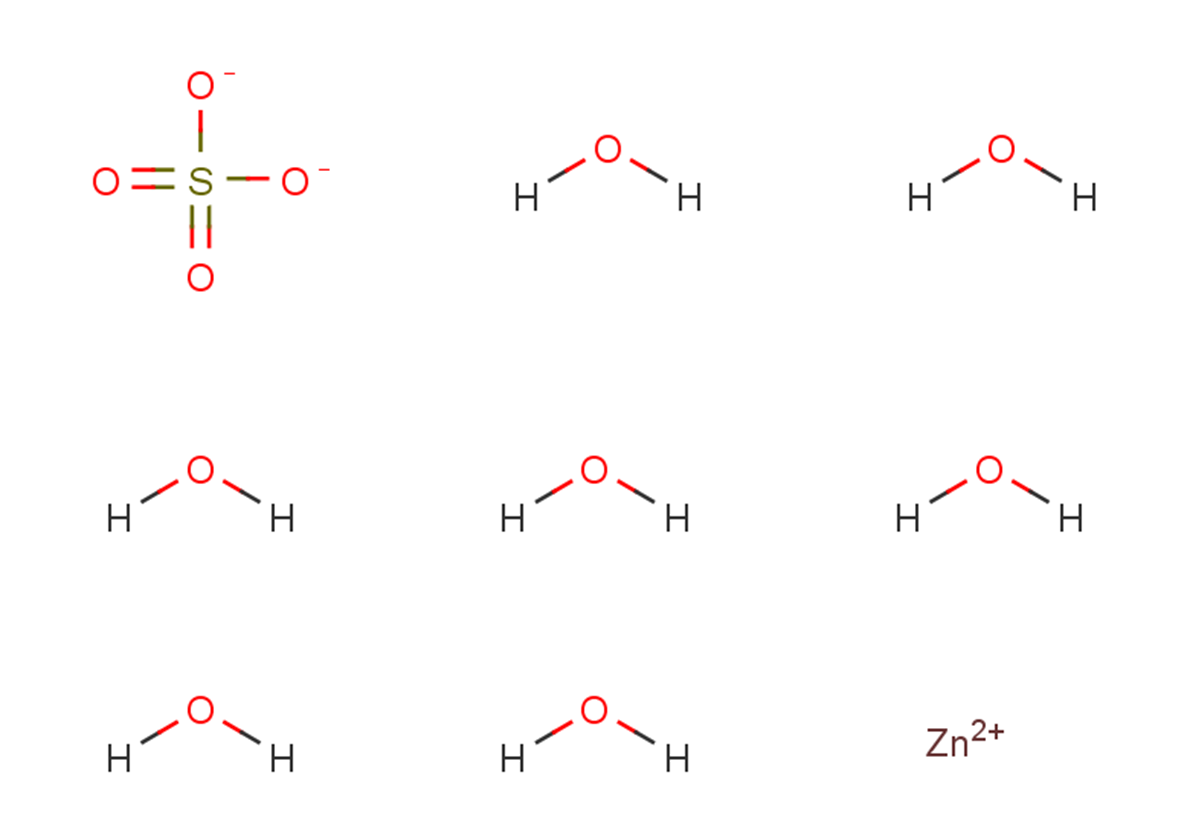
Zinc sulfate heptahydrate
CAS No. 7446-20-0
Zinc sulfate heptahydrate( —— )
Catalog No. M24754 CAS No. 7446-20-0
Zinc sulfate heptahydrate is a dietary supplement used for zinc deficiency and to prevent the condition in those at high risk.
Purity : >98% (HPLC)
 COA
Datasheet
HNMR
HPLC
MSDS
Handing Instructions
COA
Datasheet
HNMR
HPLC
MSDS
Handing Instructions
| Size | Price / USD | Stock | Quantity |
| 5MG | 49 | In Stock |


|
| 10MG | 83 | In Stock |
|
| 100MG | Get Quote | In Stock |
|
| 200MG | Get Quote | In Stock |
|
| 500MG | Get Quote | In Stock |
|
| 1G | Get Quote | In Stock |
|
Biological Information
-
Product NameZinc sulfate heptahydrate
-
NoteResearch use only, not for human use.
-
Brief DescriptionZinc sulfate heptahydrate is a dietary supplement used for zinc deficiency and to prevent the condition in those at high risk.
-
DescriptionZinc sulfate heptahydrate is a dietary supplement used for zinc deficiency and to prevent the condition in those at high risk.
-
In Vitro——
-
In Vivo——
-
Synonyms——
-
PathwayOthers
-
TargetOther Targets
-
RecptorOthers
-
Research Area——
-
Indication——
Chemical Information
-
CAS Number7446-20-0
-
Formula Weight287.58
-
Molecular FormulaH14O11SZn
-
Purity>98% (HPLC)
-
SolubilityDMSO: 99 mg/mL (344.28 mM; Need ultrasonic); H2O: 99 mg/mL (344.28 mM; Need ultrasonic)
-
SMILESO=S([O-])([O-])=O.[H]O[H].[H]O[H].[H]O[H].[H]O[H].[H]O[H].[H]O[H].[H]O[H].[Zn+2]
-
Chemical Name——
Shipping & Storage Information
-
Storage(-20℃)
-
ShippingWith Ice Pack
-
Stability≥ 2 years
Reference
1.Campos CG, et al. Targeted Metabolomics of Xylose-Fermenting Yeasts Based on Mass Spectrometry.Methods Mol Biol. 2019;1859:155-169.
molnova catalog



related products
-
Microgrewiapine A
Microgrewiapine A is a selective cytotoxic agent for colon cancer cells over normal colon cells and to exhibit nicotinic receptor antagonistic activity for both the hα3β4 and hα4β2 receptor subtypes.
-
[D-Ala2,4,Tyr5] -b-C...
[D-Ala2,4,Tyr5] -b-Casomorphin (1-5), amide, bovine
-
TAT TFA (191936-91-1...
TAT TFA (YGRKKRRQRRR) is derived from human immunodeficiency virus (hiv-1) transcription reverse activator TAT, is a cell penetrating peptide.
