


 Cart
Cart
 sales@molnova.com


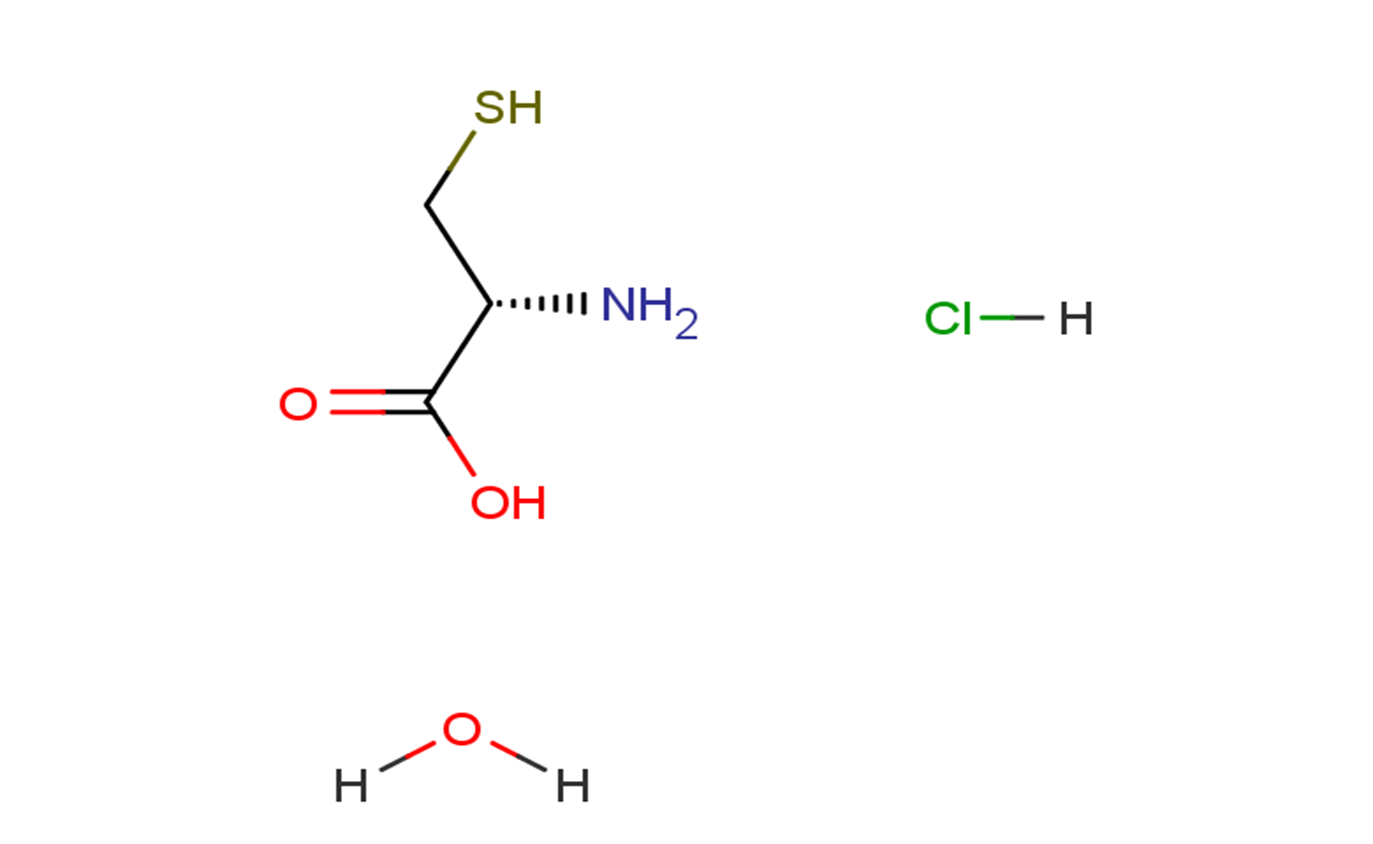
L-Cysteine hydrochloride monohydrate
CAS No. 7048-04-6
L-Cysteine hydrochloride monohydrate( —— )
Catalog No. M24719 CAS No. 7048-04-6
L-Cysteine hydrochloride hydrate is a conditionally essential amino acid, which acts as a precursor for biologically active molecules such as hydrogen sulphide (H2S), glutathione and taurine.
Purity : >98% (HPLC)
 COA
Datasheet
HNMR
HPLC
MSDS
Handing Instructions
COA
Datasheet
HNMR
HPLC
MSDS
Handing Instructions
| Size | Price / USD | Stock | Quantity |
| 1 mL x 10 mM in DMSO | 28 | In Stock |


|
| 50MG | 45 | In Stock |
|
| 100MG | Get Quote | In Stock |
|
| 200MG | Get Quote | In Stock |
|
| 500MG | Get Quote | In Stock |
|
| 1G | Get Quote | In Stock |
|
Biological Information
-
Product NameL-Cysteine hydrochloride monohydrate
-
NoteResearch use only, not for human use.
-
Brief DescriptionL-Cysteine hydrochloride hydrate is a conditionally essential amino acid, which acts as a precursor for biologically active molecules such as hydrogen sulphide (H2S), glutathione and taurine.
-
DescriptionL-Cysteine hydrochloride hydrate is a conditionally essential amino acid, which acts as a precursor for biologically active molecules such as hydrogen sulphide (H2S), glutathione and taurine. L-Cysteine hydrochloride hydrate suppresses ghrelin and reduces appetite in rodents and humans.
-
In Vitro——
-
In Vivo——
-
Synonyms——
-
PathwayOthers
-
TargetOther Targets
-
RecptorOthers
-
Research Area——
-
Indication——
Chemical Information
-
CAS Number7048-04-6
-
Formula Weight175.64
-
Molecular FormulaC3H10ClNO3S
-
Purity>98% (HPLC)
-
SolubilityDMSO:10 mM
-
SMILESN[C@@H](CS)C(O)=O.[H]Cl.[H]O[H]
-
Chemical Name——
Shipping & Storage Information
-
Storage(-20℃)
-
ShippingWith Ice Pack
-
Stability≥ 2 years
Reference
1.McGavigan AK, O'Hara HC, Amin A, et al. L-cysteine suppresses ghrelin and reduces appetite in rodents and humans. Int J Obes (Lond). 2015;39(3):447-455. doi:10.1038/ijo.2014.172
molnova catalog



related products
-
Nordalbergin
Nordalbergin, a coumarin isolated from the wood bark of?Dalbergia sissoo. Nordalbergin shows strong activity in the induction of differentiation of HL-60.
-
Sodium pyruvate
Sodium pyruvate is a antioxidant potentially used to treatment of chronic obstructive pulmonary disease.
-
Potassium thioacetat...
Potassium thioacetate is widely used as a sulfur source in the synthesis of sulfur-containing organic compounds.
