


 Cart
Cart
 sales@molnova.com


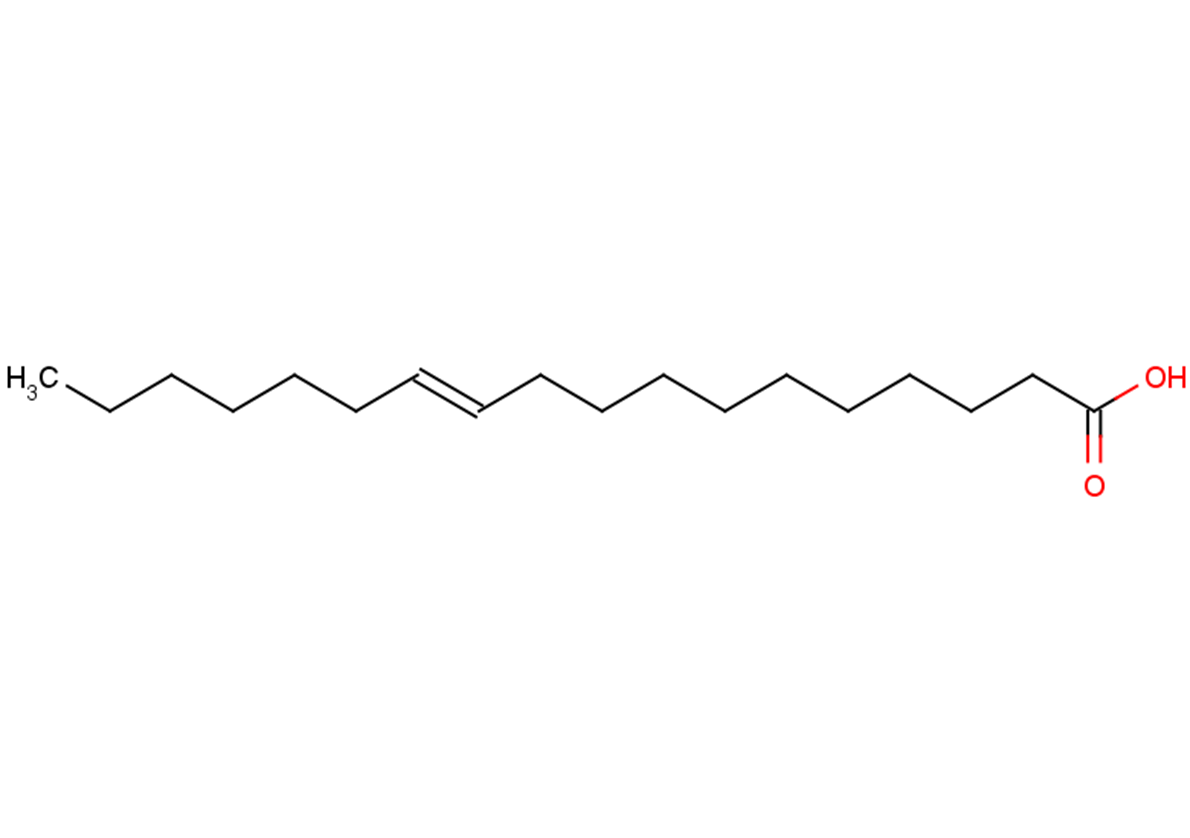
trans-Vaccenic acid
CAS No. 693-72-1
trans-Vaccenic acid( —— )
Catalog No. M24708 CAS No. 693-72-1
trans-Vaccenic acid is a precursor for the synthesis of saturated fatty acid in the rumen and of conjugated linoleic acid at the tissue level.
Purity : >98% (HPLC)
 COA
Datasheet
HNMR
HPLC
MSDS
Handing Instructions
COA
Datasheet
HNMR
HPLC
MSDS
Handing Instructions
| Size | Price / USD | Stock | Quantity |
| 1 mL x 10 mM in DMSO | 29 | In Stock |


|
| 5MG | 29 | In Stock |
|
| 10MG | 36 | In Stock |
|
| 25MG | 55 | In Stock |
|
| 50MG | 78 | In Stock |
|
| 100MG | Get Quote | In Stock |
|
| 200MG | Get Quote | In Stock |
|
| 500MG | Get Quote | In Stock |
|
| 1G | Get Quote | In Stock |
|
Biological Information
-
Product Nametrans-Vaccenic acid
-
NoteResearch use only, not for human use.
-
Brief Descriptiontrans-Vaccenic acid is a precursor for the synthesis of saturated fatty acid in the rumen and of conjugated linoleic acid at the tissue level.
-
Descriptiontrans-Vaccenic acid is a precursor for the synthesis of saturated fatty acid in the rumen and of conjugated linoleic acid at the tissue level.
-
In Vitro——
-
In Vivo——
-
Synonyms——
-
PathwayProteasome/Ubiquitin
-
TargetEndogenous Metabolite
-
RecptorHuman Endogenous Metabolite
-
Research Area——
-
Indication——
Chemical Information
-
CAS Number693-72-1
-
Formula Weight282.46
-
Molecular FormulaC18H34O2
-
Purity>98% (HPLC)
-
SolubilityDMSO: 98 mg/mL (346.95 mM; Need ultrasonic)
-
SMILESCCCCCC/C=C/CCCCCCCCCC(O)=O
-
Chemical Name——
Shipping & Storage Information
-
Storage(-20℃)
-
ShippingWith Ice Pack
-
Stability≥ 2 years
Reference
1.Li D, et al. Ruminal microbe of biohydrogenation of trans-vaccenic acid to stearic acid in vitro. BMC Res Notes. 2012 Feb 15;5:97.
molnova catalog



related products
-
Spermidine
Spermidine inhibits NOS1 (nNOS). Spermidine binds and precipitates DNA and may be used for purification of DNA binding proteins. Spermidine activates PNK (polynucleotide kinase T4). Spermidine binds to and activates NMDA and has been shown to potentiate NMDA-induced currents in a concentration-dependent manner.
-
DCBA
DCBA is a metabolite of insect repellent N-N-diethyl-meta-toluamide (DEET).
-
Darusentan
Darusentan is a potent inhibitor of endothelin signaling and function in both large and small arteries.
