


 Cart
Cart
 sales@molnova.com


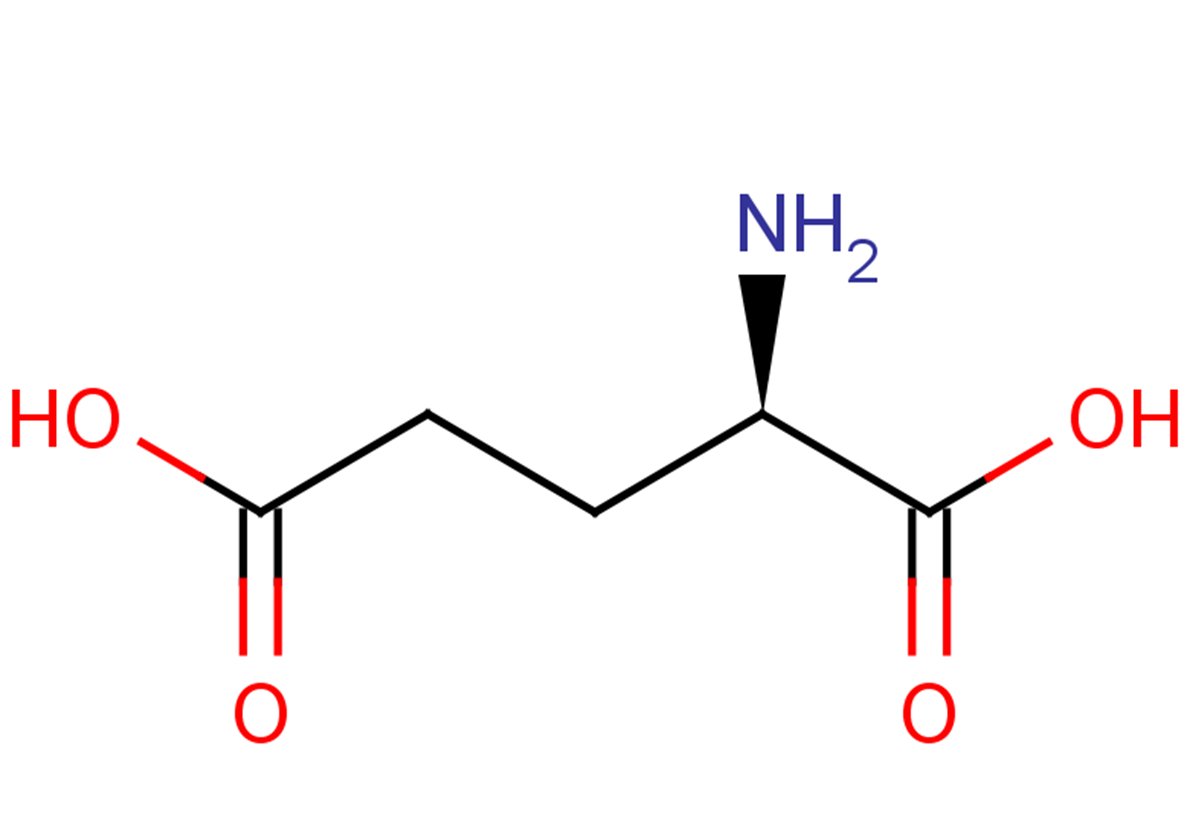
D-Glutamic acid
CAS No. 6893-26-1
D-Glutamic acid( (R)-Glutamic acid )
Catalog No. M24704 CAS No. 6893-26-1
D-glutamic acid, the enantiomer of L-glutamic acid, is widely used in medicine and food.
Purity : >98% (HPLC)
 COA
Datasheet
HNMR
HPLC
MSDS
Handing Instructions
COA
Datasheet
HNMR
HPLC
MSDS
Handing Instructions
| Size | Price / USD | Stock | Quantity |
| 100MG | Get Quote | In Stock |


|
| 200MG | Get Quote | In Stock |
|
| 500MG | Get Quote | In Stock |
|
| 1G | 27 | In Stock |
|
Biological Information
-
Product NameD-Glutamic acid
-
NoteResearch use only, not for human use.
-
Brief DescriptionD-glutamic acid, the enantiomer of L-glutamic acid, is widely used in medicine and food.
-
DescriptionD-glutamic acid, the enantiomer of L-glutamic acid, is widely used in medicine and food.
-
In VitroVarious d-amino acids, such as D-serine, D-aspartic acid (D-Asp), and D-glutamic acid (D-Glu) are widely found in mammals including human beings and they are now thought to be the candidates of novel physiologically active substances and/or biomarkers. D-[Asp/Glu] (4 mg/mL) inhibits IgE binding (75%) to peanuts while D-Glu, D-Asp has no inhibitory effect. IgE is specific for D-[Asp/Glu] and may have the potential for removing IgE or reducing IgE binding to peanut allergens.
-
In VivoD-glutamic acid is currently paid attention as a modulator of neuronal transmission and hormonal secretion. It is metabolized only by D-aspartate oxidase in mammals. After intraperitoneal injection, L-glutamate is catabolized via a-ketoglutarate, whereas D-glutamate is converted to n-pyrrolidone carboxylic acid. Carbon 2 of both D- and L-glutamate is converted in the cecum to the methyl carbon of acetate. Both rat liver and kidney catalyze the conversion of D-glutamic acid to n-pyrrolidone carboxylic acid.
-
Synonyms(R)-Glutamic acid
-
PathwayProteasome/Ubiquitin
-
TargetEndogenous Metabolite
-
RecptorHuman Endogenous Metabolite
-
Research Area——
-
Indication——
Chemical Information
-
CAS Number6893-26-1
-
Formula Weight147.13
-
Molecular FormulaC5H9NO4
-
Purity>98% (HPLC)
-
SolubilityH2O:10 mg/mL (67.97 mM; Need ultrasonic)
-
SMILESN[C@H](CCC(O)=O)C(O)=O
-
Chemical Name——
Shipping & Storage Information
-
Storage(-20℃)
-
ShippingWith Ice Pack
-
Stability≥ 2 years
Reference
1.Han H, et al. Changes in D-aspartic acid and D-glutamic acid levels in the tissues and physiological fluids of mice with various D-aspartate oxidase activities. J Pharm Biomed Anal. 2015 Dec 10;116:47-52.
molnova catalog



related products
-
Phenylacetic acid
Phenyl acetate (or phenylacetate) is a carboxylic acid ester that has been found in the biofluids of patients with nephritis and/or hepatitis as well as patients with phenylketonuria (PKU) an inborn error of metabolism. Excess phenylalanine in the body can be disposed of through a transamination process leading to the production of phenylpyruvate.
-
(±)-Propionylcarniti...
(±)-Propionylcarnitine chloride (Propionyl-DL-carnitine chloride) is a mixture of short-chain acylcarnitines used as a dietary supplement for the study of chronic diabetes.
-
D-Ribonolactone
D-Ribonolactone is sugar lactone and an inhibitor of β-galactosidase of Escherichia coli (Ki : 26 Mm).
