


 Cart
Cart
 sales@molnova.com


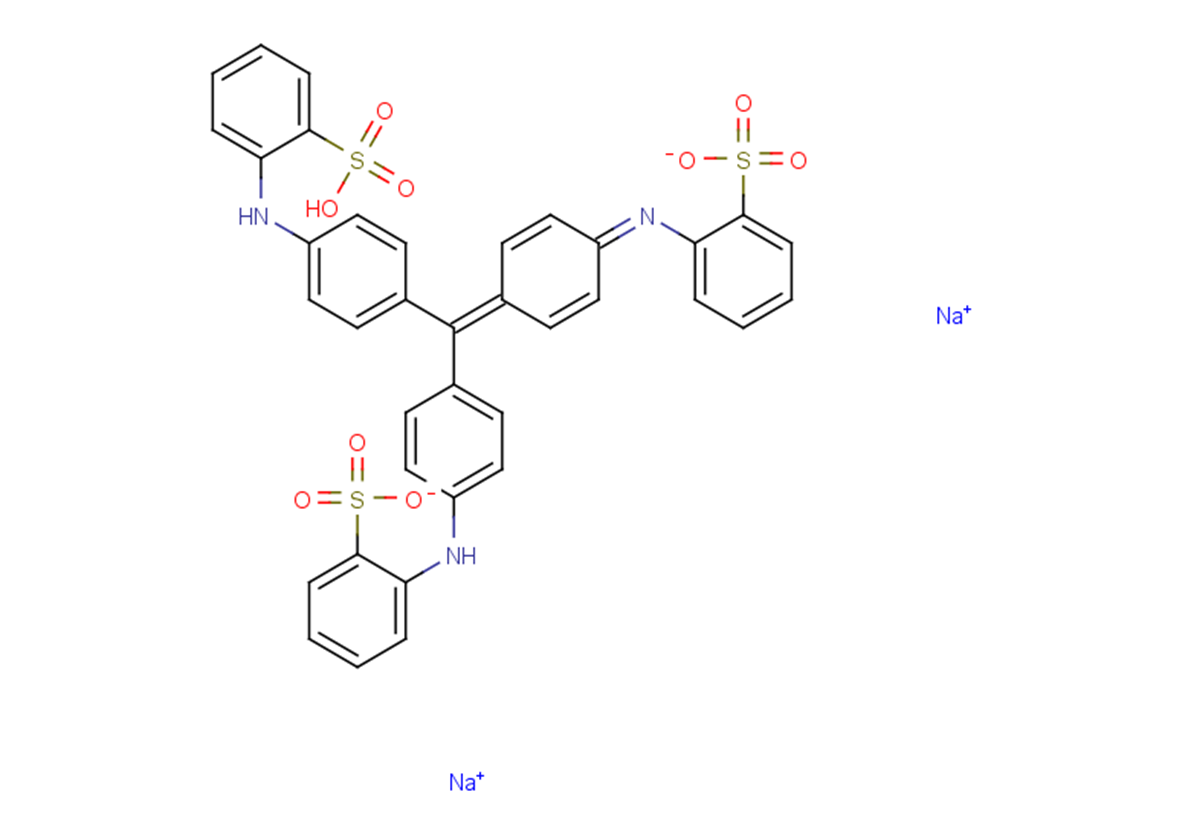
Methyl Blue
CAS No. 28983-56-4
Methyl Blue( —— )
Catalog No. M24207 CAS No. 28983-56-4
Methyl blue is a triaminotriphenylmethane dye. It is used as an antiseptic dye in the polychrome staining method and has applications in histological and microbiological staining solutions.
Purity : >98% (HPLC)
 COA
Datasheet
HNMR
HPLC
MSDS
Handing Instructions
COA
Datasheet
HNMR
HPLC
MSDS
Handing Instructions
| Size | Price / USD | Stock | Quantity |
| 100MG | Get Quote | In Stock |


|
| 200MG | Get Quote | In Stock |
|
| 500MG | 27 | In Stock |
|
| 1G | Get Quote | In Stock |
|
Biological Information
-
Product NameMethyl Blue
-
NoteResearch use only, not for human use.
-
Brief DescriptionMethyl blue is a triaminotriphenylmethane dye. It is used as an antiseptic dye in the polychrome staining method and has applications in histological and microbiological staining solutions.
-
DescriptionMethyl blue is a triaminotriphenylmethane dye. It is used as an antiseptic dye in the polychrome staining method and has applications in histological and microbiological staining solutions.
-
In Vitro——
-
In Vivo——
-
Synonyms——
-
PathwayOthers
-
TargetOther Targets
-
RecptorOthers
-
Research Area——
-
Indication——
Chemical Information
-
CAS Number28983-56-4
-
Formula Weight799.8
-
Molecular FormulaC37H27N3Na2O9S3
-
Purity>98% (HPLC)
-
SolubilityH2O:19 mg/mL?(23.75mM;?Need ultrasonic)
-
SMILESO=S(C1=CC=CC=C1/N=C2C=C/C(C=C\2)=C(C3=CC=C(NC4=CC=CC=C4S(=O)(O)=O)C=C3)\C5=CC=C(NC6=CC=CC=C6S(=O)([O-])=O)C=C5)([O-])=O.[Na+].[Na+]
-
Chemical Name——
Shipping & Storage Information
-
Storage(-20℃)
-
ShippingWith Ice Pack
-
Stability≥ 2 years
Reference
1.Mohammed Hassan, et al. Micellar effect on the kinetics of oxidation of methyl blue by Ce(IV) in sulfuric acid medium. Arabian Journal of Chemistry. Volume 8, Issue 1, January 2015, Pages 72-77.
molnova catalog



related products
-
Oleuropein
Oleuropein is an antioxidant polyphenol isolated from olive leaf.
-
4'-Methoxypuerarin
4'-Methoxypuerarin is a natural product isolated from Pueraria lobata.
-
Ibrolipim
Ibrolipim attenuates high glucose-induced endothelial dysfunction in cultured human umbilical vein endothelial cells via PI3K/Akt pathway.
