


 Cart
Cart
 sales@molnova.com


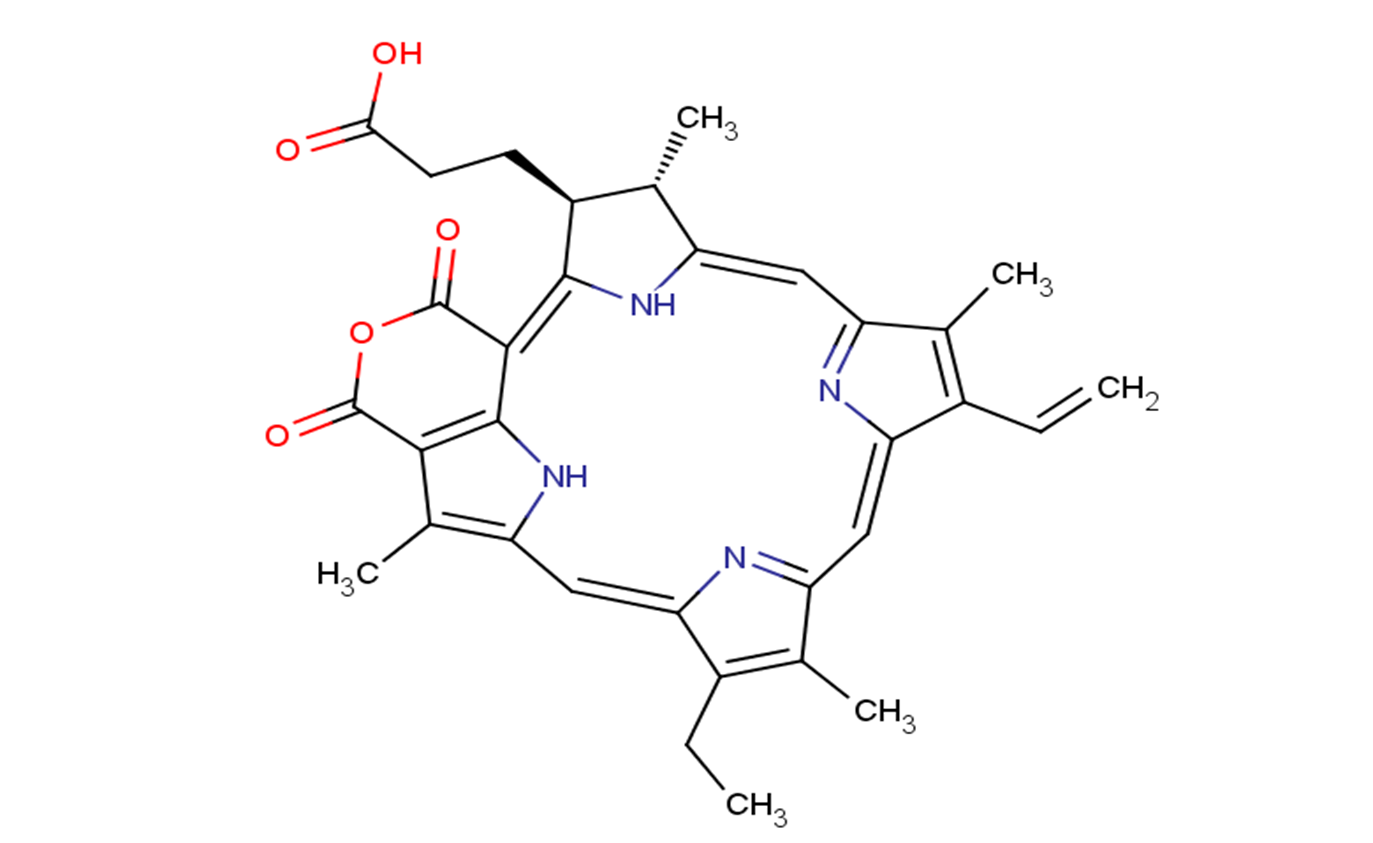
Purpurin 18
CAS No. 25465-77-4
Purpurin 18( —— )
Catalog No. M24147 CAS No. 25465-77-4
Purpurin 18 is an interesting dihydroporphyrin for generating photosensitizers. It has antioxidant activity.
Purity : >98% (HPLC)
 COA
Datasheet
HNMR
HPLC
MSDS
Handing Instructions
COA
Datasheet
HNMR
HPLC
MSDS
Handing Instructions
| Size | Price / USD | Stock | Quantity |
| 1 mL x 10 mM in DMSO | 111 | In Stock |


|
| 2MG | 29 | In Stock |
|
| 5MG | 43 | In Stock |
|
| 10MG | 61 | In Stock |
|
| 25MG | 101 | In Stock |
|
| 50MG | 152 | In Stock |
|
| 100MG | 226 | In Stock |
|
| 200MG | Get Quote | In Stock |
|
| 500MG | Get Quote | In Stock |
|
| 1G | Get Quote | In Stock |
|
Biological Information
-
Product NamePurpurin 18
-
NoteResearch use only, not for human use.
-
Brief DescriptionPurpurin 18 is an interesting dihydroporphyrin for generating photosensitizers. It has antioxidant activity.
-
DescriptionPurpurin 18 is an interesting dihydroporphyrin for generating photosensitizers. It has antioxidant activity.
-
In Vitro——
-
In Vivo——
-
Synonyms——
-
PathwayOthers
-
TargetAntioxidant
-
Recptorantioxidant
-
Research Area——
-
Indication——
Chemical Information
-
CAS Number25465-77-4
-
Formula Weight564.63
-
Molecular FormulaC33H32N4O5
-
Purity>98% (HPLC)
-
SolubilityDMSO:10 mg/mL (17.71 mM; ultrasonic and warming and heat to 60°C);Ethanol:< 1 mg/mL (insoluble)
-
SMILESCCC1=C(C2=NC1=CC3=C(C4=C(N3)C(=C5[C@H]([C@@H](C(=CC6=NC(=C2)C(=C6C)C=C)N5)C)CCC(=O)O)C(=O)OC4=O)C)C
-
Chemical Name——
Shipping & Storage Information
-
Storage(-20℃)
-
ShippingWith Ice Pack
-
Stability≥ 2 years
Reference
1.NicolasDrogat, et al. High yield preparation of purpurin-18 from Spirulina maxima. Dyes and Pigments
molnova catalog



related products
-
Tebufenpyrad
Tebufenpyrad (mitochondrial complex-1 inhibitors) is an agro-chemically important acaricide that functions like the known mitochondrial toxicant rotenone.
-
Isovitexin(b)
Isovitexin an active component of many traditional Chinese medicines shows various activities such as anti-oxidant anti-inflammatory anti-alzheimer disease (AD) effects and so on.
-
Fulvic Acid
Fulvic Acid is a natural product of humus produced by microorganisms in soil, sediment or aquatic environments.
