


 Cart
Cart
 sales@molnova.com


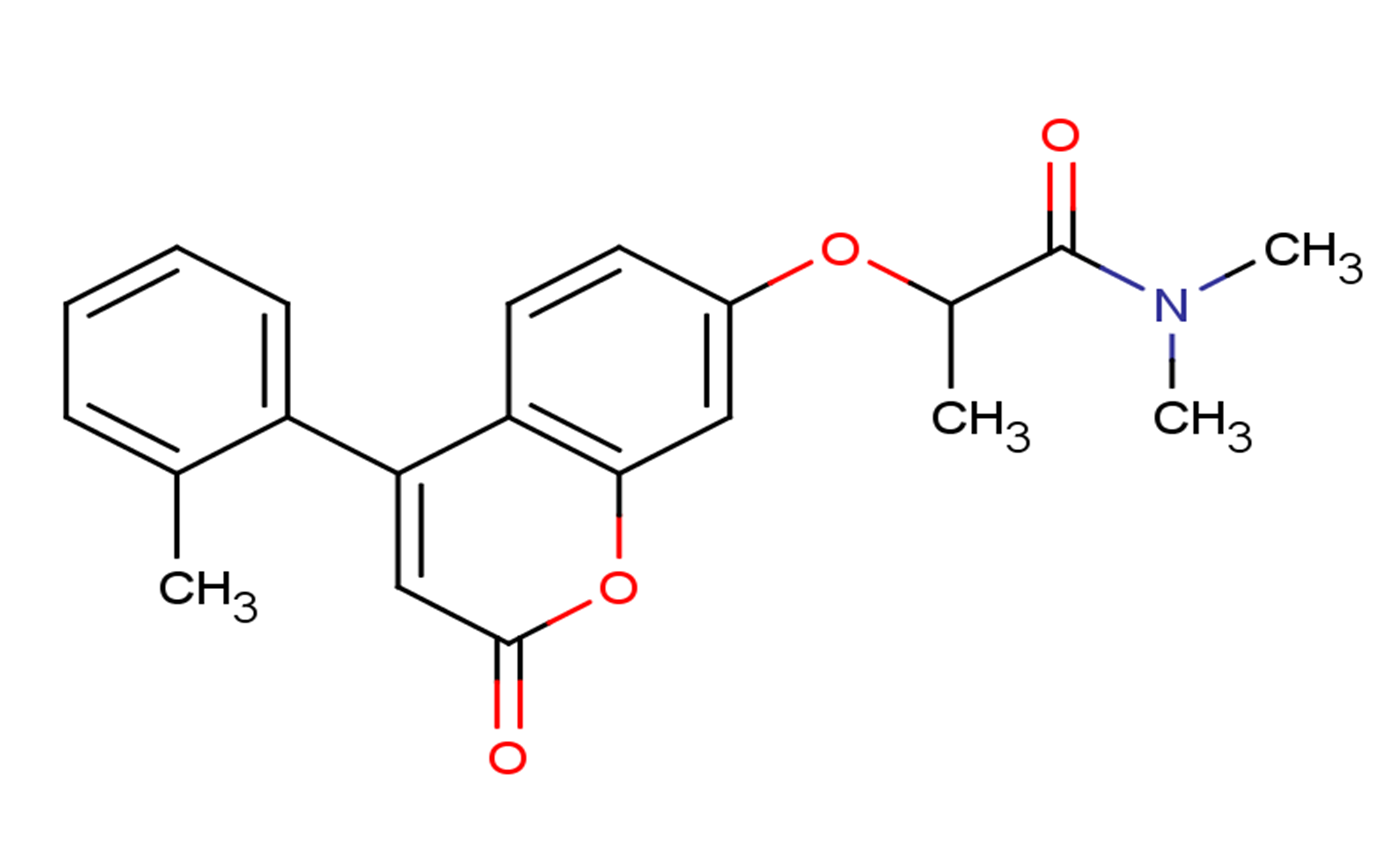
LDC195943(IMT1)
CAS No. 2304621-31-4
LDC195943(IMT1)( Propanamide, N,N-dimethyl-2-[[4-(2-methylphenyl)-2-oxo-2H-1-benzopyran-7-yl]oxy]- )
Catalog No. M24046 CAS No. 2304621-31-4
Anticancer.
Purity : >98% (HPLC)
 COA
Datasheet
HNMR
HPLC
MSDS
Handing Instructions
COA
Datasheet
HNMR
HPLC
MSDS
Handing Instructions
| Size | Price / USD | Stock | Quantity |
| 1 mL x 10 mM in DMSO | 188 | In Stock |


|
| 5MG | 169 | In Stock |
|
| 10MG | 301 | In Stock |
|
| 25MG | 563 | In Stock |
|
| 50MG | 789 | In Stock |
|
| 100MG | 1088 | In Stock |
|
| 200MG | Get Quote | In Stock |
|
| 500MG | Get Quote | In Stock |
|
| 1G | Get Quote | In Stock |
|
Biological Information
-
Product NameLDC195943(IMT1)
-
NoteResearch use only, not for human use.
-
Brief DescriptionAnticancer.
-
DescriptionAnticancer.
-
In VitroIMT1 (0.00001-10 μM; 0-168 h) has a dose-dependent decrease in cell viability in A2780, A549 and HeLa cells. IMT1 shows a strong decrease in cell viability in about one third of the cancer cell lines, 89 cancer cell lines and primary cells (IMR90 lung fibroblasts and human peripheral blood mononuclear cells (PBMCs)), whereas primary cells remained unresponsive. IMT1 (0.01-10 μM; for 24-200 h) causes a dose-dependent decrease in the levels of mitochondrial transcripts and gradual depletion of mtDNA in HeLa cells. There is a dose-dependent decrease in the levels of subunits (NDUFB8, UQCRC2 and COXI) of respiratory chain complexes I, III and IV. IMT1 reveals a time-dependent and marked increase in the levels of mono- and diphosphate nucleotides that results in a considerable increase in the AMP/ATP ratio and levels of phosphorylated AMPK in A2780 cells. IMT1 severely impairs mtDNA gene expression in A2780 cells that express wild-type POLRMT, whereas cells that express mutant POLRMT (L796Q or L816Q) are resistant.POLRMT is essential for mtDNA transcription and biogenesis of the oxidative phosphorylation (OXPHOS) system. Cell Viability Assay Cell Line:A2780, A549 and HeLa cells Concentration:0.00001-10 μM Incubation Time:0-168 hours Result:Had a dose-dependent decrease in cell viability in A2780, A549 and HeLa cells, but had not cytotoxic to human PBMCs or pooled primary human hepatocytes.
-
In Vivo——
-
SynonymsPropanamide, N,N-dimethyl-2-[[4-(2-methylphenyl)-2-oxo-2H-1-benzopyran-7-yl]oxy]-
-
PathwayOthers
-
TargetOther Targets
-
RecptorOthers
-
Research Area——
-
Indication——
Chemical Information
-
CAS Number2304621-31-4
-
Formula Weight351.4
-
Molecular FormulaC21H21NO4
-
Purity>98% (HPLC)
-
SolubilityDMSO:10 mM
-
SMILESCC1=CC=CC=C1C2=CC(=O)OC3=C2C=CC(=C3)OC(C)C(=O)N(C)C
-
Chemical Name——
Shipping & Storage Information
-
Storage(-20℃)
-
ShippingWith Ice Pack
-
Stability≥ 2 years
Reference
1.WO2019057821
molnova catalog



related products
-
Acetylsulfamerazine
Acetylsulfamerazine (N-Acetylsulfamerazine) is a secondary metabolite of sulphamethazine, which has a slight inhibitory effect on cellulose digestion and rumen endocrine activity, and has anti-microbial activity.
-
Indaconitine
Indaconitine is a natural product.
-
Necrofibrin, human
Necrofibrin, human
