


 Cart
Cart
 sales@molnova.com


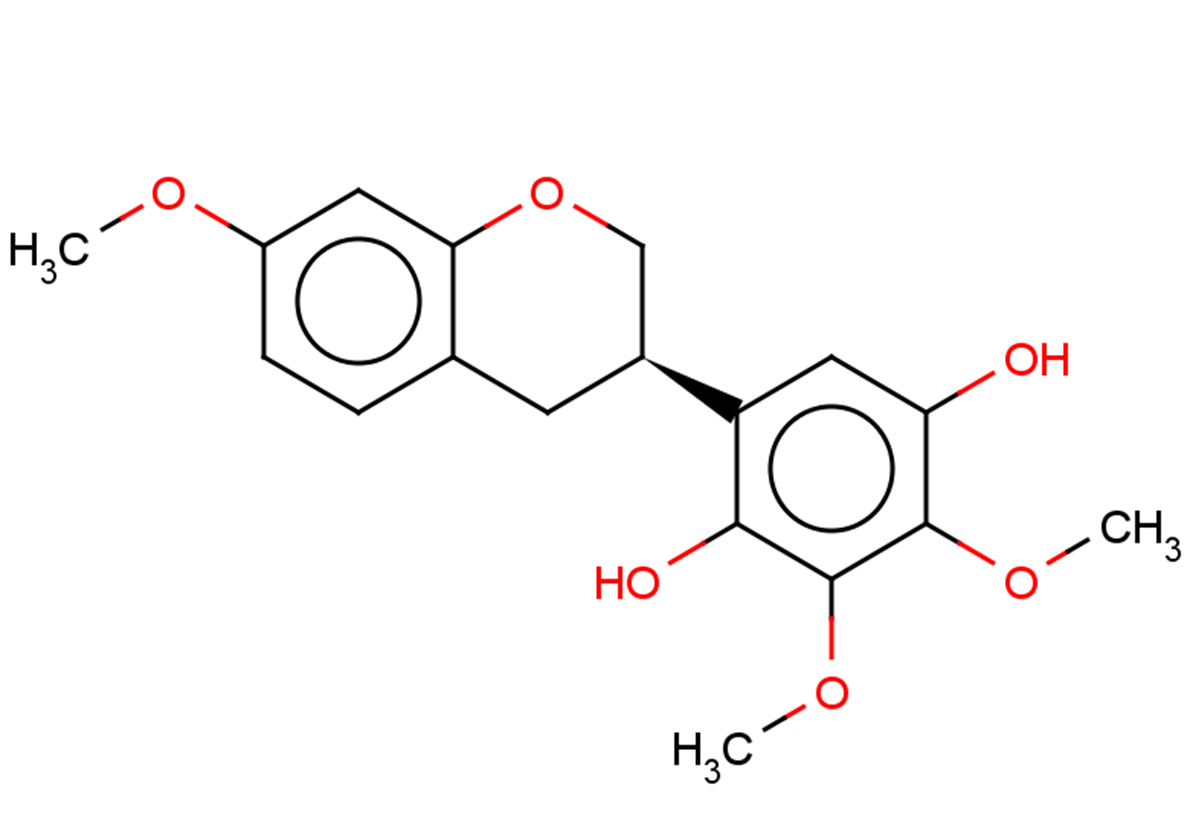
Colutehydroquinone
CAS No. 181311-16-0
Colutehydroquinone( —— )
Catalog No. M23826 CAS No. 181311-16-0
Colutehydroquinone is an antifungal isoflavonoid from Colutea arborescens.
Purity : >98% (HPLC)
 COA
Datasheet
HNMR
HPLC
MSDS
Handing Instructions
COA
Datasheet
HNMR
HPLC
MSDS
Handing Instructions
| Size | Price / USD | Stock | Quantity |
| 1 mL x 10 mM in DMSO | 170 | In Stock |


|
| 5MG | 163 | In Stock |
|
| 10MG | 242 | In Stock |
|
| 100MG | Get Quote | In Stock |
|
| 200MG | Get Quote | In Stock |
|
| 500MG | Get Quote | In Stock |
|
| 1G | Get Quote | In Stock |
|
Biological Information
-
Product NameColutehydroquinone
-
NoteResearch use only, not for human use.
-
Brief DescriptionColutehydroquinone is an antifungal isoflavonoid from Colutea arborescens.
-
DescriptionColutehydroquinone is an antifungal isoflavonoid from Colutea arborescens.
-
In Vitro——
-
In Vivo——
-
Synonyms——
-
PathwayMicrobiology/Virology
-
TargetAntifection
-
RecptorAntifection
-
Research Area——
-
Indication——
Chemical Information
-
CAS Number181311-16-0
-
Formula Weight332.35
-
Molecular FormulaC18H20O6
-
Purity>98% (HPLC)
-
SolubilityIn Vitro:?DMSO : 100 mg/mL (300.89 mM)
-
SMILESCOc1cc(OC[C@H](C2)c(cc(c(OC)c3OC)O)c3O)c2cc1
-
Chemical Name——
Shipping & Storage Information
-
Storage(-20℃)
-
ShippingWith Ice Pack
-
Stability≥ 2 years
Reference
1.Grosvenor PW, et, al. Colutequinone and colutehydroquinone, antifungal isoflavonoids from Colutea arborescens. Phytochemistry. 1996 Sep;43(2):377-80.
molnova catalog



related products
-
Isavuconazonium sulf...
Isavuconazonium sulfate is hydrolyzed by plasma esterases to yield the active moiety isavuconazole.
-
Prunin
Prunin possesses anti-diabetic, and anti-abacterial properties, it can inhibit protein tyrosine phosphatase 1B (PTP1B) and stimulate glucose uptake in insulin-resistant HepG2 cells; it also can stimulate growth of Pseudomonas aeruginosa and different Bacilllus sp.
-
1,3-Dithiane
1,3-Dithiane is a protected formaldehyde anion equivalent that could serve as a useful labeled synthon. 1,3-Dithiane is also a sulfur-containing Maillard reaction products found in boiled beef extracts.
