


 Cart
Cart
 sales@molnova.com


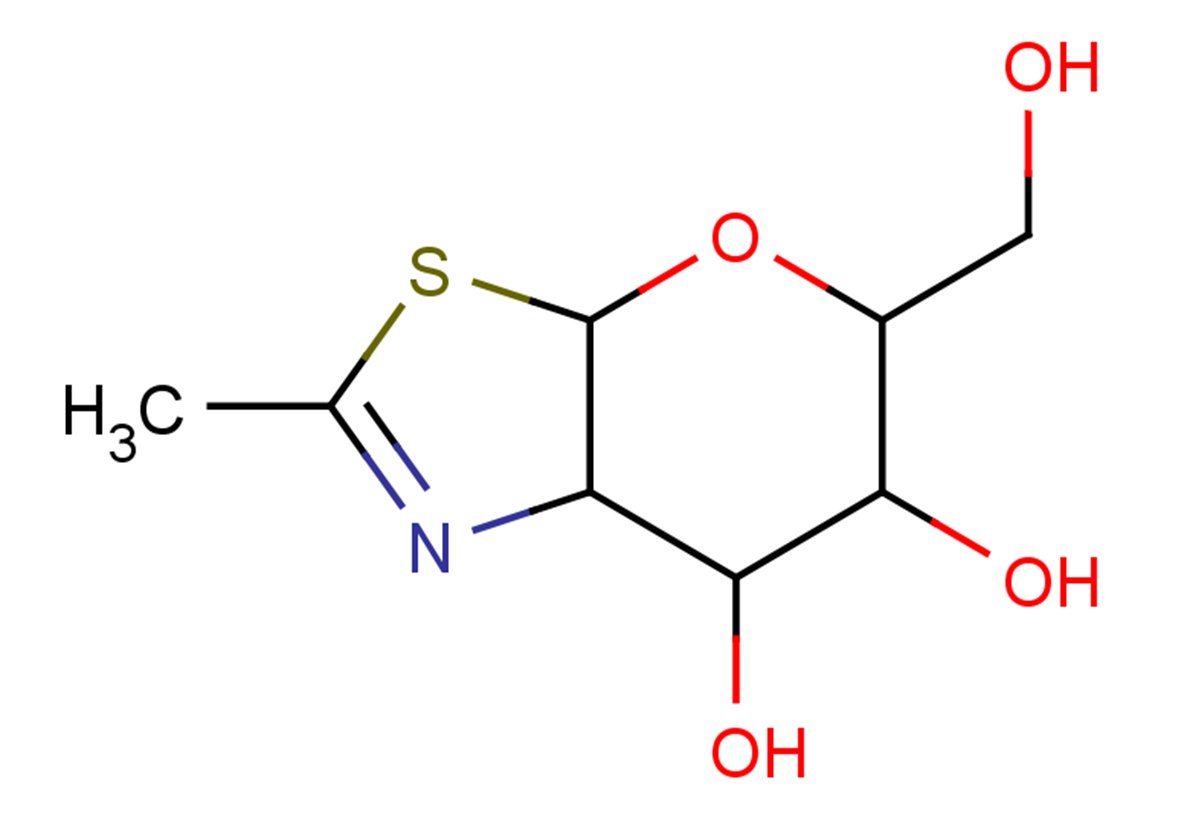
NAG-thiazoline
CAS No. 179030-22-9
NAG-thiazoline( GlcNAc-thiazoline )
Catalog No. M23803 CAS No. 179030-22-9
NAG-thiazoline is an O-GlcNAcase inhibitor with Ki value of 180 nM. It is active against V. campbellii with MIC value of 0.5 μM.
Purity : >98% (HPLC)
 COA
Datasheet
HNMR
HPLC
MSDS
Handing Instructions
COA
Datasheet
HNMR
HPLC
MSDS
Handing Instructions
| Size | Price / USD | Stock | Quantity |
| 1 mL x 10 mM in DMSO | 48 | In Stock |


|
| 5MG | 45 | In Stock |
|
| 10MG | 85 | In Stock |
|
| 25MG | 180 | In Stock |
|
| 50MG | 259 | In Stock |
|
| 100MG | 420 | In Stock |
|
| 200MG | Get Quote | In Stock |
|
| 500MG | Get Quote | In Stock |
|
| 1G | Get Quote | In Stock |
|
Biological Information
-
Product NameNAG-thiazoline
-
NoteResearch use only, not for human use.
-
Brief DescriptionNAG-thiazoline is an O-GlcNAcase inhibitor with Ki value of 180 nM. It is active against V. campbellii with MIC value of 0.5 μM.
-
DescriptionNAG-thiazoline is an O-GlcNAcase inhibitor with Ki value of 180 nM. It is active against V. campbellii with MIC value of 0.5 μM.
-
In Vitro——
-
In Vivo——
-
SynonymsGlcNAc-thiazoline
-
PathwayOthers
-
TargetOther Targets
-
RecptorO-GlcNAcase|VhGlcNAcase
-
Research Area——
-
Indication——
Chemical Information
-
CAS Number179030-22-9
-
Formula Weight219.26
-
Molecular FormulaC8H13NO4S
-
Purity>98% (HPLC)
-
SolubilityIn Vitro:?DMSO : 100 mg/mL (456.08 mM)
-
SMILESCC(SC1OC(CO)C2O)=NC1C2O
-
Chemical Name——
Shipping & Storage Information
-
Storage(-20℃)
-
ShippingWith Ice Pack
-
Stability≥ 2 years
Reference
1.NAG‐thiazoline is a potent inhibitor of the Vibriocampbellii GH20 β‐N‐Acetylglucosaminidase[J]. FEBS Journal, 2020.
molnova catalog



related products
-
p-Coumaric Acid Ethy...
p-Coumaric Acid Ethyl Ester is the ethyl ester of p-Coumaric acid. p-Coumaric Acid is a potential immunosuppressive agent in treating autoimmune inflammatory diseases like rheumatoid arthritis.
-
D(+)-Glucuronic acid...
Glucuronic acid is a carboxylic acid and highly soluble in water. In humans glucuronic acid is often linked to toxic or poisonous substances to allow for subsequent elimination and to hormones to allow for easier transport.
-
Dihydroxyfumaric aci...
Dihydroxyfumaric acid can induce lipid peroxidation in rat liver microsomes.
