


 Cart
Cart
 sales@molnova.com


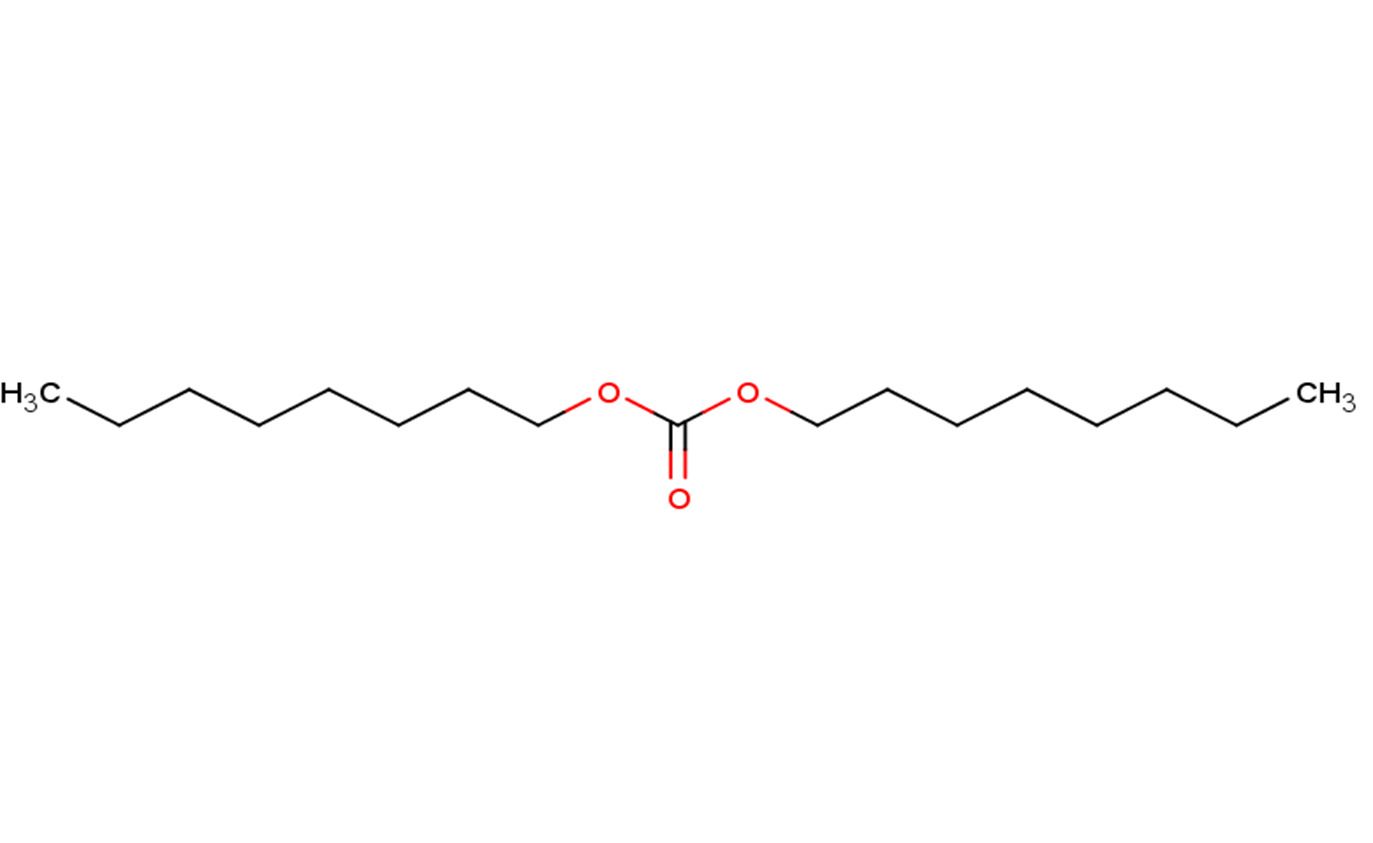
Dicaprylyl carbonate
CAS No. 1680-31-5
Dicaprylyl carbonate( Dimethyl carbonate )
Catalog No. M23754 CAS No. 1680-31-5
Dicaprylyl carbonate is a solid fat derived from plants and a dry emollient.
Purity : >98% (HPLC)
 COA
Datasheet
HNMR
HPLC
MSDS
Handing Instructions
COA
Datasheet
HNMR
HPLC
MSDS
Handing Instructions
| Size | Price / USD | Stock | Quantity |
| 1 mL x 10 mM in DMSO | 28 | In Stock |


|
| 100MG | Get Quote | In Stock |
|
| 200MG | Get Quote | In Stock |
|
| 500MG | Get Quote | In Stock |
|
| 1G | 27 | In Stock |
|
Biological Information
-
Product NameDicaprylyl carbonate
-
NoteResearch use only, not for human use.
-
Brief DescriptionDicaprylyl carbonate is a solid fat derived from plants and a dry emollient.
-
DescriptionDicaprylyl carbonate is a solid fat derived from plants and a dry emollient. Dimethyl carbonate has good skin compatibility and comprehensive properties, such as a sunscreen filter with the ability to dissolve and disperse.
-
In VitroDicaprylyl carbonate has a respective shininess value of 389.8. Dicaprylyl carbonate is evaluated as having a matte to satiny finish.
-
In Vivo——
-
SynonymsDimethyl carbonate
-
PathwayOthers
-
TargetOther Targets
-
RecptorOthers
-
Research Area——
-
Indication——
Chemical Information
-
CAS Number1680-31-5
-
Formula Weight286.45
-
Molecular FormulaC17H34O3
-
Purity>98% (HPLC)
-
SolubilityDMSO:5 mM
-
SMILESO=C(OCCCCCCCC)OCCCCCCCC
-
Chemical Name——
Shipping & Storage Information
-
Storage(-20℃)
-
ShippingWith Ice Pack
-
Stability≥ 2 years
Reference
1.JumatSalimon, et al. Industrial development and applications of plant oils and their biobased oleochemicals. Arabian Journal of Chemistry, Volume 5, Issue 2, April 2012, Pages 135-145.
molnova catalog



related products
-
LY-294002 hydrochlor...
LY294002 is a synthetic molecule inhibitor of PI3Kα/δ/β (IC50: 0.5/0.57/0.97 μM, in cell-free assays); more stable than Wortmannin in solution, and also is a blocker of autophagosome formation.
-
Cortistatin-29 (rat)
Cortistatin-29 is a neuropeptide. Cortistatin-29 alleviates neuropathic pain. Cortistatin-29 binds all somatostatin (SS) receptor subtypes with high affinity and shows IC50 values of 2.8 nM, 7.1 nM, 0.2 nM, 3.0 nM, 13.7 nM for SSTR1, SSTR2, SSTR3, SSTR4, SSTR5, respectively. Cortistatin-29 shows anti-fibrotic effects.
-
Sengosterone
Sengosterone is a steroid and can be isolated from Ajuga remota.
